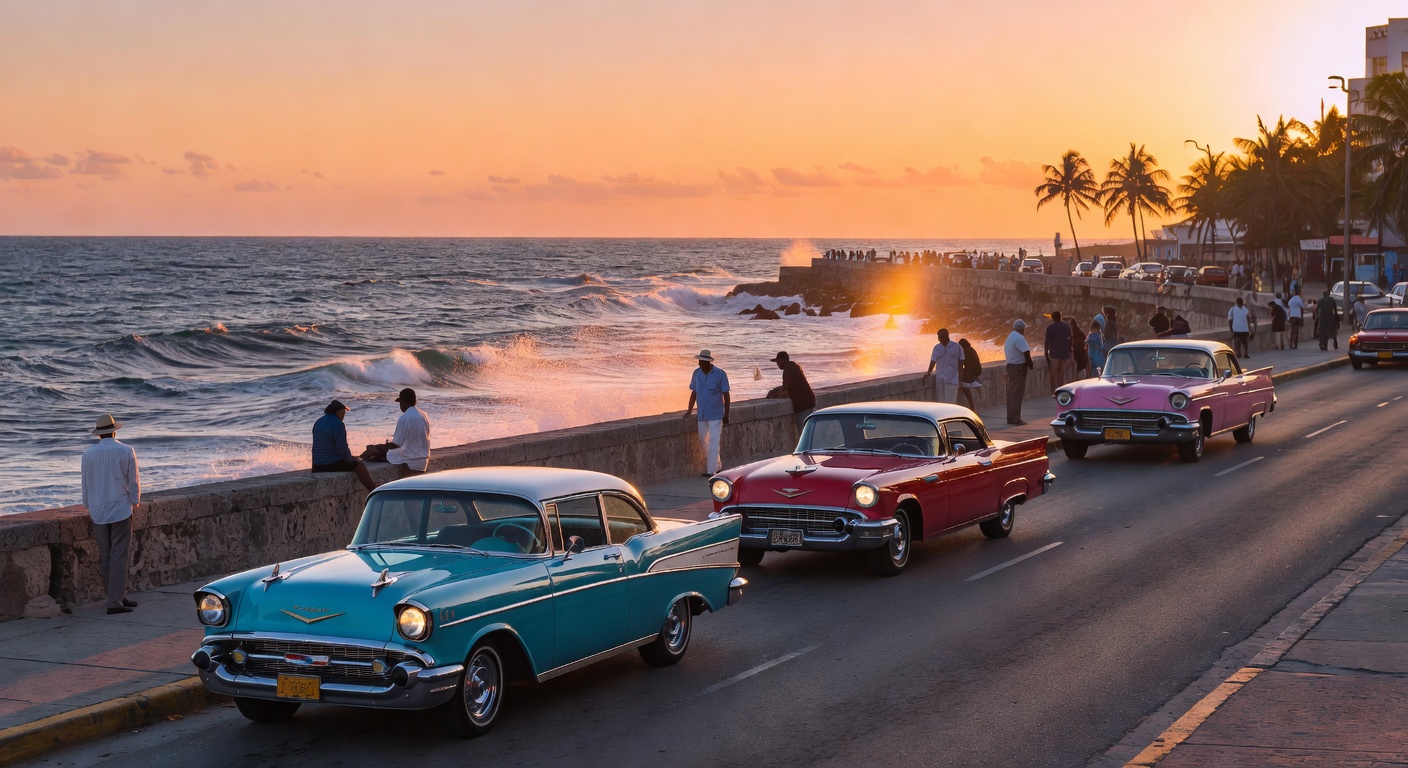
Regional Guide
Cuba
A unique destination where economic realities, tourism dynamics, and relationship-style arrangements create a scene unlike anywhere else in the world. Understanding the context is essential.
At a glance: Cuba
- Legal model
- Illegal
- FCDO advisory
- Avoid travel
- HIV prevalence
- 0.6% adult →
- PrEP access
- Pilot programmes
- Syphilis (sex workers)
- 0.5%
- Currency
- Cuban Peso (CUP); USD widely accepted
- Language
- Spanish; limited English
- Population
- 11.0M
- Capital
- Havana
- Last verified
ART: 71% · WHO 2025
MSM: 3% · WHO 2023
Government travel advisories
Pre-travel medical — vaccines & medicines(9 · CDC)
- COVID-19Recommended
All eligible travelers should be up to date with their COVID-19 vaccines. Please see Your COVID-19 Vaccination for more information.
- Hepatitis ARecommended
Recommended for unvaccinated travelers one year old or older going to Cuba. Infants 6 to 11 months old should also be vaccinated against Hepatitis A.
- Hepatitis BRecommended
Recommended for unvaccinated travelers younger than 60 years old traveling to Cuba. Unvaccinated travelers 60 years and older may get vaccinated before traveling to Cuba.
- MeaslesRecommended
Cases of measles are on the rise worldwide. Travelers are at risk of measles if they have not been fully vaccinated at least two weeks prior to departure, or have not had measles in the past, and trav…
- TyphoidRecommended
Recommended for most travelers, especially those staying with friends or relatives or visiting smaller cities or rural areas.
- RabiesConsider
Dogs infected with rabies are sometimes found in Cuba. Rabies is also commonly found in some terrestrial wildlife species.
- Routine vaccinesRoutine
Make sure you are up-to-date on all routine vaccines before every trip.
- ChikungunyaNot recommended
All travelers should take steps to prevent mosquito bites. Chikungunya vaccination is generally not recommended.
- Yellow FeverNot recommended
CDC recommendations: Vaccine is not recommended. Country entry requirements: Direct travel from United States: Vaccine is not required.
General guidance from the CDC Travelers' Health page (2026-07-23) — not medical advice. See a travel clinic 4–6 weeks before departure. Malaria and some vaccines depend on your specific itinerary.
Common questions about Cuba
What people are actually searching for.
Is Cuba good for single guys?
Cuba draws solo male travellers to Havana's Vedado and Centro Habana districts, the Malecón evening scene, and resort zones like Varadero and Cayo Coco, with Santiago de Cuba offering a smaller, more local scene. Sex work is illegal but tolerated in tourist areas, though pimping is prosecuted aggressively and police occasionally pursue jineteras and their foreign clients, so discretion matters. The country is currently classed medium-risk, and the UK FCDO issues a Warning while Canada advises avoiding non-essential travel and Australia says reconsider your need to travel. Severe shortages of food, medicine and fuel have persisted since 2021. English is limited outside resorts, so basic Spanish helps. Bring USD cash — cards rarely work for British and EU visitors — and expect CDR neighbourhood-watch scrutiny at casas particulares.
Is $100 USD a lot in Cuba?
In Cuba, USD 100 is a significant sum. The typical price range referenced for adult companionship falls between USD 50 and 100, so a single US$100 note sits at the top of that band. USD is widely accepted alongside the Cuban Peso (CUP), and dollar cash carries outsized value because cards rarely work for British and EU travellers, forcing most visitors onto a cash economy. Since 2021, severe shortages of food, medicine and fuel have made hard currency the practical route to obtaining scarce goods and private-sector services at casas particulares and paladares. Travellers should still be discreet when carrying or spending large USD sums, given that police occasionally pursue jineteras and their foreign clients, and CDR neighbourhood watches may report unusual visitor patterns.
Can Americans travel to Cuba for pleasure?
The country brief for Cuba does not detail US-specific licensing rules, so American travellers should verify their own government's current requirements before booking. What the brief does establish is that Cuba is classed medium-risk, with the UK FCDO issuing a Warning, Canada advising avoid non-essential travel and Australia saying reconsider your need to travel — a consistent picture of elevated caution from allied governments. Severe shortages of food, medicine and fuel have persisted since 2021. USD is widely accepted and Spanish is the official language, with limited English outside resorts. Key leisure zones include Havana's Vedado and Centro Habana, the Malecón, Varadero and Cayo Coco. Cards rarely work for foreign visitors, so US travellers who do go should plan to bring USD cash.
What is the age of consent in Cuba?
The age of consent in Cuba is 16. Separately, the minimum age for sex work is 18, reflecting the standard distinction between general sexual consent and any involvement in commercial sex. Sex work itself is illegal but tolerated in tourist areas such as Havana's Vedado and Centro Habana, the Malecón evening scene, and resort zones including Varadero and Cayo Coco, while pimping is prosecuted aggressively. Police occasionally pursue jineteras and their foreign clients, so travellers should be discreet and carry ID capable of proving any partner's age. CDR neighbourhood-watch structures may also report unusual visitor patterns at casas particulares. Emergency contacts are 106 for police and 104 for medical assistance. The current risk level for Cuba is assessed as medium.
Can you get condoms in Cuba?
The Cuba country brief does not specifically list condom availability, but it does document severe shortages of food, medicine and fuel that have persisted since 2021, and medicine shortages in particular imply that pharmacy stock of items including contraceptives can be unreliable. Prudent travellers should bring an adequate personal supply from home rather than depend on local resupply. USD is widely accepted for private transactions where goods can be found, and the medical emergency number is 104 if issues arise. Given that sex work is illegal but tolerated in tourist areas and police occasionally pursue jineteras and their foreign clients, discretion around any purchase is sensible. Spanish is the official language with limited English, so knowing the Spanish word 'condones' helps when asking at a farmacia.
Is Cuba friendly to American tourists?
The country brief for Cuba does not directly rate friendliness toward Americans, but it flags several practical frictions relevant to any Western visitor. Cards rarely work for British and EU travellers — a limitation that similarly affects Americans — so USD cash is essential, and USD is widely accepted. Spanish is the official language with only limited English outside resort areas such as Varadero and Cayo Coco. Allied governments are cautious: the UK FCDO issues a Warning, Canada advises avoid non-essential travel and Australia says reconsider your need to travel. Severe shortages of food, medicine and fuel since 2021 shape daily life. CDR neighbourhood watches may report unusual visitor patterns at casas particulares, and police occasionally pursue jineteras and their foreign clients, so discretion is advised regardless of nationality.
Legal Model
Criminalized
Risk Level
Medium
Currency
CUP / USD (dual economy)
Language
Spanish
Tipping Custom
Expected (in USD / EUR)
Emergency Number
106
Legal Framework
Sex work is illegal in Cuba under the country's penal code. Both selling and purchasing sexual services can technically be prosecuted, and the government periodically conducts crackdowns, particularly in tourist areas. Penalties can include fines, detention, and for Cuban nationals, potentially being sent to rehabilitation centers. The government's official position is that the revolution eliminated prostitution, making its existence ideologically uncomfortable.
In practice, enforcement is inconsistent and selectively applied. The authorities' primary concern is maintaining public order and appearances rather than prosecuting every individual transaction. Police attention tends to focus on:
- Visible street solicitation in high-profile tourist areas — periodic sweeps clear the Malecón and hotel zones
- Cuban nationals rather than foreign tourists — the government is reluctant to create incidents with visitors who bring desperately needed foreign currency
- Pimping and organized exploitation — third parties profiting from others' sex work face harsher enforcement
- Minors — Cuba takes a genuinely hard line on child exploitation, and authorities will act aggressively against any involvement with underage individuals
For foreign visitors, the realistic legal risk is low but not zero. A tourist caught in a police sweep may face questioning, confiscation of their companion's ID, and an uncomfortable encounter with authorities. Deportation is theoretically possible but rare for simple purchasing. The greater risk is to Cuban companions, who face significantly harsher consequences.
Ethical Warning
Cuba's sex work scene exists in the context of extreme economic inequality. Average monthly state salaries are equivalent to $20–40 USD. The financial power disparity between a foreign visitor and a Cuban sex worker is among the largest anywhere in the world. This creates dynamics where "consent" is shaped by economic desperation. Visitors should approach this reality with serious ethical reflection. The line between a mutually enjoyable encounter and economic exploitation is often blurry and uncomfortable.
How It Works
Cuba's adult scene is fundamentally different from commercially structured markets in other countries. There are no brothels, no formal venues, no escort agencies, and very limited internet connectivity to support online advertising. Instead, the scene operates through informal social encounters, personal connections, and a culture of "jineterismo" that blurs the boundaries between genuine romance, companionship, and transactional sex.
Jineteras (female) and jineteros (male) — literally "jockeys" — is the Cuban term for those who hustle tourists. The term encompasses a wide spectrum: from direct sex-for-money transactions to extended "girlfriend/boyfriend experiences" lasting days or weeks, to genuine romantic connections that happen to involve financial support. Many arrangements are relationship-style rather than purely transactional. A jinetera may spend several days with a tourist, acting as a companion, guide, and intimate partner, in exchange for meals, gifts, money, and the possibility of an ongoing connection.
This ambiguity is both characteristic and intentional. Many Cubans involved in jineterismo do not consider themselves sex workers — they view the arrangement as a relationship with economic benefits. Some are genuinely looking for foreign partners who might eventually sponsor their emigration. Others are simply supplementing impossible state salaries. The motivations are complex and rarely reducible to simple sex-for-money exchanges.
The lack of internet access is a defining factor. While Cuba has expanded connectivity in recent years through public Wi-Fi hotspots and limited mobile data, access remains expensive and unreliable by global standards. This means the scene operates primarily through in-person encounters — meeting people at bars, clubs, on the Malecón, through casa particular hosts, or through social networks. There is no Cuban equivalent of escort directories or dating apps functioning the way they do elsewhere.
Venue Types
Freelancers (Malecón & Streets)
The Malecón, Havana's iconic seawall promenade, is Cuba's most famous meeting point. In the evenings, the Malecón fills with locals socializing, drinking rum, and enjoying the sunset. Among them are jineteras and jineteros looking to connect with tourists. The approach is typically social rather than transactional — someone may strike up a conversation, offer to show you around, or simply be friendly and see where it goes. This is the most authentic Cuban experience but also the least structured.
Bars, Restaurants & Hotel Lobbies
Tourist-oriented bars and restaurants, particularly in Havana's Vedado and Old Havana districts, serve as meeting points. Hotel lobbies — especially at larger tourist hotels like the Hotel Nacional, Hotel Habana Libre, and Meliá properties — are classic encounter spots, though security staff may prevent non-guests from entering or may separate obvious tourist-Cuban pairings. Some bars near tourist hotels are well-known gathering spots where jineteras wait for foreign clients.
Clubs & Discos
Havana's nightclubs and music venues attract a mix of tourists and locals. Venues playing reggaetón and Cuban pop tend to have a younger crowd that includes jineteras. The interaction is social — dancing, drinking, conversation — with arrangements discussed later in the evening. Popular venues in Vedado and Old Havana serve as the primary nightlife meeting points.
Casa Particular Connections
Casas particulares (private homestays, Cuba's equivalent of B&Bs) are the primary accommodation for independent travelers. Some casa owners will, if asked or sometimes unprompted, offer to arrange female or male companionship for guests. This is technically illegal for the casa owner (facilitating prostitution), but it happens regularly. The casa provides a private, discreet location for the encounter. Some casas are known specifically for being "friendly" to these arrangements.
Private Homes
Through local connections, visitors may be invited to private gatherings or introduced to individuals in private settings. These encounters are the most discreet and least visible to authorities. They require local social connections to access — a friendly taxi driver, a helpful casa owner, or Cuban acquaintances made during the trip.
Notable Venues & Establishments
Cuba has no formal adult entertainment venues. The scene operates through informal social encounters at bars, clubs, and public spaces. These are well-known meeting points and social hubs.
Hotel Nacional de Cuba (Vedado, Havana)
One of Havana's most iconic hotels, perched on a promontory overlooking the Malecón. The Hotel Nacional's lobby bar, terrace, and gardens have been a classic meeting point for decades. While hotel security may screen visible pairings, the hotel's public areas — particularly the outdoor bar and the terrace overlooking the sea — serve as natural socializing zones where tourists and jineteras connect. The setting is atmospheric and the cocktails are strong. The hotel also hosts a nightly cabaret show. Drinks are priced in USD ($5–12). The Nacional's reputation means it attracts a mix of genuine tourists, professionals, and working companions. Dress smart-casual to avoid being turned away by lobby security.
The Malecón (Vedado to Centro Habana)
Havana's 8-kilometre seawall promenade is Cuba's most iconic social space and the most famous meeting point for the jinetera scene. The stretch between Calle 23 (La Rampa) in Vedado and the beginning of Centro Habana is the most active section, filling after 8 PM with locals drinking rum, playing music, and socializing. Jineteras and jineteros are among the crowd, approaching tourists with casual conversation. The atmosphere is social, relaxed, and uniquely Cuban. Police presence varies — periodic sweeps clear the area temporarily, but activity resumes within days. The Malecón experience is authentically Cuban and costs nothing beyond the price of a bottle of rum. The best evenings are Friday and Saturday, though the wall is populated every night in good weather.
La Rampa / Calle 23 (Vedado, Havana)
Calle 23 (La Rampa) is Vedado's main boulevard, running from the Hotel Nacional down to the Malecón. The street is lined with bars, restaurants, ice cream parlours (including the famous Coppelia), and cultural venues. The bars and clubs along La Rampa and the side streets between 23 and the Malecón are traditional nightlife meeting points. Several specific bars near the Hotel Habana Libre and the Cine Yara intersection are well-known gathering spots where jineteras wait for foreign clients. The area is more upscale than Centro Habana, with higher-quality encounters and slightly higher expectations from companions.
Calle Obispo Area (Habana Vieja)
The main pedestrian street through Old Havana, Calle Obispo is Havana's most touristy thoroughfare. Bars and restaurants along the street and around the connecting plazas (Plaza Vieja, Plaza de Armas, Plaza de la Catedral) attract the highest concentration of tourists in the city. The famous La Bodeguita del Medio and El Floridita bars are on or near Obispo. While the area is the most heavily policed in Havana (and therefore encounters require more discretion), the sheer volume of tourists creates opportunities for natural-seeming social connections. The small bars on side streets off Obispo are better for discreet conversations than the main tourist traps.
Pricing Guide
| Arrangement Type | Price (CUP) | Price (USD) | Notes |
|---|---|---|---|
| Short encounter | CUP 1,000 – 2,500 | $20 – $50 | Quick, direct transaction |
| Overnight | CUP 2,500 – 5,000 | $50 – $100 | Evening through morning |
| Full day companion | CUP 2,500 – 7,500 | $50 – $150 | Meals and activities included |
| Multi-day arrangement | Negotiated | $30 – $80/day | Relationship-style; meals, gifts, expenses covered |
| Upscale / model-type | CUP 5,000 – 10,000+ | $100 – $200+ | Higher-end providers in Havana |
| Male companion (jinetero) | CUP 1,000 – 5,000 | $20 – $100 | Similar range; female tourists are the primary market |
Last verified: March 2026. Cuba's dual economy and fluctuating exchange rates make pricing highly variable. USD or EUR cash is strongly preferred over local currency.
Pricing in Cuba is fundamentally different from other markets. Many encounters are not explicitly priced — instead, money changes hands as "gifts," the tourist covers all expenses (meals, drinks, transportation, gifts), and a cash amount is given at the end. The total cost of a multi-day "girlfriend experience" — including meals, activities, gifts, and direct cash — typically runs $50–150 per day, which is extraordinarily low by international standards but represents significant income in Cuba (exceeding monthly state salaries).
Cuba's dual economy is important context. The Cuban peso (CUP) is the local currency, but USD, EUR, and other hard currencies are far more valuable and preferred. As of 2024, Cuba eliminated the convertible peso (CUC) and operates on the CUP, but the informal exchange rate for USD on the black market is significantly more favorable than official rates. Most transactions with tourists occur in USD or EUR. Always carry cash — credit and debit cards issued by US banks do not work in Cuba, and even non-US cards have inconsistent acceptance.
Key Cities & Areas
Havana
The capital is overwhelmingly the center of Cuba's scene, with the vast majority of tourist-oriented activity concentrated here. Havana offers the most variety, the most active nightlife, and the most opportunities for encounters.
Malecón — The 8-kilometer seawall is Havana's social heart and the most iconic meeting place. Evenings (after 8 PM) are when the Malecón comes alive. The stretch between Vedado and Centro Habana is the most active. The atmosphere is social and relaxed — rum, music, conversation. Police presence varies; periodic crackdowns clear the area temporarily.
Vedado — Havana's relatively affluent residential and cultural district. The area around La Rampa (Calle 23) and the Hotel Nacional has historically been a focal point. Bars, clubs, and restaurants along La Rampa and in the surrounding streets attract both tourists and jineteras. This is a more upscale area with higher-quality encounters.
Habana Vieja (Old Havana) — The UNESCO-listed historic center draws the most tourists and consequently has an active scene. Bars and restaurants around Plaza Vieja, Calle Obispo, and the surrounding streets are popular meeting points. Old Havana is the most heavily policed area, so encounters here require more discretion.
Centro Habana — The gritty, densely populated neighborhood between Vedado and Old Havana. Less touristic and less polished, but this is where much of the street-level scene operates. The Malecón section fronting Centro Habana is particularly active.
Varadero
Cuba's premier beach resort town, 140 km east of Havana. Varadero is dominated by all-inclusive resorts that create a somewhat insular tourist environment. The scene here is more resort-oriented — encounters happen at resort entertainment events, in the small town area outside the resort zone, and through connections made at beach bars. The scene is less active than Havana and more seasonal, peaking during European and Canadian winter vacation periods (December–March). Some providers commute from nearby Matanzas or even Havana to work the Varadero tourist market.
Trinidad
This beautifully preserved colonial town in central Cuba attracts a younger, more backpacker-oriented tourist crowd. The scene is smaller and more discreet than Havana but exists. The town's main square and the famous Casa de la Música are the primary social hubs. Trinidad offers a more relaxed, authentic atmosphere with less of the hustle associated with Havana. Encounters here tend to be more genuinely social and relationship-oriented.
Santiago de Cuba
Cuba's second city, on the eastern end of the island, has a distinct cultural identity with stronger Afro-Cuban and Caribbean influences. Santiago has an active scene but receives far fewer international tourists than Havana or Varadero. The nightlife is centered on the city's famous music scene — son, rumba, and reggaetón venues. Encounters here are more likely to involve genuine cultural exchange and less of the transactional dynamic seen in Havana. Pricing is lower than Havana, reflecting fewer tourists and more local economic conditions.
Finding Providers
- In-person encounters — This is the primary channel in Cuba. The Malecón, bars, clubs, hotel lobbies, and tourist areas are where connections happen. Cuba's limited internet means online methods are secondary at best.
- Casa particular hosts — Your accommodation host is often the most practical connection point. Many casa owners will facilitate introductions if asked, or may proactively offer. This is the safest and most discreet method.
- Taxi drivers — Regular taxi drivers and informal drivers (in vintage cars or modern Chinese vehicles) often offer to connect tourists with companions. Quality and trustworthiness vary. Negotiate any finder's fee upfront — it should be minimal ($5–10 USD).
- Social connections — Making Cuban friends, even casually, quickly opens doors. Cubans have extensive social networks, and introductions happen naturally.
- Wi-Fi hotspots and messaging — In public Wi-Fi parks and hotels, messaging apps provide limited online connectivity. Some providers are reachable through messaging, but this requires having their number first, usually obtained through in-person meeting or referral.
- International forums — Online travel and hobby forums with Cuba-specific sections provide pre-trip intelligence, venue recommendations, and sometimes direct contacts. These are valuable for preparation but cannot replace the in-person nature of the Cuban scene.
Cultural Etiquette
- Relationship framing — Cubans involved in jineterismo strongly prefer encounters framed as relationships rather than transactions. Taking your companion to dinner, dancing, sightseeing, and engaging as a genuine couple enhances the experience for both parties and keeps interactions discreet. Treating someone as a pure commodity is both disrespectful and counterproductive.
- Generosity beyond cash — Gifts carry significant weight. Bring useful items from home: toiletries, cosmetics, clothing, over-the-counter medicines, electronics, and other goods that are expensive or unavailable in Cuba. These gifts are often valued more than their cash equivalent.
- Respect the hustle — Jineteros and jineteras are survivors navigating an extremely difficult economic system. Approach with empathy rather than condescension. Many are well-educated professionals who simply cannot survive on state salaries.
- Don't be flashy — Ostentatious displays of wealth attract both police attention and unwanted approaches. Dress casually, avoid wearing expensive watches or jewelry, and don't wave cash around.
- Learn some Spanish — Very few Cubans speak English. Even basic Spanish dramatically improves your experience and shows respect. Cuban Spanish is fast, drops consonants, and uses distinctive slang — but Cubans are patient with learners.
- Discretion with police — If stopped by police while with a Cuban companion, remain calm and polite. Your companion will likely be asked for ID. Do not argue, bribe (at least not obviously), or become confrontational. Most police interactions end with the officer moving on once documents are checked.
- Photography consent — Always ask before photographing your companion, and never post photos on social media that could identify them. The consequences for Cubans caught in jineterismo can be severe.
- Promises — Do not make promises you cannot keep. Many jineteras hope for ongoing financial support or sponsorship for emigration. Be honest about your intentions to avoid causing genuine emotional harm.
Safety Considerations
Power Dynamics Warning
The economic disparity between foreign tourists and Cubans is extreme. A single night's payment of $50 can exceed a Cuban's monthly salary. This financial power imbalance means that "consent" operates in a context of economic pressure that would not exist in wealthier countries. Visitors should approach with heightened ethical awareness and genuine consideration for their companions' wellbeing and dignity.
- Petty theft — Cuba is generally safe compared to other Caribbean and Latin American destinations, but petty theft targeting tourists does occur. Don't leave valuables unattended, and use your casa or hotel safe for passport and excess cash.
- Scams — Common tourist scams include inflated prices for goods and services, fake cigars, orchestrated "introductions" where the introducer and companion split a fee, and the "my family needs medicine" appeal. Maintain healthy skepticism without being hostile.
- Police encounters — Police may stop mixed Cuban-tourist couples, particularly at night. Carry your passport (or a copy) at all times. Your companion should have their identification. These checks are routine and usually end without incident, but they can be intimidating and inconvenient.
- Health — Cuba's healthcare system is famous but strained by resource shortages. Hospitals may lack basic supplies. Bring your own condoms and any medications you might need — these can be unavailable in Cuba. Tap water should be avoided; drink bottled or purified water.
- Internet and communication — Internet access is limited and expensive. Public Wi-Fi hotspots (ETECSA) require purchasing access cards. Mobile data is available but slow and expensive. Do not rely on being able to communicate digitally in real-time. Share your itinerary with someone at home before traveling.
- US travel restrictions — Americans face specific restrictions on travel to Cuba. Tourism is technically prohibited; travelers must qualify under one of 12 authorized categories (support for the Cuban people, educational activities, etc.). Engaging in the sex industry almost certainly violates the terms of any authorized travel category. Americans should understand the additional legal risk layer.
- Drink safety — While scopolamine drugging is far less common in Cuba than in Colombia, exercise standard caution with drinks from strangers. Rum is ubiquitous and inexpensive — pace yourself, as Cuba's heat and humidity amplify alcohol's effects.
Health Supplies
Bring condoms and any personal healthcare supplies from home. Cuba's chronic shortages mean that condoms, lubricant, and other supplies may be unavailable locally. Do not rely on being able to purchase these items on the island.
Useful Phrases
| English | Cuban Spanish | Pronunciation |
|---|---|---|
| Hello / What's up? | ¿Qué bolá? / ¿Qué tal? | keh boh-LAH / keh TAHL |
| How are you? | ¿Cómo estás? | KOH-moh es-TAHS |
| You are very beautiful | Eres muy linda / bella | EH-rehs mooy LEEN-dah / BEH-yah |
| How much? | ¿Cuánto es? | KWAHN-toh ehs |
| Do you want to go out? | ¿Quieres salir? | kee-EH-rehs sah-LEER |
| Let's dance | Vamos a bailar | VAH-mohs ah buy-LAR |
| Friend / Buddy | Asere / Compañero | ah-SEH-reh / kom-pahn-YEH-roh |
| I don't speak much Spanish | No hablo mucho español | noh AH-bloh MOO-choh es-pahn-YOHL |
| Where is the bar? | ¿Dónde está el bar? | DOHN-deh es-TAH el BAR |
| Let's go to my place | Vamos a mi casa | VAH-mohs ah mee KAH-sah |
| Thank you | Gracias | GRAH-see-ahs |
| No problem / It's cool | No hay problema / Tranquilo | noh eye proh-BLEH-mah / trahn-KEE-loh |
| Goodbye / See you later | Adiós / Nos vemos | ah-dee-OHS / nohs VEH-mohs |
Cuban Spanish is distinctive: fast-paced, with dropped consonants (especially final "s" sounds), and heavy use of slang. ¿Qué bolá? ("What's up?") is the quintessential Cuban greeting. Asere means "buddy" or "mate." Yuma is the slang term for a foreigner (especially American). Jinetera/jinetero is understood but not used politely in direct conversation. Resolver ("to resolve/sort out") is the Cuban verb for getting things done through informal means — the concept underpins daily life on the island.
Travel Logistics
Visa & Entry
Most visitors need a tourist card (tarjeta de turista), purchased through the airline or at the departure airport ($15–85 USD depending on nationality and purchase point). This grants 30 days (extendable once for another 30 days). US citizens face additional restrictions: direct travel is allowed but must be under one of 12 OFAC-authorized categories (the most commonly used being "support for the Cuban people"). Standard tourism is not a permitted category for Americans, though enforcement is minimal. US visitors should maintain documentation supporting their authorized travel category.
Best Time to Visit
November through April is the dry season and the most comfortable period, with temperatures around 25–28°C and low humidity. This coincides with peak tourist season (especially December–March when Canadian and European visitors flood beach resorts). May through October is hotter, more humid, and includes hurricane season (August–October). The scene operates year-round, but availability peaks with tourist season. Carnival in Santiago (July) and Havana's cultural festivals offer unique experiences.
Transport
Within Havana, options include classic car taxis (tourist-priced, $5–20 USD per trip), modern metered taxis, shared colectivos (shared route taxis, very cheap), and bici-taxis (bicycle taxis for short distances). Ride-hailing apps have limited presence. Between cities, Viázul tourist buses connect major destinations. Domestic flights connect Havana with Santiago and Varadero. The lack of reliable GPS and limited internet make offline maps essential.
Hotels & Accommodation
Casas particulares (private homestays) are the recommended accommodation for engaging with the scene. They're affordable ($20–50 USD/night), provide privacy, and hosts are often helpful facilitators. State-run and international hotels ($80–250+ USD/night) are more comfortable but less flexible — many require guest registration for overnight visitors, and some prohibit non-registered Cuban nationals from entering rooms.
Money
Bring cash in USD or EUR. This is not optional — it is essential. US-issued credit and debit cards do not work in Cuba due to the embargo. Non-US cards (Canadian, European) may work at some ATMs and larger establishments but are unreliable. Exchange currency at official CADECA exchange offices or banks — the informal/black market rate for USD is significantly better but carries risk. Bring enough cash for your entire trip in small denominations. Carry cash securely and distribute it across multiple locations (money belt, hotel safe, separate pockets).
Havana: Detailed Neighborhood Guide
Vedado — The Primary Zone
Vedado is the most productive neighborhood for the adult scene. It balances relative affluence, active nightlife, and enough distance from tourist-police patrols to allow more relaxed interactions. The critical streets and areas:
- Calle 23 (La Rampa) from Hotel Nacional to Cine Yara: This stretch is Vedado’s main boulevard and the epicenter of the scene. Bars and restaurants along the Rampa attract both tourists and jineteras, particularly after 9 PM. The intersection with Calle L is a well-known meeting point
- Calle G (Avenida de los Presidentes): The wide boulevard running from the University of Havana toward the Malecón. Popular with young Cubans socializing on the median benches. Less tourist-oriented than La Rampa, more authentic, and connections here tend to be more genuinely social
- Around Hotel Habana Libre: The former Hilton hotel on La Rampa remains a landmark meeting point. The lobby bar and surrounding sidewalk cafes attract a mix of tourists and jineteras. Security at the hotel has tightened over the years but the surrounding area remains active
- Music venues in Vedado: Jazz clubs like La Zorra y El Cuervo (on Calle 23) and cultural venues attract a mixed crowd where social encounters develop naturally around shared musical experiences. These are among the most authentic and enjoyable meeting environments in Havana
Habana Vieja (Old Havana) — Tourist-Dense
Old Havana’s UNESCO-listed historic center is the most heavily touristed area, which creates both opportunity and complication. The highest density of tourists means the highest density of jineteras and jineteros, but also the heaviest police presence. Specific zones:
- Calle Obispo: The main pedestrian artery. Tourist bars and restaurants along the entire length. La Bodeguita del Medio (famous for mojitos) and El Floridita (famous for daiquiris) are tourist traps but the side streets off Obispo offer quieter, cheaper bars where more natural conversations happen
- Plaza Vieja and surrounding streets: Restored colonial plazas with cafes and restaurants. More relaxed than the Obispo corridor but still heavily patrolled. Sidewalk cafes around the plazas are good for afternoon socializing
- The Prado (Paseo de Martí): The tree-lined boulevard separating Old Havana from Centro Habana. A popular evening strolling area where casual encounters begin. Less police attention than Obispo but still more than Vedado
Centro Habana — Gritty and Authentic
The densely packed neighborhood between Vedado and Old Havana is the most unfiltered part of Havana. Streets are chaotic, buildings are crumbling, and the energy is raw. The adult scene here is more street-level and less curated than Vedado. The Malecón section fronting Centro Habana is the most active stretch of the seawall for the jinetera scene. This area offers lower prices and more authentic Cuban interactions but requires more street awareness and comfort with rough-around-the-edges environments.
The Jinetera Dynamic: Understanding the Culture
Cuba’s jinetera scene operates differently from commercial sex work in virtually every other country. Understanding these dynamics is essential for navigating it respectfully:
- Relationship framing is not an act. Many jineteras genuinely prefer arrangements that feel like relationships rather than transactions. This is not a sales technique — it reflects Cuban cultural values around connection, affection, and social interaction. The best encounters happen when you embrace this dynamic rather than trying to force a purely transactional model
- Extended arrangements are the norm. Unlike most markets where sessions are measured in hours, Cuban arrangements commonly span entire days or multi-day periods. A jinetera may spend two or three days with you as a full companion — eating meals together, exploring the city, dancing, swimming — with intimacy as part of the broader experience. The daily cost of such an arrangement ($30–80/day plus expenses) is extraordinary value by international standards
- Gifts carry outsized value. Due to Cuba’s chronic shortages of consumer goods, a $20 bottle of perfume, a pack of quality cosmetics, or clothing items carry value far beyond their purchase price. Bring useful items from home: toiletries (shampoo, conditioner, skincare), cosmetics (lipstick, foundation, mascara), over-the-counter medicines (ibuprofen, antibiotics, allergy medication), clothing (especially underwear, leggings, and activewear), and small electronics (earbuds, phone cases, chargers). These gifts are often more valued than their cash equivalent
- Emigration hopes are real. A significant percentage of jineteras are looking for a foreign partner who might eventually sponsor their emigration from Cuba. Some are transparent about this; others develop genuine attachment that includes this hope. Be honest about your intentions. Making promises you cannot or will not keep causes real emotional harm to people in genuinely desperate circumstances
Cuba’s Dual Currency: Practical Guide
Cuba’s monetary system is one of the most confusing and consequential practical factors for visitors:
- Cuban Peso (CUP) is the official currency. The official exchange rate is approximately CUP 120 = 1 USD. However, this rate bears little relationship to the informal (black market) rate, which as of early 2026 fluctuates between CUP 250–350 = 1 USD
- USD cash is the most powerful currency on the island. Everyone wants it. Providers strongly prefer payment in USD or EUR over CUP. Bring USD in small denominations ($1, $5, $10, $20) to avoid change problems. $50 and $100 bills are accepted but can be difficult to break
- EUR is the second-preferred hard currency. In some contexts (hotels, tourist restaurants), EUR is accepted at posted exchange rates. For the adult scene, USD is universally preferred
- MLC (Moneda Libremente Convertible) is a government-created digital currency used for purchases at state-run hard-currency stores. It is not relevant to the adult scene but you may encounter it in shops
- Black market exchange: Exchanging USD to CUP at the informal rate gives you significantly more purchasing power for local-currency transactions (food, transport, non-tourist services). This is technically illegal but universally practiced. Your casa particular host is usually the safest exchange contact. Change only what you need for daily local expenses — keep the rest in USD for adult-scene transactions
- No ATM access for Americans. US-issued cards do not work in Cuban ATMs or at any point-of-sale terminal. Canadian, European, and other non-US bank cards may work at some ATMs but reliability is poor. Plan to bring your entire trip budget in cash. There is no backup if you run out
Casa Particular Scene
The casa particular (private homestay) is central to both your accommodation and your access to the adult scene. Understanding how this works is essential:
- Guest-friendly casas: Some casas are known for being welcoming to guests who bring companions. These hosts understand the dynamic and will not create uncomfortable situations. They may offer a more private room arrangement (separate entrance, fewer shared spaces) or simply be discreet about overnight guests. Finding these casas is best done through recommendations on travel forums or from other travelers
- Facilitation by hosts: Many casa owners will, if asked — or sometimes unprompted — offer to introduce you to potential companions. This is technically illegal for the casa owner (facilitating prostitution), but it is widely practiced. The host’s connections tend to be more reliable than random street encounters, as the host’s reputation depends on providing a positive experience
- Registration requirements: Cuban law requires all visitors to register with authorities when staying at a casa particular. If your companion is Cuban, the casa owner may need to record their national ID number. This is a routine bureaucratic requirement, not a trap, but some companions may be uncomfortable with the registration
- Booking platforms: Casas can be booked through platforms like Airbnb (which operates in Cuba for non-US travelers) or through Cuba-specific booking sites. For guest-friendly casas, direct booking through recommendations is more reliable than platform bookings, where guest policies may not be clearly stated
Essential Resources
Named Venues — Extended Index
Havana — Central neighborhoods
- Havana Vieja (Old Havana) — Tourist core; "jineterismo" (pickup-tourism) culture longstanding.
- Centro Habana — Adjacent to Old Havana; lower-priced; safety mixed.
- Vedado — Upper-middle-class; calmer; some independent base.
- Miramar / Playa — Diplomatic / business district; premium clientele.
Havana — bars & clubs
- Hotel Nacional — Iconic; lobby-bar pickup culture.
- Hotel Habana Libre (Tryp) — Mid-market hotel; bar pickup.
- Cafe Cantante (Teatro Nacional) — Live music; tourist-friendly pickup.
- 1830 (Malecón) — Long-running club; freelancer pickup.
- Don Cangrejo (Miramar) — Friday-night club legacy.
- Casa de la Música (Miramar) — Live salsa; pickup friendly.
Varadero (resort)
- Calle 62 disco strip — Tourist nightlife.
- Plaza America mall-area bars.
- Several large all-inclusive resorts: Iberostar, Melia, Royalton — restrictive guest policies typical.
Trinidad, Santiago de Cuba, Cienfuegos
- Trinidad — Plaza Mayor area — Tourist-tourism overlay; small adult scene.
- Santiago — Casa de la Trova — Music-tourism; pickup culture.
- Cienfuegos Malecón — Smaller scene.
Casas particulares dynamic
Cuba's licensed-private-home (casa particular) lodging is the practical solution to hotel guest restrictions. Hosts vary in policy; some explicitly accept guests, others don't. Confirm before booking. Hotel-chain properties typically prohibit Cuban guests (national policy, not hotel policy).
Currency & payment
Cuba's dual-currency system (CUP for locals, formerly CUC for tourists) was unified in 2021; only CUP now. Cash USD/EUR exchanges at street rates significantly above the official rate. Western credit cards do not work; cash is the only payment option.
Legal & safety
Sex work itself is not criminal; pimping and brothel-keeping are. Foreign tourist enforcement is essentially zero for adult encounters. Theft and overcharge by jineteros (hustler-companions) is the chief risk.