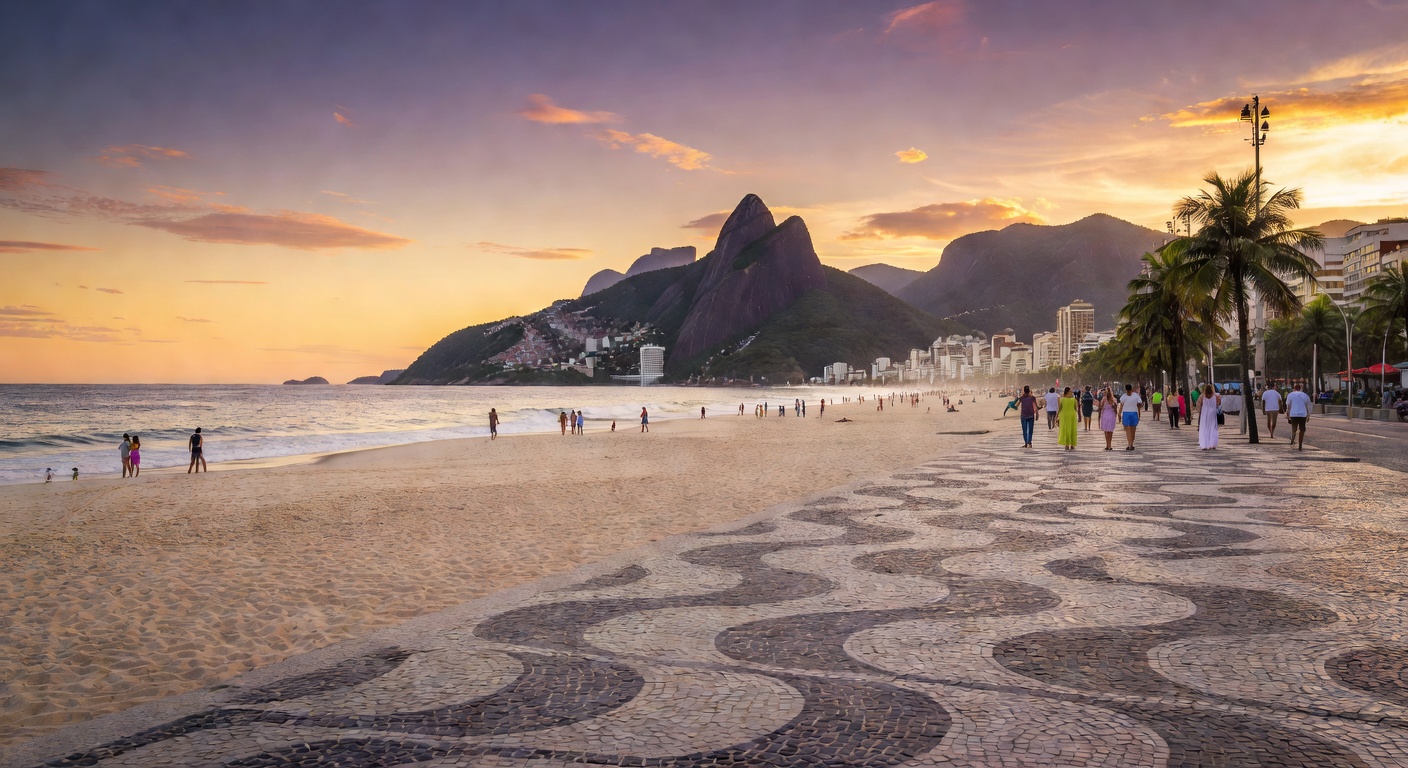
Regional Guide
Brazil
South America's largest country offers a unique terma (bathhouse) culture, vibrant nightlife, and a diverse scene that demands serious street-safety awareness alongside cultural immersion.
At a glance: Brazil
- Legal model
- Gray Market
- FCDO advisory
- Avoid travel
- HIV prevalence
- 0.8% adult →
- PrEP access
- Free
- Syphilis (sex workers)
- 8.4%
- Currency
- Brazilian Real (BRL)
- Language
- Portuguese; English limited
- Population
- 213.4M
- Capital
- Brasília
- Last verified
ART: 71% · WHO 2025
MSM: 61.5% · WHO 2016
Government travel advisories
Pre-travel medical — vaccines & medicines(10 · CDC)
- COVID-19Recommended
All eligible travelers should be up to date with their COVID-19 vaccines. Please see Your COVID-19 Vaccination for more information.
- Hepatitis ARecommended
Recommended for unvaccinated travelers one year old or older going to Brazil. Infants 6 to 11 months old should also be vaccinated against Hepatitis A.
- Hepatitis BRecommended
Recommended for unvaccinated travelers younger than 60 years old traveling to Brazil. Unvaccinated travelers 60 years and older may get vaccinated before traveling to Brazil.
- MalariaRecommended
CDC recommends that travelers going to certain areas of Brazil take prescription medicine to prevent malaria.
- MeaslesRecommended
Cases of measles are on the rise worldwide. Travelers are at risk of measles if they have not been fully vaccinated at least two weeks prior to departure, or have not had measles in the past, and trav…
- TyphoidRecommended
Recommended for most travelers, especially those staying with friends or relatives or visiting smaller cities or rural areas.
- ChikungunyaConsider
There is elevated chikungunya risk in Brazil. Chikungunya vaccination may be considered for people traveling or moving to this location if they are planning to stay for an extended period of time (for…
- RabiesConsider
Dogs infected with rabies are sometimes found in Brazil. Rabies is also commonly found in some terrestrial wildlife species and bats.
- Routine vaccinesRoutine
Make sure you are up-to-date on all routine vaccines before every trip.
- Yellow FeverNot recommended
CDC recommendations: Vaccine is recommended for travelers ≥9 months old going to the states of Acre, Amapá, Amazonas, Distrito Federal (including the capital city, Brasília), Esp&iacu…
General guidance from the CDC Travelers' Health page (2026-07-23) — not medical advice. See a travel clinic 4–6 weeks before departure. Malaria and some vaccines depend on your specific itinerary.
Common questions about Brazil
What people are actually searching for.
What is the 3 second rule in Brazil?
The so-called three-second rule is Brazilian dating folklore rather than any codified law: it suggests that holding eye contact with someone for around three seconds signals mutual interest and an invitation to approach. It reflects the country's generally direct, forward flirting culture, particularly on beaches like Copacabana and Ipanema and in the Augusta nightlife strip in Sao Paulo. It has no bearing on Brazilian statute. What the law does fix is age: the age of consent is 14, while the minimum age for any commercial sex work is 18. Regardless of local flirting norms, foreign visitors should note the UK FCDO warning and the Canadian and Australian advisories to exercise a high degree of caution, and treat any encounter with normal situational awareness.
Do Americans need $2000 to visit Brazil?
There is no rule requiring Americans to carry USD 2,000 to enter Brazil. Brazilian immigration can ask arriving visitors to show proof of onward travel and sufficient funds for their stay, but no specific dollar figure is set in the country brief or advisories. Practically, budgeting matters because the Brazilian Real (BRL) is volatile: typical companion pricing runs BRL 400 to 1,000 (roughly USD 80 to 200), and guidance for the country is to quote and pay in BRL rather than USD to avoid inflated conversions. Given the UK FCDO warning and the Canadian and Australian advisories to exercise a high degree of caution, carrying a mix of card and modest local cash, and using a hotel safe, is more relevant than hitting an arbitrary USD threshold.
Is there a redlight area in Brazil?
Brazil does not run formal, zoned red-light districts in the Dutch or German sense, but several cities have well-known adult zones. In Rio de Janeiro the key areas are Centro, home to established termas (sauna clubs), the Copacabana street and bar scene, and private apartments in Ipanema. Sao Paulo concentrates activity in Centro and Bela Vista termas and along the Augusta nightlife strip. Belo Horizonte has a strong termas tradition, and Bahia is known more for a massage culture. Selling sex has been legal in Brazil since 2002, but pimping, brothel-keeping and trafficking remain illegal, which is why many termas operate in a legal gray zone. The minimum age for sex work is 18.
Do and don'ts in Brazil?
Key dos and don'ts for adult travel in Brazil start with the law: selling sex is legal for adults 18 and over since 2002, but pimping, brothel-keeping and trafficking are criminal offenses, and the age of consent is 14 with a strict 18-plus rule for any paid encounter. Do favor established termas such as those in Rio's Centro and Sao Paulo's Bela Vista over street pickups, which are riskier. Do quote prices in Brazilian Real, expect BRL 400 to 1,000, and use your hotel safe as robbery is a real risk in Rio. Do learn basic Portuguese as English is limited, and save 190 for police, 192 medical and 193 fire. Don't ignore the UK FCDO warning or Canada and Australia's high-caution advisories.
Are there red light districts in Brazil?
Brazil has recognizable red-light zones rather than officially designated districts. In Rio de Janeiro the main areas are Centro, known for its termas, plus the Copacabana street and bar scene and Ipanema apartment scene. Sao Paulo's equivalents are the termas of Centro and Bela Vista and the Augusta nightlife strip. Belo Horizonte has a long-standing termas tradition, while Bahia leans toward a massage culture. Since 2002 selling sex has been legal in Brazil, but pimping, brothel-keeping and trafficking remain illegal, so many termas sit in a legal gray zone. Only adults 18 and over may work, even though the general age of consent is 14. Travelers should factor in the UK FCDO warning and Canadian and Australian advisories to exercise a high degree of caution.
Which country has the safest prostitution?
Brazil is rated medium risk on this guide and is not considered the safest jurisdiction globally for paid encounters. Selling sex has been legal here since 2002, but pimping, brothel-keeping and trafficking are illegal, leaving many termas in a gray zone rather than under formal regulation and health inspection. The UK FCDO issues a warning for Brazil and both Canada and Australia advise exercising a high degree of caution. Within the country, the safer option is generally an established terma, such as the well-known Centaurus or Bahamas names cited in the country brief, rather than street pickups, particularly in Rio de Janeiro where robbery is a real risk. Minimum age for sex work is 18; the general age of consent is 14.
Is it easy to meet girls in Brazil?
Meeting women in Brazil is generally considered straightforward by travelers, thanks to a direct social culture and dense nightlife in cities like Rio de Janeiro and Sao Paulo. Copacabana and Ipanema offer a beach, bar and street scene, while Sao Paulo's Augusta strip and Belo Horizonte's nightlife are also active. English is limited, so some Portuguese helps considerably. Visitors should distinguish social dating from commercial encounters: selling sex has been legal since 2002 for adults 18 and over, but pimping, brothel-keeping and trafficking are illegal, and the age of consent is 14. Safety-wise, Brazil is rated medium risk, the UK FCDO issues a warning, and Canada and Australia advise a high degree of caution; robbery is a specific concern in Rio, so use a hotel safe.
Which city in Brazil has the best sex tourism?
Rio de Janeiro is the city most associated with adult tourism in Brazil, combining Centro termas with the Copacabana street and bar scene and private Ipanema apartments. Sao Paulo runs a close second, with termas concentrated in Centro and Bela Vista and a large nightlife strip along Augusta. Belo Horizonte has a strong termas tradition and is often cited for value, while Bahia leans toward a massage culture. Typical pricing across these hubs is BRL 400 to 1,000 (USD 80 to 200), and travelers are advised to quote in Brazilian Real given currency volatility. Selling sex is legal for adults 18 and over since 2002, but pimping and brothel-keeping are not. Rio carries a real robbery risk, and the UK FCDO warns visitors.
Legal Model
Legal (Individual); Brothels Illegal
Risk Level
Medium–High
Currency
Brazilian Real (BRL / R$)
Language
Portuguese (NOT Spanish)
Tipping Custom
10% service charge standard
Emergency Number
190 (Police) / 192 (Medical)
Legal Framework
Brazil occupies an interesting legal position: individual sex work is legal for adults, but operating a brothel, pimping, or profiting from another person's sex work is technically illegal under Articles 228–230 of the Brazilian Penal Code. This creates a paradox where the activity itself is lawful but most organized venues exist in a legal gray zone.
In practice, the distinction works as follows:
- Individual sex work — Fully legal. Sex workers are recognized as a professional category in Brazil's official occupation classification system (CBO code 5198-05, "professional of sex"). They can register as autonomous workers, pay taxes, and access social benefits.
- Termas and boates — Technically operating illegally as brothels, but tolerated by authorities in most jurisdictions. These venues have operated openly for decades, pay taxes, and face little enforcement action. They classify themselves as "entertainment venues" or "private clubs" to maintain legal distance.
- Exploitation and trafficking — Actively prosecuted. Brazilian law draws a clear line between consensual adult sex work and exploitation. Child sexual exploitation carries penalties of 4–10 years imprisonment, with enhanced sentences for foreign perpetrators.
- Client purchasing — Not criminalized. There are no penalties for buying services from consenting adults.
Brazil's legislative environment has seen periodic attempts to either fully legalize and regulate the industry (the "Gabriela Leite" bill) or to adopt a Nordic-model criminalization of clients. Neither has progressed significantly, leaving the current ambiguous status quo intact. For visitors, the practical reality is that the industry operates openly, venues are well-established, and legal risk to clients is effectively zero for consensual adult interactions.
How It Works
Brazil's adult industry is built around several distinctive venue types, with the terma (bathhouse) being the country's signature contribution to the global landscape. The Brazilian approach combines the social warmth of Latin culture with a surprisingly organized commercial structure.
The market segments broadly into venue-based encounters (termas, boates, casas de massagem), independent escorts, and the freelancer scene (clubs, beach areas, and online). Each operates with different conventions, pricing models, and atmospheres. Brazil's vast geographic size means significant regional variation — the scene in Rio de Janeiro is very different from São Paulo's, and smaller cities have their own local dynamics.
A critical cultural note: Brazil speaks Portuguese, not Spanish. This is a common and irritating misconception for Brazilians. While some Spanish speakers can make themselves partially understood, the languages are distinct. English proficiency is generally low outside of international business contexts, making some Portuguese essential for navigating the scene, particularly outside major tourist areas.
Venue Types
Termas (Bathhouse-Brothels)
The terma is Brazil's most distinctive venue format and one of the most unique in the global industry. These are luxurious bathhouse-style establishments that combine the amenities of a high-end spa with adult services. The concept shares DNA with Germany's FKK clubs but with a distinctly Brazilian character.
A typical terma experience works as follows: You arrive and pay an entry fee (R$80–200, depending on the venue and day of the week). This grants access to the facility, which typically includes a swimming pool, sauna, steam room, bar, restaurant, and lounge areas. You receive a locker key and change into a robe or towel.
Providers work inside the terma, typically wearing lingerie, swimwear, or cocktail dresses depending on the venue's style. They circulate through the lounge and bar areas, and negotiations happen naturally through conversation. Once you've chosen a companion, you agree on the service and price, then retire to one of the venue's private suites. Sessions typically run 40–60 minutes.
Provider fees in termas are separate from the entry fee and are paid directly to the provider. Rates vary by provider, ranging from R$200–500 for a standard session at mid-range venues, with premium providers at upscale termas commanding R$400–800+. The total cost (entry + drinks + session) typically runs R$400–1,000 for an evening.
Termas range from budget to ultra-luxury. The most prestigious venues feature marble interiors, gourmet restaurants, and multiple floors of amenities. The atmosphere is generally relaxed, social, and upscale — more cocktail party than red-light district. Dress codes for entry vary (some require collared shirts, others are casual), and the clientele is typically a mix of Brazilian businessmen and international visitors.
Boates (Nightclubs)
Boates (from the French boîte de nuit) are nightclub-style venues where providers work. Unlike termas, the atmosphere is club-oriented: loud music, dance floors, stage shows, and a party vibe. Entry fees are lower (R$30–100), and the pace is faster. Providers at boates tend to be younger and more party-oriented, with prices generally lower than at termas (R$150–350 for sessions). Some boates operate as strip clubs with the option to take performers to private areas. Boates are most common in São Paulo and often operate into the early morning hours.
Casas de Massagem (Massage Houses)
Erotic massage houses are widespread in major Brazilian cities. These range from basic massage shops offering "happy endings" to more upscale establishments with full service. Prices range from R$100–300 for a massage with extras to R$200–500 for full-service establishments. These venues offer a more discreet entry point to the scene and are particularly common in São Paulo's commercial districts.
Independent Escorts (Acompanhantes)
The independent acompanhante (companion/escort) market is large and well-developed in Brazil. Providers advertise through dedicated directories, social media, and messaging apps. Rates range widely: budget independents charge R$150–300/hour, mid-range providers R$300–600/hour, and high-end escorts R$500–2,000+/hour. Outcall to hotels is common, though many providers also offer incall at private apartments. The independent market offers the greatest variety in terms of provider demographics, services, and availability.
Freelancers (Clubs and Street)
Freelancers operate at nightclubs, along beach promenades (particularly in Rio), and increasingly through dating apps. Rio's Copacabana and Lapa neighborhoods are historically known for freelancer activity. Prices are negotiable and generally lower than venue-based options (R$100–400 for short-time). This segment carries higher safety risk, particularly street-based encounters (see Safety section).
Notable Venues & Establishments
These are well-known establishments in the local scene. Venues open and close regularly — always verify current status before visiting.
Termas (Rio de Janeiro, Copacabana Area)
Multiple terma (bathhouse-brothel) establishments operate in the Copacabana area. Entry R$100–200 includes drinks/food/facilities. Providers negotiate separately. The most iconic Brazilian venue type.
Vila Mimosa (Rio de Janeiro)
Historic red-light area. Declining but still active. Budget option. More local, less tourist-oriented.
Rua Augusta (São Paulo)
Famous nightlife street. Mix of clubs, bars, and late-night establishments. São Paulo's entertainment spine.
Termas Centaurus Legacy Venues (Rio de Janeiro)
While the legendary Termas Centaurus closed years ago, several termas in the Copacabana and Botafogo areas have inherited its tradition of high-quality bathhouse experiences. These venues typically feature entry fees of R$100–200, which include access to pool, sauna, bar, and lounge facilities. On a busy evening, 30–60+ providers circulate through the venue. Session fees are negotiated directly with providers and range from R$250–500. The best Rio termas maintain marble interiors, quality food and drink service, and a sophisticated cocktail-party atmosphere. These are the safest and most organized venues in Rio and highly recommended for first-time visitors. Verified: March 2026.
Premium Termas (São Paulo)
São Paulo hosts Brazil's most prestigious termas, scattered across the city's commercial and upscale residential areas. The top-tier venues feature gourmet restaurant-quality dining, multiple floors of amenities, themed suites, and curated provider selections of 40–80+ women on weekends. Entry fees run R$150–200, with session fees ranging from R$300–600 for premium providers. These establishments operate discreetly behind unmarked or minimally signed doors, and many require a phone call for the exact address. The São Paulo terma experience is considered the pinnacle of Brazil's adult industry — a genuinely unique format that combines spa luxury with adult entertainment. Verified: March 2026.
Rio Nightclubs (Lapa District)
Several clubs in Rio's bohemian Lapa district serve as meeting points between tourists and freelance providers. Venues in the streets surrounding the Arcos da Lapa feature live samba, funk, and forró music. The commercial scene here is integrated into genuine nightlife — not everyone is a provider, and social skills are required to navigate. Cover charges run R$20–60. Provider fees are negotiated individually, typically R$150–350 for short-time. The Lapa scene is best on Friday and Saturday nights after 11 PM. Travel by Uber exclusively — the area has elevated street crime risk. Verified: March 2026.
Boate Strip (São Paulo, Rua Augusta)
The grittier section of Rua Augusta (on the Centro side, above Avenida Paulista) hosts a cluster of boates (nightclub-style adult venues) that have operated for decades. Entry fees range from R$30–80, and the atmosphere is club-oriented with stages, dance floors, and provider performances. Session fees run R$150–300, lower than termas. The quality is more variable than termas, but several well-established boates maintain good standards. These venues operate late — many don't start filling up until midnight and stay open until 5–6 AM. A good budget alternative to São Paulo's premium termas. Verified: March 2026.
Services & What's Included
Termas
- Entry fee (R$80–200): Includes locker, towel/robe, access to pool, sauna, steam room, bar, and sometimes buffet food and soft drinks. You can stay for several hours.
- Session fee (R$200–600, 40–60 min): Paid directly to the provider. Full service in a private suite. Condom use is standard. Negotiated through conversation in the lounge area.
- Drinks: Alcoholic drinks at the bar are separate (R$15–40 per drink). Some venues include soft drinks and beer in the entry fee.
- Total evening cost: R$400–1,200 depending on venue quality, drinks consumed, and provider choice.
- NOT included: Multiple sessions (each requires separate negotiation and payment), premium spirits, and tips (R$50–100 appreciated but not expected).
Boates (Nightclubs)
- Entry fee (R$30–100): Access to the club. Sometimes includes one drink.
- Session fee (R$150–350, 20–40 min): Full service in a private room within the venue. Shorter and more transactional than terma sessions.
- Lady drinks: Some boates use a commission drink system. R$20–50 per drink.
Independent Escorts (Acompanhantes)
- Session fee (R$200–800+, 1 hr): Full service at their apartment (incall) or your hotel (outcall). One or two rounds, oral, standard positions.
- Overnight (R$500–2,000+): Extended companionship. Often includes dinner or social time.
- Extras: Specific requests negotiated in advance via WhatsApp. Premium acts and fetish services command additional fees.
Pricing Guide
| Venue / Service | Price Range (BRL) | Price Range (USD) |
|---|---|---|
| Terma Entry | R$80 – R$200 | $16 – $40 |
| Terma Session | R$200 – R$800 | $40 – $160 |
| Terma Total Evening | R$400 – R$1,200 | $80 – $240 |
| Boate Session | R$150 – R$350 | $30 – $70 |
| Massage House | R$100 – R$500 | $20 – $100 |
| Independent Escort (/hr) | R$200 – R$800+ | $40 – $160+ |
| Freelancer (short) | R$100 – R$400 | $20 – $80 |
Prices in Brazil are moderate by international standards, and the real's exchange rate has been favorable for dollar and euro holders in recent years. Prices at premium termas in São Paulo are at the top of the range, while Belo Horizonte and other secondary cities offer significantly lower pricing. Carnival season (February/March) sees inflated prices across the board, sometimes doubling standard rates. Cash is strongly preferred in all transactions.
Key Cities & Areas
Rio de Janeiro
Rio is Brazil's most famous destination and has a scene as diverse as the city itself. The juxtaposition of stunning natural beauty, extreme poverty, and vibrant culture creates a complex environment.
Copacabana — The legendary beachfront neighborhood is ground zero for Rio's freelancer scene. The Copacabana Palace and surrounding hotels, as well as the beachside bars and promenade, have historically attracted providers. The scene here has diminished somewhat from its peak in the 2000s due to police crackdowns and gentrification, but Copacabana remains the most recognized area. Several termas operate in the greater Copacabana/Botafogo area, some of which have inherited the legacy of legendary venues that have since closed.
Centro / Lapa — Rio's city center and the bohemian Lapa neighborhood combine nightlife with the adult scene. The arches of Lapa (Arcos da Lapa) mark a nightlife district with clubs, bars, and samba venues. Freelancers are active in this area, particularly late at night. The area can be rough after dark — travel by taxi/Uber, not on foot.
Vila Mimosa — Rio's traditional zona (tolerance zone), located in a working-class area. This is a street of basic establishments offering budget services. Not for the faint-hearted and not recommended for tourists unfamiliar with the city. Prices are rock-bottom but so are safety standards.
Termas — Rio has several operating termas, some carrying on the tradition of the legendary venues of the past. These are scattered across the Zona Sul (South Zone) and Centro areas. The terma scene in Rio is smaller and less concentrated than in São Paulo but offers a characteristically Carioca (Rio native) experience — more relaxed, more social, more party-oriented.
São Paulo
South America's largest city has Brazil's biggest and most sophisticated adult industry, reflecting its status as the country's economic capital.
Termas — São Paulo is the undisputed terma capital of Brazil. The city hosts the country's most prestigious and luxurious bathhouse-brothels, some of which are genuinely impressive establishments with restaurant-quality dining, multiple floors, and dozens of providers on any given night. These are concentrated in commercial and upscale residential areas, operating discreetly behind unmarked doors.
Rua Augusta — The central street divides between an upscale section (Jardins side) and a grittier section (Centro side) that has historically been associated with adult entertainment. The area has gentrified significantly but retains a concentration of boates, massage houses, and nightlife venues where the commercial and social scenes overlap.
Independent scene — São Paulo's massive independent escort market is the largest in Brazil. The city's international business traveler population supports a sophisticated high-end segment, while the sheer size of the city means options at every price point.
Belo Horizonte
The capital of Minas Gerais state is known within Brazil for particularly attractive women (mineiras) and a vibrant but less tourist-oriented scene. Belo Horizonte has several well-regarded termas and a significant independent market, with prices generally 20–40% lower than Rio or São Paulo. The city receives fewer international visitors, meaning interactions are more authentic and less influenced by tourist dynamics, but Portuguese language ability becomes more important.
Other Cities
Fortaleza (Ceará) — A major beach destination in the northeast with a significant scene, particularly around the Praia de Iracema area. Popular with European tourists. Salvador (Bahia) — Known for its Afro-Brazilian culture and a lively if somewhat rough scene. Manaus (Amazonas) — A growing destination with a local scene but limited tourist infrastructure. Florianópolis (Santa Catarina) — An upscale beach city with a seasonal (summer) scene catering to wealthy Brazilians and Argentinians.
Scene Districts
Brazil's adult scene is heavily concentrated in specific neighborhoods within each city. The differences between districts — in terms of safety, pricing, venue types, and clientele — are dramatic. Choosing the right area is as important as choosing the right venue.
Rio de Janeiro
Copacabana — The iconic beachfront neighborhood is ground zero for Rio's adult scene. The famous termas (bathhouse-style venues) are concentrated in Copacabana, mostly on side streets within a few blocks of Avenida Atlântica. Termas operate like upscale clubs — you pay an entry fee, enjoy a bar and lounge area, and choose from available providers. They are the safest and most organized venues in Brazil. Beyond termas, Copacabana's nightlife strip along the beachfront avenue hosts freelancers at certain bars and clubs, particularly late at night (after 1 AM). The neighborhood also has massage parlors and smaller independent venues scattered through the side streets. Copacabana is tourist-friendly and relatively safe on the main avenues, though side streets can be risky after dark. Stay on well-lit, populated routes.
Lapa — Rio's bohemian nightlife district, centered under the iconic Arcos da Lapa (Lapa Arches). Lapa is famous for samba clubs, live music, and a vibrant street scene that peaks on Friday and Saturday nights. The area attracts a mix of tourists, locals, freelancers, and party-goers. The freelancer scene here is more social and nightlife-integrated than Copacabana's — you meet people at bars and clubs, and arrangements develop naturally. Lapa is rougher than Copacabana, with higher street crime risk. Go with a group, watch your belongings, and use ride-hailing apps to get in and out.
Centro — Rio's downtown business district has daytime establishments — primarily small bars and massage venues operating on side streets near Praça Tiradentes and the Saara market area. Centro is active during business hours Monday through Friday but empties out dangerously at night and on weekends. Daytime visits to specific establishments are feasible; do not wander the area after dark.
São Paulo
Rua Augusta / Jardins — São Paulo's most famous entertainment corridor runs along Rua Augusta from Avenida Paulista down toward the Jardins neighborhood. The upper portion (above Paulista) is grittier with budget clubs and establishments, while the lower section transitions into the upscale Jardins district. Independent escorts in the higher price ranges tend to operate incall apartments in Jardins and Itaim Bibi — two of São Paulo's wealthiest neighborhoods. The contrast between the two ends of Augusta is stark and reflects the city's extreme inequality.
Liberdade — São Paulo's Japanese-Brazilian neighborhood has a concentration of Asian-influenced massage parlors and smaller venues scattered among the neighborhood's restaurants and shops. The area caters to a specific clientele and offers a different atmosphere from the rest of the city's scene. Liberdade is safe and easily accessible via the Liberdade metro station.
Pinheiros / Vila Madalena — São Paulo's bohemian nightlife neighborhoods have a freelancer scene similar to Rio's Lapa — integrated into mainstream bars and clubs, social rather than transactional. These are upper-middle-class neighborhoods with a progressive, arts-oriented culture. Safety is good by SP standards, but standard precautions apply after dark.
Other Cities
Fortaleza has a concentrated scene around Praia de Iracema (Iracema Beach) catering heavily to European tourists. Salvador has an active but rougher scene in the Pelourinho historic district and Barra beachfront. In all Brazilian cities, the pattern holds: beachfront neighborhoods are the most tourist-accessible, while downtown districts offer lower prices at higher risk.
Finding Providers
- Escort directories — Multiple Brazilian-specific directories list independent providers with photos, prices, services, and contact information. These are the most reliable online channel.
- Terma websites — Most established termas maintain websites or social media pages with provider galleries, operating hours, pricing, and directions.
- Review forums — Both Portuguese-language and international English-language forums have extensive Brazil sections with venue reviews, provider reports, and current intelligence. These are invaluable for identifying quality venues and providers.
- Social media and messaging apps — Messaging apps popular in Brazil are widely used by providers for advertising and booking. Many providers post regular updates, photos, and availability.
- Dating apps — Mainstream dating apps have a significant presence in Brazil. Some users are providing commercial services, though this isn't always explicitly stated in profiles.
Recommended Platforms & Apps
- Fatal Model — Brazil's largest escort directory. Comprehensive profiles with verification. The go-to platform.
- GP Guia — Escort guide and directory for Brazil.
- GPForums — Brazilian review community. Portuguese-language. Detailed reviews and recommendations.
- WhatsApp — Essential for communication after initial contact through directories.
Cultural Etiquette
- Portuguese, not Spanish — This cannot be overstated. Speaking Spanish in Brazil is considered ignorant at best and insulting at worst. Learn basic Portuguese greetings and phrases. Brazilians appreciate any effort to speak their language, even if poorly.
- Physical warmth — Brazilian culture is physically affectionate. Greetings involve cheek kisses (one or two, depending on the region), and physical contact during conversation is normal. This warmth extends into commercial interactions, which often feel more personal and girlfriend-like than in more transactional markets.
- The "jeitinho brasileiro" — The Brazilian "way" or "knack" is a cultural concept of creative problem-solving, flexibility, and finding ways around rules. In the adult industry, this means that many situations are negotiable, rules are guidelines, and personal charm can open doors.
- Racial sensitivity — Brazil is one of the world's most racially diverse countries. Treat all providers with equal respect regardless of appearance. Racial fetishization, while it exists in the market, should be navigated with awareness and sensitivity.
- Tipping — In termas, tipping your provider R$50–100 beyond the agreed fee is appreciated for good service. Bar and restaurant tips are typically 10% (often included in the bill as "gorjeta"). Tipping is not mandatory in the adult industry but is a positive gesture.
- Hygiene — Brazilians are famously hygiene-conscious, showering multiple times daily. Arriving clean and well-groomed is expected. Most termas and independent providers will ask you to shower before the session.
- Music and dance — Showing genuine interest in Brazilian music (samba, funk, forró) and attempting to dance goes very far socially. Brazil is a culture where rhythm and movement are deeply valued.
- Don't flash wealth — Displaying expensive watches, jewelry, or large amounts of cash makes you a target. Dress modestly, leave valuables in the hotel safe, and travel light.
Safety Considerations
Street Safety Warning
Brazil has significant violent crime rates, particularly in major cities. Armed robbery, mugging, and in extreme cases, express kidnapping are real risks. The adult entertainment scene can increase your exposure to these risks, particularly when traveling at night, carrying cash, or visiting unfamiliar areas. The precautions in this section are not optional — they are essential.
- Robbery prevention — Carry only what you need for the evening. Leave your passport (carry a photocopy), primary bank cards, and valuables in the hotel safe. Carry a separate "sacrifice" wallet with a small amount of cash and an expired credit card. If mugged, hand it over immediately without resistance. Lives are lost over petty theft in Brazil.
- Transportation — Use ride-hailing apps exclusively after dark. Never walk in unfamiliar areas at night, even for short distances. Even in "safe" neighborhoods like Copacabana, after-dark muggings occur on side streets. Take Uber or 99 (the Brazilian ride-hailing app) door to door.
- Favela awareness — Favelas (informal communities/slums) are woven throughout Brazilian cities, sometimes directly adjacent to upscale neighborhoods. Never enter a favela without a local guide, regardless of what anyone tells you. Some providers live in or near favelas — if invited to an incall in an area you don't recognize, suggest meeting at a hotel or terma instead.
- Phone security — Smartphone theft is epidemic in Brazilian cities. Don't use your phone on the street. Don't have it visible in your hand while walking. Consider a cheap secondary phone for going out. If using ride-hailing apps, order the car from inside a venue and go outside only when it arrives.
- Drink spiking — Less common than in Colombia but present, particularly in the freelancer scene. Watch your drink, particularly in clubs and bars frequented by freelancers.
- Venue safety — Established termas are the safest option. They have security, cameras, and vetted providers. The further you move from established venues toward freelancers and street encounters, the higher the risk profile.
- Beach safety — Rio's beaches are not safe after dark. The Copacabana promenade, while atmospheric, is a mugging hotspot at night. If meeting someone at the beach area, use a car to and from the venue.
- Police — Brazilian police can be unpredictable. If stopped, be polite and cooperative. Carry identification (a photocopy of your passport is sufficient). Corruption exists — if an officer suggests a "fine" payable immediately, use your judgment, but never argue or resist.
- Health — Brazil has both a public healthcare system (SUS) and excellent private hospitals. Travel insurance is strongly recommended. Yellow fever vaccination is recommended for certain regions. Dengue fever is a risk, particularly in the wet season — use mosquito repellent. STI prevention is essential; condom use is standard practice in venues.
Useful Phrases
| English | Brazilian Portuguese | Pronunciation |
|---|---|---|
| Hi / Hello | Oi / Olá | OY / oh-LAH |
| How are you? / Everything good? | Tudo bem? | TOO-doo bayn? |
| Thank you (male speaker) | Obrigado | oh-bree-GAH-doo |
| Please | Por favor | por fah-VOR |
| How much? | Quanto custa? | KWAHN-too KOOS-tah |
| Beautiful | Linda / Bonita | LEEN-dah / boh-NEE-tah |
| Yes / No | Sim / Não | seen / now(n) |
| I don't speak Portuguese | Não falo português | now(n) FAH-loo por-too-GAYS |
| Where is...? | Onde fica...? | OHN-jee FEE-kah |
| I like you | Gostei de você | gos-TAY jee voh-SAY |
| The bill, please | A conta, por favor | ah KOHN-tah por fah-VOR |
| Help! | Socorro! | soh-KOH-hoo |
| Let's go | Vamos | VAH-moosh |
| Cool / Great | Legal / Massa | leh-GOW / MAH-sah |
Brazilian Portuguese sounds very different from European Portuguese. The Brazilian version is more melodic, slower, and uses more open vowels. Key pronunciation note: the letter "r" at the beginning of words or when doubled (rr) is pronounced like an English "h" — so "Rio" sounds more like "HEE-oo." English proficiency is limited even in major cities and particularly in the adult industry. Some Portuguese is strongly recommended.
Travel Logistics
Visa & Entry
US citizens have visa-free access to Brazil for up to 90 days (since 2019 rule change, though policy has fluctuated — verify current requirements before travel). EU, Canadian, and Australian citizens also have visa-free access for tourism. Brazil requires a passport valid for at least six months beyond the entry date. You may be asked to show proof of onward travel and accommodation.
Best Time to Visit
Carnival (February/March, dates vary) is Brazil's peak tourist season and transforms the scene entirely. During Carnival, prices inflate dramatically, the atmosphere is chaotic and festive, and the lines between social and commercial interactions blur. It's an incredible cultural experience but not ideal for a focused adult entertainment trip. The weeks before and after Carnival are quieter and better value.
Rio's best weather is from December through March (summer), but this is also the hottest and most humid period. São Paulo has milder weather year-round. The off-season (May–September) offers the best value with lower prices and fewer tourists, though weather in Rio can be cooler and rainier.
Transport
Domestic flights are the best way to cover Brazil's enormous distances (São Paulo to Rio is a 1-hour flight or 6-hour drive). Within cities, use Uber or 99 (the Brazilian ride-hailing app) exclusively for nighttime transport. Taxis can be used during the day but are less reliable and more expensive. The metro systems in São Paulo and Rio are efficient for daytime travel but should be avoided late at night.
Hotels
International hotel chains and quality local hotels are widely available. For Rio, Copacabana and Ipanema offer the best location for beach and nightlife access. For São Paulo, Jardins, Itaim Bibi, and Vila Olímpia are upscale neighborhoods with good access to termas and nightlife. Most Brazilian hotels do not restrict overnight guests, but confirm the policy if booking a smaller or boutique property. Budget hotels start from R$100/night; quality mid-range options run R$250–500/night.
Money
Cash is essential for all adult industry transactions. ATMs (caixas eletrônicos) are available at banks and shopping malls — avoid standalone ATMs on the street due to skimming and robbery risk. Use ATMs during business hours inside bank branches for maximum safety. The real has been relatively weak against the dollar and euro, making Brazil affordable for international visitors. Notify your bank before travel to avoid card blocks. Major credit cards are accepted in hotels, restaurants, and some upscale venues, but bring enough cash for the evening's activities. A typical terma night requires R$500–1,200 in cash.
Essential Resources
Named Venues — Extended Index
Rio de Janeiro — Centro termas (sauna clubs)
- Centaurus (Ipanema) — Rio's most famous termas; widely cited as Latin America's premier sauna-club. Entry R$80–120; sessions R$300–800.
- Termas Solarium (Centro) — Long-running mid-tier termas.
- 4×4 Termas (Tijuca) — Mid-market option.
- Termas Monte Carlo — Centro-area termas.
- Termas Bahamas — Larger termas with multiple Rio locations.
- Termas Galeão — Near international airport.
- Termas Cesar's (Ipanema/Copa) — Smaller upscale.
São Paulo — Bela Vista & Centro termas
- Bahamas Club (Bela Vista) — Among São Paulo's biggest; multiple floors.
- Termas Vesúvio — Long-running mid-tier.
- Termas Lido — Established bigger venue.
- Termas Dom Quixote — Mid-market Bela Vista.
- Termas Bahamas (Sé) — Centro-area branch of the chain.
- Termas Imperial — Smaller upscale option.
Rio — Copacabana / Ipanema beach scene
- Mab's (Copacabana, Av. Atlântica) — Long-running upstairs club; freelancer-heavy.
- Help (former) — Iconic Rio club closed years ago; legacy reference only.
- Balcony Bar (Copacabana) — Rooftop pickup bar.
- Lapa nightlife — Less explicit but pickup-friendly samba clubs.
- Praia de Copacabana / Ipanema — Daytime/early evening freelance scene; verify all encounters.
Belo Horizonte, Curitiba, Porto Alegre, Brasília
- Termas Dom (Belo Horizonte) — BH's largest termas.
- Termas Bahamas BH — Chain branch.
- Curitiba termas in Centro and Batel — multiple mid-sized venues.
- Porto Alegre — Cidade Baixa area has small termas + escort culture.
- Brasília — Setor Comercial Sul (SCS) historic adult-services area; thinner market.
Florianópolis (Floripa)
- Several termas in Centro and around Universidade Federal de Santa Catarina area.
- Beach-bar circuit at Praia dos Ingleses, Lagoa da Conceição — pickup culture, not termas.
Manaus (Amazon)
- Centro de Manaus historic adult area — small termas; check current operators.
- Boate clubs on Av. Djalma Batista.
Northeast (Fortaleza, Recife, Salvador)
Detailed on individual city pages: [Fortaleza](/regions/fortaleza), [Recife](/regions/recife), [Salvador](/regions/salvador).