Regional Guide
Uruguay
South America's most progressive country has one of the continent's most structured and regulated sex work frameworks, with mandatory health registration, licensed venues, and a generally tolerant social attitude.
At a glance: Uruguay
- Legal model
- Legal & Regulated
- FCDO advisory
- Normal
- HIV prevalence
- 0.6% adult →
- PrEP access
- Free
- Syphilis (sex workers)
- 8%
- Last verified
ART: 81% · WHO 2025
MSM: 21% · WHO 2016
Government travel advisories
Pre-travel medical — vaccines & medicines(8 · CDC)
- COVID-19Recommended
All eligible travelers should be up to date with their COVID-19 vaccines. Please see Your COVID-19 Vaccination for more information.
- Hepatitis ARecommended
Recommended for unvaccinated travelers one year old or older going to Uruguay. Infants 6 to 11 months old should also be vaccinated against Hepatitis A.
- Hepatitis BRecommended
Recommended for unvaccinated travelers of all ages traveling to Uruguay.
- MeaslesRecommended
Cases of measles are on the rise worldwide. Travelers are at risk of measles if they have not been fully vaccinated at least two weeks prior to departure, or have not had measles in the past, and trav…
- TyphoidRecommended
Recommended for most travelers, especially those staying with friends or relatives or visiting smaller cities or rural areas.
- RabiesConsider
Dogs infected with rabies are not commonly found in Uruguay. Rabies is present in some terrestrial wildlife species.
- Routine vaccinesRoutine
Make sure you are up-to-date on all routine vaccines before every trip.
- ChikungunyaNot recommended
All travelers should take steps to prevent mosquito bites. Chikungunya vaccination is generally not recommended.
General guidance from the CDC Travelers' Health page (2026-07-23) — not medical advice. See a travel clinic 4–6 weeks before departure. Malaria and some vaccines depend on your specific itinerary.
Common questions about uruguay
What people are actually searching for.
Is paying for sex legal in Uruguay?
Yes. Uruguay legalized and regulated sex work in 2002 under Law 17.515, recognizing it as legitimate labor, and registered providers must obtain a health card (carné de salud) from the Ministry of Public Health certifying regular STI testing. Licensed venues must also meet municipal licensing, health, and safety standards and allow inspections. For clients, purchasing services from registered providers in licensed venues carries essentially zero legal risk, making Uruguay one of the lowest-risk environments in the Americas for this activity.
What is a "whiskería" and how does a visit typically work?
A whiskería is Uruguay's signature licensed venue type - a bar or club, named for "whiskey bar" - where sex work takes place openly. Visitors enter, order drinks, and meet providers on-site; once a connection is made, price and terms are negotiated directly with the provider rather than venue staff, and the venue separately charges a room fee for a private room. Sessions are typically timed at 30 minutes to an hour, and no advance booking, screening, or online communication is required, making it the most accessible option for first-time visitors.
Where in Uruguay is the sex work market concentrated?
The market is concentrated in Montevideo, which contains the majority of licensed venues and providers. There is also a significant seasonal market in Punta del Este during the summer months of December through February. Overall the market is relatively small, reflecting Uruguay's population of roughly 3.5 million.
How do independent escorts differ from whiskería providers?
Independent escorts advertise through escort directories, social media, and messaging apps, and offer incall (at their apartment) or outcall (to a hotel) appointments arranged in advance. Rates are generally higher than whiskería encounters, and the experience is typically more polished and private, though some identity verification may be requested even though screening is less rigorous than in North America. This segment has grown rapidly with smartphone adoption, and the balance of the market has shifted toward it in recent years.
What are the HIV and STI risks for travelers in Uruguay?
Uruguay's adult HIV prevalence is estimated at 0.5%, with 78% of those on antiretroviral therapy (WHO 2024), and PrEP is available free of charge. Among sex workers, syphilis prevalence is 8%, rising to 21% among MSM (WHO 2016). Registered providers must undergo periodic mandatory STI screening as a condition of their health-card registration, and the guide currently indexes one clinic in the country.
What practical basics (emergency number, currency, tipping) should a traveler know?
Uruguay's emergency number is 911, the currency is the Uruguayan Peso (UYU/$U), and the primary language is Spanish (Rioplatense). Tipping around 10% is a customary and appreciated practice rather than mandatory. The country's overall risk level is rated Low, though the US State Department places it at Level 2 (Exercise Increased Caution) as of 2026-07-28.
Legal Model
Regulated (since 2002)
Risk Level
Low
Currency
Uruguayan Peso (UYU / $U)
Language
Spanish (Rioplatense)
Tipping Custom
Appreciated (10%)
Emergency Number
911
Legal Framework
Uruguay legalized and regulated sex work in 2002 under Law 17.515, creating one of Latin America's most comprehensive and progressive frameworks for the industry. The law recognizes sex work as legitimate labor and establishes a system of registration, health monitoring, and venue licensing that aims to protect both providers and public health.
Key provisions of Uruguay's regulatory framework:
- Registration requirement — Sex workers must register with the Ministry of Public Health (Ministerio de Salud Pública) and obtain a health card (carné de salud) that certifies regular STI testing and health check-ups
- Mandatory health checks — Registered providers undergo periodic medical examinations, including STI screening, as a condition of their registration
- Venue licensing — Establishments offering sexual services (whiskerías) must obtain municipal licenses, meet health and safety standards, and allow health inspections
- Age restriction — Strictly limited to adults 18 and older. Uruguay actively prosecutes child exploitation
- Pimping prohibition — Third parties profiting from exploitation of sex workers face criminal penalties. However, venue owners who provide the space and charge rent or commissions operate within legal boundaries as long as conditions are not exploitative
- Anti-trafficking — Uruguay has anti-trafficking laws and cooperates with international enforcement, though the small size of the market means trafficking cases are relatively uncommon compared to larger regional markets
Uruguay's approach reflects the country's broader progressive social philosophy. This is the nation that was first in Latin America to legalize cannabis (2013), first to legalize same-sex marriage (2013), and has maintained a strong separation of church and state since the early 20th century. The sex work framework is part of a consistent pattern of pragmatic, rights-based social policy.
In practice, enforcement is generally consistent. Registered whiskerías operate openly and are subject to periodic health inspections. The unregistered segment (independent providers without health cards, unlicensed venues) exists but is smaller than in most other Latin American countries. Police attention focuses on trafficking, underage involvement, and unlicensed venues rather than individual transactions between consenting adults.
Regulatory Context
Uruguay's regulated model means that purchasing services from registered providers in licensed venues carries essentially zero legal risk for clients. The legal framework is designed to protect providers through health monitoring and labor rights, not to criminalize clients. This makes Uruguay one of the lowest-risk environments in the Americas for engaging with the adult industry.
How It Works
Uruguay's sex work market is relatively small, reflecting the country's population of approximately 3.5 million people. The industry is concentrated in Montevideo, which contains the majority of venues and providers, with a significant seasonal market in Punta del Este during the summer months (December–February).
The market operates through two primary channels: licensed whiskerías (the traditional venue model) and an increasingly active independent online market. The balance has shifted toward online independents in recent years, mirroring global trends, but whiskerías remain a significant and culturally established part of the Uruguayan scene.
The whiskería model is straightforward: you enter the venue (typically a bar or club setting), purchase drinks, interact with available providers, negotiate terms and price, and proceed to a private room within the establishment. The venue charges a room fee, and the provider's payment is negotiated separately. This is the most accessible option for first-time visitors — no advance booking, screening, or online communication required.
The independent market has grown rapidly with smartphone adoption. Providers advertise on escort directories, social media, and messaging apps, offering incall (at their apartment) or outcall (to your hotel) services. Rates are generally higher than whiskería encounters but the experience is typically more polished and private. Screening requirements are less rigorous than in North America but some verification of identity may be requested.
Uruguay's small, tight-knit community means that reputation matters. Word spreads quickly about problematic clients or providers. Treating everyone with respect and following established norms is both ethically correct and practically beneficial.
Venue Types
Whiskerías (Licensed Venues)
Whiskerías are Uruguay's signature venue type — licensed bars and clubs where sex work takes place openly. The name derives from "whiskey bar" and reflects the venue's dual function as a drinking establishment and a place to arrange paid encounters. Whiskerías vary widely in quality: some are basic, dimly lit bars with a few providers and simple private rooms, while others are larger, better-appointed establishments with more comfortable environments.
The typical experience: you enter, sit at the bar or a table, and order drinks. Providers are present in the venue and may approach you, or you can express interest. Once a connection is made, terms are discussed directly with the provider (not the venue). The venue charges a room fee (separate from the provider's rate) for use of a private room. Sessions are typically timed, with 30 minutes to one hour being standard. Whiskerías are concentrated in Montevideo, with a handful in other cities.
Independent Escorts
The fastest-growing segment of Uruguay's market. Independent providers advertise online through escort directories, personal social media accounts, and messaging apps. They operate from private apartments (incall) or travel to the client's hotel (outcall). The independent market skews younger and more upscale than the whiskería scene. Some registered providers work both independently and in whiskerías, depending on the day and demand.
Massage Parlors
Erotic massage establishments exist in Montevideo, offering services ranging from sensual massage with a "happy ending" to more comprehensive encounters. These operate in a somewhat gray area — they may or may not be fully compliant with the whiskería licensing requirements. Pricing is generally mid-range.
Private Apartments
Some providers or small groups of providers share private apartments that function as unofficial incall locations. These are advertised online and offer a more intimate, private setting than whiskerías. The quality varies from basic to quite comfortable, and these locations are typically found through online directories or messaging apps.
Street Work
Some street-level sex work exists in designated areas of Montevideo, particularly historically in the Ciudad Vieja (Old City) area. This segment has diminished as the market has moved online and into licensed venues. Street work carries higher risk and is generally not recommended for visitors. If encountered, exercise heightened caution regarding both personal safety and the potential for engagement with unlicensed or underage individuals.
Pricing Guide
| Venue / Service | Price (UYU) | Price (USD) | Notes |
|---|---|---|---|
| Whiskería (session) | $U 2,000 – 5,000 | $50 – $125 | 30–60 min; room fee separate ($U 500–1,000) |
| Independent (1 hr) | $U 3,000 – 6,000 | $75 – $150 | Standard rate in Montevideo |
| Independent (premium) | $U 6,000 – 10,000 | $150 – $250 | Higher-end providers, longer sessions |
| Punta del Este (summer) | $U 8,000 – 20,000+ | $200 – $500+ | Dec–Feb peak prices; resort premium |
| Massage Parlor | $U 2,000 – 4,000 | $50 – $100 | Varies by service level |
| Private Apartment | $U 2,500 – 5,000 | $63 – $125 | Mid-range; advance booking typical |
| Overnight | $U 8,000 – 16,000+ | $200 – $400+ | Not universally offered; negotiate in advance |
Last verified: March 2026. Exchange rate approximately $U 40 = $1 USD. USD is also widely accepted in tourist areas, particularly Punta del Este.
Uruguay's pricing is moderate by regional standards — lower than Argentina's major cities (especially given Argentina's economic instability) and comparable to Brazil's mid-range markets. The Punta del Este premium is significant during the summer season, when the resort town fills with wealthy Argentine, Brazilian, and international visitors, driving prices up by 100–200% compared to Montevideo. Outside of summer, Punta del Este's scene is minimal.
Cash is the standard payment method across all venue types. Uruguayan pesos are preferred, but USD is accepted in many tourist-oriented contexts (particularly in Punta del Este). ATMs are widely available in Montevideo and Punta del Este. Some independent providers may accept digital payment methods, but cash remains king for in-person transactions.
Key Cities & Areas
Montevideo
Uruguay's capital and largest city (population ~1.8 million) is the primary market, containing the vast majority of the country's whiskerías and independent providers. The scene is well-established, relatively discreet, and integrated into the city's broader nightlife culture.
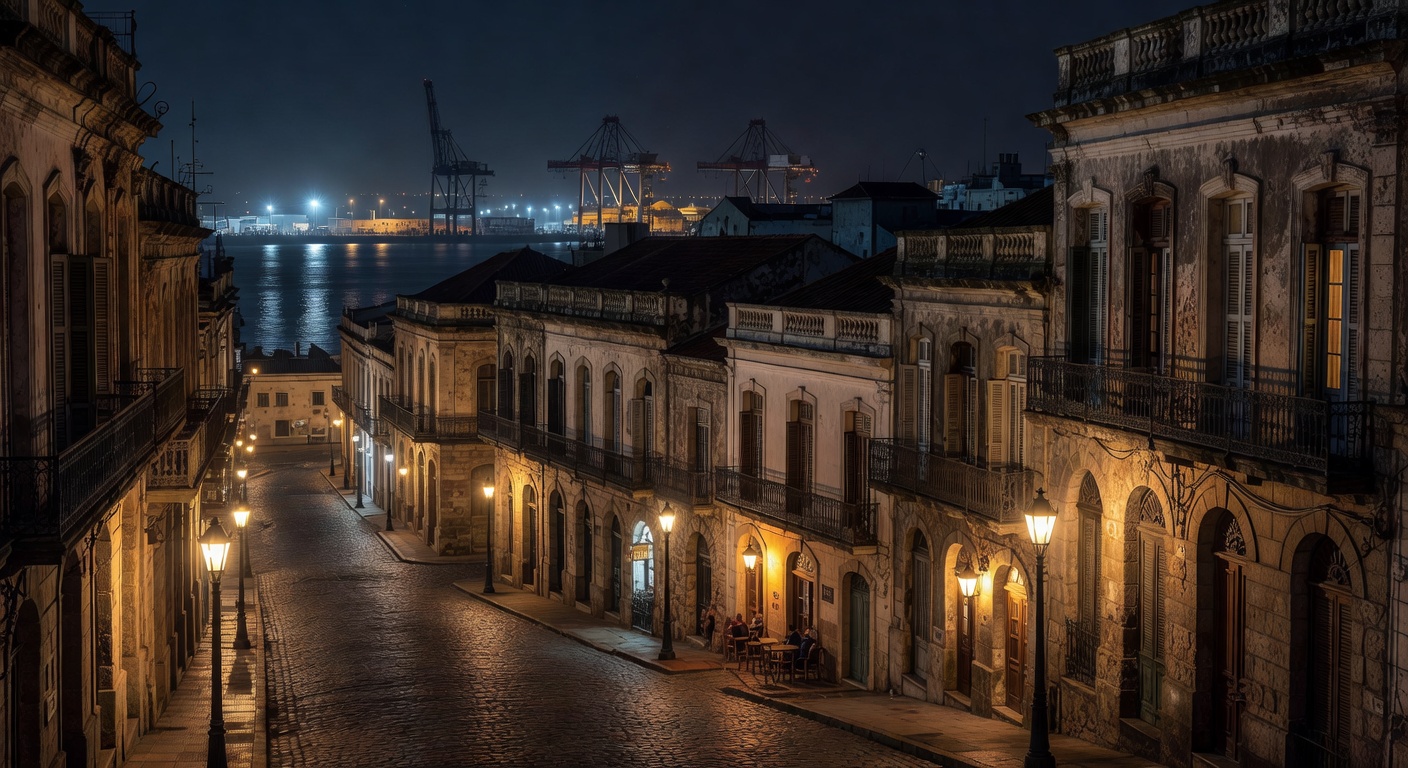
Ciudad Vieja (Old City) — Montevideo's historic district has been historically associated with the sex work industry, though significant gentrification over the past decade has reduced the visible street-level scene. Some whiskerías continue to operate in and around the old city. The neighborhood has become a trendy nightlife area with restaurants, bars, and cultural venues, and the adult scene now coexists with mainstream entertainment.
Centro (Downtown) — Several whiskerías and massage parlors operate in Montevideo's commercial center. The area around Avenida 18 de Julio and side streets hosts establishments that are easy to identify but maintain a low-key exterior. The downtown area is busy during the day but quiets significantly at night outside of the main entertainment corridors.
Pocitos / Punta Carretas — The upscale beachfront neighborhoods where many independent escorts maintain incall apartments. These residential areas offer discretion and comfort. Providers operating in Pocitos tend to be at the higher end of the market.
Cordón / Parque Rodó — A more bohemian, university-adjacent neighborhood with active nightlife. Some independent providers operate here, and the area's bars and clubs serve as social meeting points where connections can be made organically.
Punta del Este
Uruguay's premier resort destination, located 130 km east of Montevideo on the Atlantic coast. Punta del Este transforms during the summer season (December–February) from a quiet coastal town into South America's most exclusive beach destination, attracting wealthy visitors from Argentina, Brazil, and beyond.
During summer, the adult scene expands dramatically. Independent providers from Montevideo (and from Argentina and Brazil) relocate to Punta del Este for the season. Upscale nightclubs, beach clubs, and casino venues become meeting points. The clientele is affluent, and pricing reflects this — Punta del Este in January can rival European prices. The scene caters primarily to a wealthy Argentine and Brazilian clientele, with international visitors as a secondary market.
Outside of summer, Punta del Este reverts to a quiet town with virtually no adult scene. The off-season (March–November) is not worth visiting specifically for this purpose.
Colonia del Sacramento
The charming UNESCO-listed colonial town across the Río de la Plata from Buenos Aires. Colonia attracts day-trippers and weekend visitors from Argentina but has a minimal adult scene. A few very discreet establishments exist, but this is not a destination for adult entertainment. Its primary relevance is as a transit point — Argentine visitors sometimes cross to Uruguay for reasons including the different legal framework.
Salto
Uruguay's second-largest city, on the Argentine border in the northwest. Salto has a small local scene with a few whiskerías serving the local and cross-border market. Not a tourist destination for adult entertainment, but worth mentioning for completeness. The scene here is locally oriented and much less developed than Montevideo.
Finding Providers
- Escort directories — Several Uruguayan and regional escort sites list independent providers with photos, contact information, and rates. These are the primary channel for the growing independent market.
- Whiskería visits — The most direct method: simply visit a licensed whiskería and choose from available providers on-site. No advance research required, though checking current reviews helps identify the better establishments.
- Social media and messaging apps — Messaging platforms are widely used for communication with independent providers. Some advertise through social media stories and profiles.
- Forums and review sites — International hobbyist forums with Uruguay sections provide venue reviews, provider recommendations, and current pricing intelligence. These are particularly useful for identifying which whiskerías are currently the best options.
- Nightlife — Montevideo's nightlife scene in Ciudad Vieja, Pocitos, and Cordón neighborhoods includes venues where encounters can develop organically. Not all women in bars are providers, and social awareness is needed to navigate these spaces respectfully.
- Hotel concierge — In Punta del Este during summer season, some hotel staff may be able to provide discreet recommendations. This is more common at boutique and mid-range hotels than at international chains.
Cultural Etiquette
- Mate culture — Uruguay is defined by mate (the herbal tea drink consumed constantly from a shared gourd). Being offered mate is a sign of friendship and trust. If a provider or local offers you mate, accepting is a strong social gesture. Declining is understood but less warm.
- Rioplatense warmth — Uruguayans share the warm, physical social style of their Argentine neighbors. Greet with a kiss on the cheek (one kiss, unlike the two-kiss Brazilian style). Physical affection is natural and does not necessarily signal romantic or commercial interest.
- Relaxed pace — Uruguay moves slowly. Don't rush interactions, negotiations, or encounters. The culture values quality of interaction over efficiency. This extends to the adult industry — encounters are generally less transactional and more social than in highly commercialized markets.
- Respect the registration system — If visiting a whiskería, it is reasonable to confirm that the establishment is licensed. Registered providers with health cards represent a system designed to protect everyone. Supporting the regulated system rather than the informal market is both safer and more ethical.
- Tipping — Tips of 10% are appreciated in whiskerías and by independent providers. In Punta del Este during summer, tipping norms are influenced by the wealthy clientele and may be higher.
- Discretion — Despite Uruguay's progressive laws, the social attitude is discreet rather than flagrant. The industry operates openly but without overt advertising or public display. Maintain this social contract — be discreet in public, respect providers' privacy, and avoid behavior that attracts unnecessary attention.
- Voseo — Uruguayan Spanish uses vos instead of tú for the informal "you" (identical to Argentine usage). Using vos shows cultural awareness and is appreciated. Using tú is understood but marks you as a foreigner immediately.
- Football culture — Uruguay is obsessed with football (soccer). Knowing the basics (Nacional vs. Peñarol rivalry, the legendary 1950 World Cup victory) provides excellent conversation material and social bonding opportunities.
Safety Considerations
Low Risk Environment
Uruguay is generally one of the safest countries in South America for visitors. Violent crime rates are lower than in neighboring Brazil and Argentina, and the regulated framework for sex work means that encounters in licensed venues carry minimal legal and personal risk. Standard travel precautions apply, but Uruguay does not require the heightened security awareness needed in Colombia, Brazil, or many other regional markets.
- Petty crime — Pickpocketing and minor theft occur in tourist areas, particularly in Montevideo's Ciudad Vieja and around the port area. Standard precautions: don't flash valuables, use hotel safes for documents and excess cash, be aware of your surroundings in crowded areas.
- Nighttime safety — Montevideo is generally safe at night in the main neighborhoods (Pocitos, Punta Carretas, Ciudad Vieja's bar areas). Exercise more caution in the Centro district and areas around bus terminals late at night. Use ride-hailing apps for nighttime transportation.
- Health — Uruguay's public healthcare is competent, and private healthcare in Montevideo is good. The registered provider system with mandatory health checks provides an additional layer of protection. Condom use is standard and expected. STI testing is available at clinics in Montevideo. Carry travel health insurance.
- Legal protection — The regulated framework means that clients engaging with licensed venues and registered providers have legal protections. If an issue arises (theft, assault, fraud), you can report to police without fear of being prosecuted for the underlying transaction. This is a significant advantage over criminalized or gray-area markets.
- Scams — Scams are relatively uncommon in Uruguay's adult scene compared to other Latin American markets. The most common issues are mild overcharging in whiskerías (inflated drink tabs) and occasional no-shows from online-booked independent providers. Neither represents a serious safety concern.
- Cannabis — Uruguay legalized recreational cannabis in 2013. However, legal purchase from pharmacies is limited to Uruguayan residents only. Tourists cannot legally purchase cannabis. Using cannabis obtained through informal channels is technically illegal for non-residents and could complicate any encounters with police.
- River crossing from Argentina — Many visitors combine Buenos Aires with Montevideo or Colonia del Sacramento via ferry across the Río de la Plata. Buquebus and Colonia Express operate regular crossings. If crossing from Argentina, be aware that your passport will be stamped on both exit and entry — bringing a companion across the border adds significant complications and is strongly discouraged.
Useful Phrases
| English | Rioplatense Spanish | Pronunciation |
|---|---|---|
| Hello / What's up? | ¿Qué tal? / ¿Todo bien? | keh TAHL / TOH-doh bee-EN |
| How are you? (informal) | ¿Cómo andás? | KOH-moh ahn-DAHS |
| You are beautiful | Sos muy linda / hermosa | sohs mooy LEEN-dah / air-MOH-sah |
| How much? | ¿Cuánto sale? / ¿Cuánto es? | KWAHN-toh SAH-leh / KWAHN-toh ehs |
| Do you want to go out? | ¿Querés salir? | keh-REHS sah-LEER |
| Yes / No | Sí / No | see / noh |
| Thank you | Gracias | GRAH-see-ahs |
| Please | Por favor | por fah-VOR |
| Let's go | Vamos / Dale | VAH-mohs / DAH-leh |
| Do you want mate? | ¿Querés mate? | keh-REHS MAH-teh |
| Cool / Great | Bárbaro / Fenómeno | BAR-bah-roh / feh-NOH-meh-noh |
| I don't speak much Spanish | No hablo mucho español | noh AH-bloh MOO-choh es-pahn-YOHL |
| Goodbye / See you later | Chau / Nos vemos | CHOW / nohs VEH-mohs |
Uruguayan Spanish is Rioplatense, virtually identical to Argentine Spanish. Key features: vos replaces tú (so "¿querés?" instead of "¿quieres?"), the "ll" and "y" sounds are pronounced "sh" (so yo sounds like "sho," calle sounds like "KAH-sheh"). Bo is a uniquely Uruguayan interjection meaning "hey" or "dude" — it's used constantly and is the easiest way to sound like a local. Ta means "OK" or "sure" and is used as frequently as bo. Chau (from Italian ciao) is the standard goodbye, reflecting Uruguay's Italian immigrant heritage.
Travel Logistics
Visa & Entry
US, Canadian, EU, UK, and Australian citizens can enter Uruguay visa-free for up to 90 days with a valid passport. Entry requirements are straightforward — a valid passport and return ticket are typically all that's needed. Carrasco International Airport (MVD) serves Montevideo with direct flights from regional hubs (Buenos Aires, São Paulo, Santiago) and some intercontinental connections. Many visitors arrive via ferry from Buenos Aires to Colonia del Sacramento or Montevideo.
Best Time to Visit
December through March is summer and the peak season, particularly for Punta del Este. The weather is warm (25–32°C), beaches are active, and the nightlife scene peaks. This is the best time for Punta del Este but also the most expensive. September through November (spring) and March through May (autumn) offer pleasant weather, lower prices, and a quieter but still active scene in Montevideo. June through August (winter) is cool (8–18°C) and the slowest period for tourism and the adult scene.
Transport
Montevideo has a bus system but no metro or rail. Ride-hailing apps are the most convenient transport option and operate reliably throughout the city. Taxis are metered and generally honest. Renting a car is useful for traveling between Montevideo, Punta del Este, and other coastal towns. The drive from Montevideo to Punta del Este takes approximately 90 minutes on the well-maintained Ruta Interbalnearia highway. Buquebus and Colonia Express ferries connect Montevideo and Colonia del Sacramento with Buenos Aires (1–3 hours depending on route and vessel speed).
Hotels
Montevideo offers a range of accommodation from budget hostels ($15–30/night) to quality mid-range hotels ($60–120/night) and upscale properties ($150–300/night). Pocitos and Punta Carretas beachfront neighborhoods are the best areas for combining tourism with access to the adult scene. Punta del Este hotel prices spike dramatically during summer (double or triple off-season rates). Airbnb operates widely in both cities and can provide more privacy than hotels for those seeking discretion.
Money
The Uruguayan peso (UYU) is the primary currency. USD is widely accepted in tourist-oriented businesses and in Punta del Este but may receive an unfavorable exchange rate — exchanging at banks or cambio offices is preferable. ATMs are available throughout Montevideo and Punta del Este. Credit cards are accepted at hotels, restaurants, and larger establishments. Cash (in UYU) is the standard for adult industry transactions. Keep smaller denominations available — whiskerías and independent providers may not have change for large bills.
Montevideo: Detailed Area Guide
For visitors spending multiple days in Montevideo, understanding the city’s neighborhood dynamics in more detail helps with planning and navigation.
Ciudad Vieja — Nightlife & Historic Scene
The Old City has undergone significant transformation. Once the undisputed center of Montevideo’s sex work scene, gentrification has brought upscale restaurants, craft cocktail bars, and cultural venues alongside the remaining whiskerías. The best approach is to combine mainstream nightlife exploration (Ciudad Vieja has some of Montevideo’s best bars and live music venues) with awareness that discreet establishments continue to operate on side streets. Mercado del Puerto is the daytime social hub; at night, the streets around Plaza Matriz and Calle Bacacay have both mainstream bars and venues catering to the adult market. Safety is generally good along main streets but exercise caution on poorly lit side streets after midnight.
Centro — The Commercial Core
The blocks surrounding Avenida 18 de Julio between Plaza Independencia and the Palacio Legislativo contain several established whiskerías and massage parlors. These venues are identifiable by their discreet signage (often just a colored light or a small neon sign) and operate most actively from Thursday through Saturday nights. The area is busy and well-lit during business hours but empties considerably after 9 PM, leaving the adult venues as the primary activity. Side streets perpendicular to 18 de Julio, particularly between Calle Yi and Calle Ejido, have the highest concentration.
Pocitos & Punta Carretas — Upscale Independents
These neighboring beachfront neighborhoods are where Montevideo’s premium independent escort market operates. Providers here maintain apartments in modern residential buildings, offering a private, upscale incall experience. The Rambla (coastal promenade) connects both neighborhoods and is an excellent area for walking, dining, and hotel accommodation. Hotels along the Rambla in Pocitos offer the best combination of quality, location, and scene access. The nightlife in Pocitos is mainstream — restaurants, wine bars, and cafes — rather than adult-oriented, which adds to the area’s discretion.
Cordón & Parque Rodó — Bohemian Alternative
The university-adjacent Cordón neighborhood and the leafy Parque Rodó area have a younger, more bohemian character. Nightlife here is alternative and artistic — live music venues, indie bars, and cultural spaces. The adult scene in this area is more organic and less commercial than in Ciudad Vieja or Centro. Encounters develop socially through bars and nightlife rather than through dedicated venues. Some independent providers based in this area specifically cater to a younger, culturally aware clientele.
Punta del Este: The Resort Scene
Punta del Este’s adult scene operates on entirely different dynamics than Montevideo, driven by the resort town’s extreme seasonality and wealthy clientele.
Summer Season (December–February)
During peak summer, Punta del Este transforms into one of South America’s most exclusive destinations. The adult scene operates through several channels:
- Nightclubs and beach clubs — Premium venues along Calle 20 (Gorlero) and near Playa Brava attract wealthy clientele and providers who relocate from Montevideo, Buenos Aires, and São Paulo for the season. Cover charges and bottle service prices are steep ($100–500+ per table)
- Casino circuit — The Conrad Hotel casino (now Enjoy Punta del Este) is a classic meeting point. The lobby bar and surrounding restaurants serve as social zones where connections happen organically
- Independent providers — Premium escorts advertise online with Punta del Este availability during the summer months. Rates are 2–3x Montevideo prices, reflecting the resort market. Outcall to luxury rental properties and hotel suites is the standard format
- Argentine and Brazilian influx — A significant portion of providers working Punta del Este in summer are from Buenos Aires and southern Brazilian cities. They follow the money and the season, creating a more diverse and higher-end market than Montevideo offers year-round
Off-Season (March–November)
Outside summer, Punta del Este reverts to a quiet town of approximately 20,000 permanent residents. The adult scene is virtually nonexistent. A few permanent residents may be available through online platforms, but anyone visiting specifically for this purpose outside of December–February will be disappointed. Use this period for Montevideo instead.
Online Platforms
Uruguay’s online adult market has grown significantly, particularly since 2020. The key platforms and channels:
- Regional escort directories — Several South American escort sites include Uruguay sections with listings for Montevideo and (in summer) Punta del Este. These feature photos, service descriptions, pricing, and contact information. Listings are primarily in Spanish but some providers include English descriptions
- Classified ad platforms — Uruguayan online classifieds have active adult sections. These are the most comprehensive source for the full range of the market, from budget to premium. Listings refresh frequently and provide the most current pricing information
- WhatsApp — The universal communication tool. Provider numbers obtained through directories or in-person contacts are contacted via WhatsApp. Some providers maintain WhatsApp business profiles with photos and service information
- Instagram — A growing channel for premium providers. Curated profiles with lifestyle content serve as advertising platforms. DM to initiate contact, then move to WhatsApp for booking details. The Instagram presence tends to skew toward the upscale independent market
- Telegram channels — City-specific Telegram groups have emerged as alternatives to directory sites, particularly for newer or younger providers. Access typically requires an invitation or link shared through other channels
Pricing in UYU: Current Benchmarks
Uruguay’s pricing has risen moderately since 2023, tracking general inflation. Updated benchmarks as of early 2026:
- Whiskería session (30–60 min): $U 2,500–5,500, plus room fee of $U 600–1,200. Total cost $U 3,100–6,700 ($78–168 USD)
- Mid-range independent (1 hr): $U 3,500–7,000 ($88–175 USD). This is the sweet spot for quality and value in Montevideo
- Premium independent (1–2 hr): $U 7,000–12,000 ($175–300 USD). High-end providers in Pocitos/Punta Carretas
- Punta del Este summer premium: Add 80–150% to Montevideo rates. A mid-range independent encounter that costs $150 in Montevideo will cost $270–375 in Punta del Este during peak January
- Massage with extras: $U 2,500–5,000 ($63–125 USD). Quality and available services vary significantly by establishment
- Overnight arrangements: $U 10,000–20,000 ($250–500 USD). Not universally offered. Negotiate clearly regarding expectations for the duration, including whether morning intimacy is included
Payment note: Always carry cash in UYU. ATM withdrawals from Banred network machines have the best rates. The Montevideo Shopping and Punta Carretas Shopping malls have reliable ATMs. Avoid exchanging at the airport — rates are poor. Street money changers do not operate in Uruguay the way they do in Argentina. The official and informal exchange rates are essentially the same, so banks and cambio offices are safe and straightforward. Use the budget calculator to compare Montevideo and Punta del Este seasonal costs. For regional context, compare with Brazil or Colombia. Review the health guide and scam awareness before engaging with any provider.