Regional Guide
Japan
A legally complex, culturally unique market built around the fuzoku system — where vaginal intercourse is technically prohibited but an elaborate industry of alternatives thrives.
At a glance: Japan
- Legal model
- Gray Market
- FCDO advisory
- Normal
- HIV prevalence
- 0.05% adult
- PrEP access
- Private only
- Currency
- Japanese Yen (JPY)
- Language
- Japanese; English limited
- Population
- 123.8M
- Capital
- Tokyo
- Last verified
ART: 90% · WHO 2024
JPY 5,000–15,000/month
Government travel advisories
Pre-travel medical — vaccines & medicines(9 · CDC)
- COVID-19Recommended
All eligible travelers should be up to date with their COVID-19 vaccines. Please see Your COVID-19 Vaccination for more information.
- Hepatitis ARecommended
Consider hepatitis A vaccination for most travelers. It is recommended for travelers who will be doing higher risk activities, such as visiting smaller cities, villages, or rural areas where a travele…
- Hepatitis BRecommended
Recommended for unvaccinated travelers younger than 60 years old traveling to Japan. Unvaccinated travelers 60 years and older may get vaccinated before traveling to Japan.
- MeaslesRecommended
Cases of measles are on the rise worldwide. Travelers are at risk of measles if they have not been fully vaccinated at least two weeks prior to departure, or have not had measles in the past, and trav…
- RabiesConsider
Dogs infected with rabies are not commonly found in Japan. If rabies exposures occur while in Japan, rabies vaccines are typically available throughout most of the country.
- Tick-borne EncephalitisConsider
Avoid bug bites Learn more about tick-borne encephalitis at your destination .
- Routine vaccinesRoutine
Make sure you are up-to-date on all routine vaccines before every trip.
- Japanese EncephalitisNot recommended
Recommended for travelers who Are moving to an area with Japanese encephalitis to live Spend long periods of time, such as a month or more, in areas with Japanese encephalitis Frequently travel to are…
- Yellow FeverNot recommended
CDC recommendations: Vaccine is not recommended. Country entry requirements: Vaccine is not required. Updated April 23, 2025
General guidance from the CDC Travelers' Health page (2026-07-23) — not medical advice. See a travel clinic 4–6 weeks before departure. Malaria and some vaccines depend on your specific itinerary.
Common questions about Japan
What people are actually searching for.
Is there a red light district in Japan?
Japan has several well-known red light districts, though they operate under the country's unusual legal framework where penetrative paid sex is banned but non-coital adult services ("fuzoku") are regulated. In Tokyo, Yoshiwara and Senzoku are the historic soapland quarters, while Kabukicho in Shinjuku is the neon-lit nightlife zone associated with host clubs, hostess bars, and aggressive tout-driven scams along Yasukuni-dori. Shibuya is a hub for delivery health (out-call) services. Osaka's Tobita Shinchi is the country's oldest surviving soapland district, and Shinsaibashi anchors the city's broader entertainment quarter. Kyoto's scene is smaller and integrated into ordinary nightlife blocks. Travelers should note that most fuzoku venues in these districts operate a "gaijin okotowari" (no-foreigner) policy, admitting only a handful of foreigner-friendly establishments.
Is prostitution common in Japan?
Commercial adult services are widespread and highly visible in Japan, though "prostitution" in the strict legal sense — penetrative paid sex — is banned by the 1956 Anti-Prostitution Law. What is common is the enormous licensed "fuzoku" industry of non-coital services: soaplands, fashion health parlors, image clubs, pink salons, and delivery health. These operate openly in defined districts such as Tokyo's Yoshiwara and Kabukicho, Osaka's Tobita Shinchi and Shinsaibashi, and smaller pockets in Kyoto. Typical session prices run roughly JPY 25,000–60,000 (about USD 165–400). Host and hostess clubs are also mainstream nightlife. The industry is culturally normalized but operates in a legal grey zone, with the minimum working age set at 18 and most venues refusing foreign customers.
Is red light area legal in Japan?
Japan's red light areas exist in a deliberate legal grey zone created by the 1956 Anti-Prostitution Law, which prohibits penetrative sex for money but does not outlaw other paid adult services. As a result, districts such as Yoshiwara and Kabukicho in Tokyo, and Tobita Shinchi in Osaka, are not illegal, and the "fuzoku" venues within them — soaplands, fashion health, image clubs, pink salons, and delivery health — are regulated under entertainment-business rules rather than banned. The minimum age to work in these venues is 18. Soaplands technically sell a bathing service, with anything further framed as a private matter between adults. Street solicitation and coital prostitution remain illegal, and Kabukicho touts running scams along Yasukuni-dori should be avoided; the UK FCDO issues a general warning for Japan.
Are hookups a thing in Japan?
Casual hookups exist in Japan but are less openly pursued than in many Western countries, and the commercial fuzoku industry fills much of the demand for no-strings sexual encounters. Dating apps operate in major cities, and Tokyo neighborhoods such as Shibuya, Roppongi, and parts of Shinjuku have bar scenes where meeting strangers is realistic, especially for those with some Japanese. The legal age of consent is 16, though social norms and most venues treat 18 as the practical adult threshold. Language is a real barrier — English is limited outside tourist zones — and travelers in Kabukicho should be wary of sophisticated tout-driven bar scams on Yasukuni-dori. Emergency contacts are 110 for police and 119 for medical assistance.
What kind of sex work is legal in Japan?
Under Japan's 1956 Anti-Prostitution Law, only penetrative paid sex is criminalised; a wide range of non-coital commercial adult services remain legal and are collectively known as "fuzoku." These include soaplands (bathing-based sessions, concentrated in Tokyo's Yoshiwara/Senzoku and Osaka's Tobita Shinchi), fashion health parlors, image clubs offering role-play rooms, pink salons providing oral services in bar-like settings, and delivery health (out-call) services common in Shibuya. Host and hostess clubs, strip clubs, and adult video production are also legal. Workers must be at least 18. Typical fuzoku session prices range from JPY 25,000 to 60,000 (roughly USD 165–400). Most venues enforce a "gaijin okotowari" no-foreigner policy, and only a small number of foreigner-friendly establishments accept overseas customers.
What is the Japanese 3 date rule?
The "3 date rule" is a piece of Japanese dating folklore suggesting that a couple typically does not become physically intimate until at least the third date, reflecting broader cultural norms around gradual courtship, restraint, and clearly expressed commitment before sex. It is a social convention rather than a law and has no bearing on Japan's legal framework, where the age of consent is 16 and the minimum age for sex work is 18. Because it is informal, the rule is applied inconsistently, particularly in cosmopolitan nightlife districts such as Tokyo's Shibuya and Roppongi or Osaka's Shinsaibashi. Travelers should note that the commercial fuzoku industry — soaplands, fashion health, delivery health — operates on an entirely different, transactional model and is unrelated to private dating conventions like the three-date guideline.
What is a pink salon in Japan?
A pink salon ("pinsaro") is a category of Japanese fuzoku venue that offers oral sexual services in a dimly lit, bar-style setting, typically with fixed short time slots and set drink-inclusive prices. Because pink salons do not provide penetrative sex, they operate legally under the 1956 Anti-Prostitution Law alongside soaplands, fashion health, image clubs, and delivery health. They are common in entertainment districts such as Tokyo's Kabukicho and Shibuya and Osaka's Shinsaibashi, with session prices generally sitting at the lower end of the JPY 25,000–60,000 fuzoku range. The minimum working age is 18. As with most fuzoku, pink salons frequently enforce a "gaijin okotowari" no-foreigner policy, so overseas visitors should check current forum recommendations for the small number of foreigner-friendly establishments before attempting a visit.
Can foreigners go to bath houses in Japan?
Traditional public bathhouses (sento) and hot-spring baths (onsen) generally welcome foreign visitors, provided bathers follow the standard etiquette of washing thoroughly before entering the communal water and, at many establishments, covering or leaving visible tattoos. Commercial "soaplands," however, are a different category: they are fuzoku venues concentrated in Tokyo's Yoshiwara and Senzoku districts and Osaka's Tobita Shinchi, offering time-limited bathing rituals within the legal grey zone permitted by the 1956 Anti-Prostitution Law. Soaplands very commonly enforce "gaijin okotowari," refusing foreign customers outright, though a handful of foreigner-friendly venues exist and are tracked on traveler forums. Typical soapland sessions run JPY 25,000–60,000 (USD 165–400), and customers should understand the fixed bath-based format, minimum age of 18, and firm entry rules before booking.
Legal Model
Gray Area (Complex)
Risk Level
Medium
Currency
JPY (Yen)
Language
Japanese
Tipping
Not customary
Emergency
110 (Police) / 119 (Ambulance)
Legal Framework
Japan's legal framework around sex work is a fascinating case study in creative legal interpretation — and arguably the most complex system in the world. The Anti-Prostitution Law of 1956 technically prohibits "prostitution," which the law defines specifically and narrowly as vaginal intercourse in exchange for payment. This narrow definition has spawned an enormous industry built around every service except vaginal intercourse.
The Fueiho (Entertainment Business Law) regulates the broader adult entertainment sector — known collectively as fuzoku (風俗, literally "public morals" or "customs"). Fuzoku businesses must register with authorities, operate within designated zones, observe curfew hours, and follow specific rules for each business category. This creates a massive, semi-legal industry that operates openly, employs hundreds of thousands of people, and is policed primarily through licensing rather than criminal enforcement.
In practice, full-service sexual intercourse is available in certain venue types (particularly soaplands and some delivery health services) under a layer of plausible deniability. The official position is that any sexual contact is a "private arrangement between consenting adults" that occurs outside the business transaction itself. Police generally do not intervene in consenting adult interactions at licensed fuzoku establishments.
Critical language barrier: Japan's fuzoku industry is built by and for Japanese speakers. The majority of venues actively refuse non-Japanese-speaking customers ("Japanese only" policies). This is not necessarily racism — it is a practical concern about communication regarding rules, services, boundaries, and consent. Overcoming this barrier requires preparation, Japanese-speaking friends, or venues that specifically welcome foreign clients.
How It Works
Japan's approach is unlike any other country. Instead of a simple transaction model, the fuzoku system has evolved into a complex ecosystem of specialized business categories, each offering different services at different price points. Understanding these categories is essential before you set foot in any establishment.
Most fuzoku businesses operate on a nomination system — you view profiles (photos and descriptions) either at the shop's front desk, on their website, or on a listing portal, then select a provider. Some popular providers require advance booking. Walk-ins are possible at many venues but selection may be limited during busy hours.
Payment is almost always cash only (Japan remains heavily cash-based). You pay at the front desk before the session. Tips are not expected or customary in Japan — offering a tip can actually be awkward. The price quoted is the price you pay.
A few key concepts to understand before diving into the categories:
- Honban (本番): Vaginal intercourse. Officially prohibited in all fuzoku categories, but available in practice at soaplands and some delivery health services as a "private arrangement."
- Kihon play (基本プレイ): Basic/standard service included in the base price. Varies by venue type.
- Option (オプション): Additional services available for extra fees — costumes, specific acts, extended time. These are listed on the shop's menu.
- NG (エヌジー): "No good" — things the provider will not do. Respect NG items absolutely.
- Free (フリー): Random/no-preference assignment. Cheaper than nominating a specific provider.
Venue Types
Soaplands (ソープランド)
The most famous and full-service category. Originally called "Turkish baths" (renamed after diplomatic complaints from Turkey in the 1980s), soaplands offer a unique experience: you enter a private room with a bathtub and an air mattress (the "mat"). The provider bathes you, performs a body-to-body wash using a soapy air mattress (the signature "mat play" / マットプレイ), and then sexual services follow — which typically include oral sex and, despite the legal prohibition, vaginal intercourse. The fiction is that intercourse is a "private arrangement" between you and the provider, not a service provided by the business.
Sessions are long (60-120+ minutes), prices are high (¥20,000-80,000+), and the experience is elaborate and ritualistic. Top-tier soaplands in Yoshiwara (Tokyo) are famous for their service quality. The soapland experience is distinctly Japanese — it combines elements of bathing ritual, sensual massage, and sexual services into a choreographed sequence that emphasizes the provider's skill and attention to the client.
Soaplands are categorized into tiers that reflect both price and the attractiveness/youth of the providers:
- Budget soaplands (格安ソープ): ¥15,000-25,000. Shorter sessions, older or less popular providers. Still professional.
- Mid-range: ¥25,000-45,000. The sweet spot for quality and value. Longer sessions, attractive providers.
- High-end / premium (高級ソープ): ¥50,000-80,000+. Top-tier providers, extended sessions, premium facilities. The pinnacle of the soapland experience.
Soapland access: Many soaplands have strict "Japanese only" policies. Yoshiwara in Tokyo is the most accessible area for foreign visitors — several establishments there accept non-Japanese clients, though some Japanese ability helps enormously. Call ahead to confirm.
Delivery Health (デリヘル / DeliHelu)
The "delivery" model — providers come to your hotel room or a designated meeting spot. This is Japan's largest fuzoku category by volume, with thousands of services operating across the country. Officially, delivery health offers "health" services (oral sex, hand jobs, body massage) but not intercourse. In practice, some providers offer full service as a "private arrangement" — this varies widely and should never be assumed or pressured.
Delivery health is often the most accessible category for foreigners because it comes to you (no "Japanese only" door policy), and some services specifically market to foreign clients. The process works as follows:
- Check into a love hotel or your regular hotel room
- Call the delivery health service and specify your preferences (provider type, duration)
- The dispatcher confirms a provider and estimated arrival time (usually 30-60 minutes)
- The provider arrives at your room. You pay in cash (usually to the provider directly or placed in an envelope)
- The session begins with a shower and proceeds from there
Pricing: ¥15,000-40,000 for 60-90 minutes. Some foreign-friendly delivery health services have English-speaking dispatchers or English booking forms on their websites.
Fashion Health (ファッションヘルス)
Similar to delivery health but at a fixed location (the shop's premises). You visit the establishment, choose a provider, and the session takes place in a private room on-site. Services officially include oral, hand, and body services but not intercourse. Fashion health shops tend to have more thematic variety — costumes, role-play scenarios, and specialized services.
Pricing: ¥10,000-30,000 for 30-60 minutes. More likely to enforce "Japanese only" policies due to in-person reception. The typical fashion health visit works like this: you enter the shop, view a panel of available providers (photos displayed on a wall or digital screen), make your selection at reception, pay the session fee plus any nomination charge, and are led to a private room. The provider arrives in the costume or outfit that matches the shop's theme. Sessions follow a structured flow — conversation, disrobing, the service itself, and a brief wind-down. The entire process is designed to be predictable, comfortable, and efficient.
Pink Salons (ピンクサロン / Pinsaro)
A uniquely Japanese format. These are dark, bar-like rooms where you sit in a booth and a provider performs oral sex. That is essentially the entire service. Sessions are short (20-30 minutes), pricing is low by Japanese standards (¥3,000-6,000), and the atmosphere is casual. Some pinsaro allow you to touch the provider, others do not. These are quick, no-frills establishments.
Image Clubs (イメクラ / Imekura)
Themed role-play establishments. The venue provides costumes and set designs — schoolroom, office, train car, nurse's station, and so on. Services are similar to fashion health (oral, hand, body) but wrapped in elaborate fantasy scenarios. Japan's image clubs are uniquely inventive and reflect the country's complex relationship with fantasy and role-play. Pricing: ¥10,000-25,000 for 30-60 minutes.
What makes image clubs uniquely Japanese is the commitment to the fantasy. These are not just rooms with a costume thrown in — the sets are detailed, the providers stay in character, and the entire experience is scripted around the chosen scenario. Popular themes include "JK" (high school student — note that all performers are adults; the appeal is the uniform and scenario), office lady (OL), nurse, maid, and train groping (chikan play, conducted consensually in a mock train car). The level of theatrical production is something you will not find in any other country's sex industry. For visitors interested in Japan's otaku and fantasy culture, image clubs are a fascinating (if bizarre to Western sensibilities) expression of how the country processes desire through elaborate fiction.
Pink Salons (ピンクサロン / Pinsaro)
A walk-in, no-appointment-necessary format that is unique to Japan. Pink salons are dark, lounge-like rooms divided into semi-private booths where providers perform oral sex. The format is simple: you enter, pay at the counter, sit in a booth, and a provider comes to you. Sessions are short (typically 20-30 minutes), pricing is low by Japanese fuzoku standards (¥3,000-6,000), and the atmosphere is quick and casual — more like grabbing a coffee than an elaborate session. Some pink salons rotate providers to your booth every few minutes (the "rotation" or "mawashi" style), giving you multiple short encounters within one session.
Pink salons appeal to salarymen on their way home from work — quick, affordable, and minimal commitment. They are less likely to enforce "Japanese only" policies strictly (since communication is minimal), making them one of the more accessible fuzoku formats for foreigners. The experience is purely functional — do not expect ambiance, conversation, or romance. However, if you want a low-cost taste of Japan's fuzoku culture with minimal language barrier, pink salons are a practical entry point.
Oppai Pubs (おっぱいパブ)
Bars where you can touch and fondle the staff's breasts while drinking. No sexual services beyond this. An unusual niche but illustrative of how Japan slices the adult entertainment spectrum into very specific categories. Pricing: ¥3,000-8,000 plus drink charges.
Hostess / Host Clubs
Not technically fuzoku and do not involve sexual services on premises. Hostess clubs (for male clients) and host clubs (for female clients) are conversation/entertainment venues where attractive staff pour drinks, flirt, and provide companionship. They are mentioned here because tourists sometimes confuse them with the sex industry. Relationships sometimes develop outside the club, but that is separate from the business itself.
Hostess clubs can be extremely expensive — charges accumulate through time-based seating fees, overpriced bottles, and "nomination" charges for specific hostesses. Bills of ¥30,000-100,000+ for a single evening are not uncommon at established clubs in Kabukicho or Ginza. If you are interested in the hostess club experience as a cultural curiosity, set a strict budget before entering and confirm all charges. Many hostess clubs refuse foreign clients.
Notable Venues & Establishments
These are well-known establishments in the local scene. Venues open and close regularly — always verify current status before visiting.
Yoshiwara (Tokyo, Taito-ku)
Historic soapland district with approximately 150 establishments. Tokyo's largest concentrated adult entertainment area. Ranges from budget (¥15,000) to ultra-premium (¥80,000+). Some establishments accept foreign clients — look for "外国人OK" signs.
Kabukicho (Tokyo, Shinjuku)
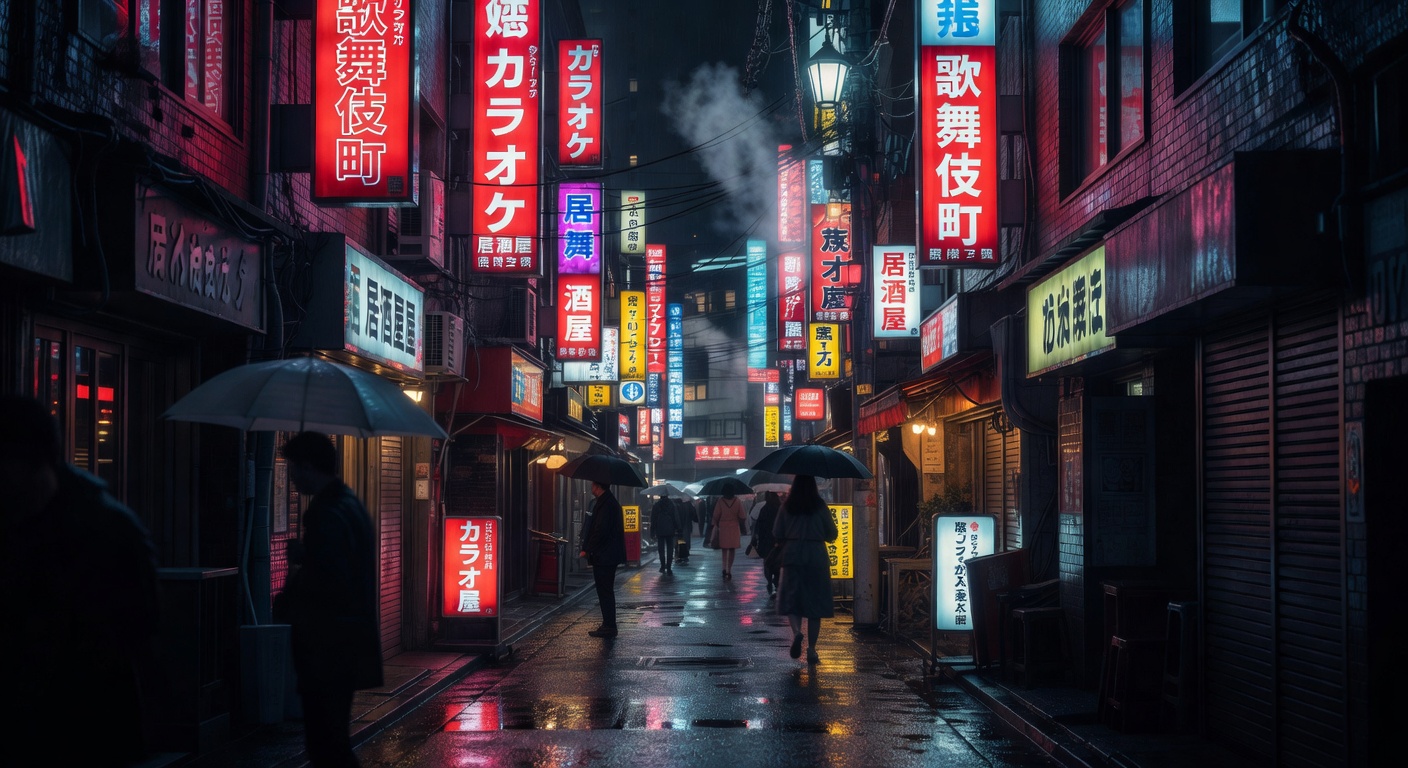
Japan's largest entertainment district. Mix of host/hostess clubs, delivery health dispatch centers, fashion health, karaoke, restaurants. The neon-lit center of Tokyo nightlife. Not exclusively adult-oriented but the hub for finding services.
Tobita Shinchi (Osaka)
Traditional licensed quarter. Unique format: walk the narrow streets, providers sit in doorways with a madam. Choose, enter, negotiate. One of Japan's last traditional red-light quarters. Very specific etiquette — do not take photos.
Susukino District (Sapporo, Hokkaido)
Sapporo's premier entertainment district and the largest nightlife zone in northern Japan. Susukino stretches across several blocks south of Odori Park, packed with bars, restaurants, karaoke venues, and fuzoku establishments. The area has a significant soapland and delivery health scene, with establishments concentrated on the upper floors of buildings along the main Susukino intersection and surrounding streets. Sapporo's soaplands tend to be slightly cheaper than Tokyo (¥15,000–40,000), and some are more relaxed about foreign clients than their Tokyo counterparts. The district is particularly active during the Sapporo Snow Festival (February) and summer beer garden season (July–August). Susukino also has numerous pink salons and fashion health shops with straightforward pricing. The area is well-lit, heavily trafficked, and safe despite its late-night character. Verified: March 2026.
Foreigner-Friendly Establishments in Tokyo
Beyond Yoshiwara soaplands, Tokyo has a growing number of fuzoku businesses that specifically welcome foreign clients. Foreigner-friendly delivery health services in Shinjuku and Ikebukuro often have English-language booking pages or staff who can communicate in basic English. Some fashion health shops in Kabukicho have begun accepting foreign walk-ins, recognising the growing tourism market. The key phrase to know is "gaikokujin OK desu ka?" (Do you accept foreigners?). Websites like Tokyo Adult Guide and English-language forum communities maintain regularly updated lists of foreigner-friendly establishments across all fuzoku categories. The foreigner-friendly segment typically charges a modest premium (¥2,000–5,000 above standard rates) to account for the additional communication effort. Verified: March 2026.
Foreigner-Friendly Yoshiwara Soaplands (Tokyo)
While most Yoshiwara soaplands enforce "Japanese only" policies, a small number of establishments have begun accepting foreign clients. Look for signs reading "外国人OK" (gaikokujin OK) near the entrance, or call ahead to ask "Gaikokujin OK desu ka?" These tend to be in the mid-range price bracket (¥25,000–45,000 for 60–90 minutes). The experience includes the full soapland ritual: body wash, mat play (body-to-body wash on an air mattress), and full service. Having basic Japanese phrases prepared dramatically increases your acceptance rate. Several English-language forums maintain updated lists of foreigner-friendly soaplands in Yoshiwara. Verified: March 2026.
Ikebukuro Delivery Health Services (Tokyo)
Ikebukuro has emerged as one of the more accessible areas for foreign visitors seeking delivery health services. Several dispatch services in the area specifically market to foreigners, with English-language booking pages or English-speaking staff. You check into a love hotel near Ikebukuro Station (east exit), call the service, and a provider is dispatched to your room within 30–60 minutes. Pricing runs ¥15,000–35,000 for 60–90 minutes. The standard service includes shower, oral, and hand service; full service (honban) may be available as a "private arrangement" but should never be assumed or demanded. Ikebukuro love hotels are conveniently clustered along Sunshine 60 Dori. Verified: March 2026.
Shinsekai Options (Osaka)
The gritty Shinsekai neighborhood adjacent to Tobita Shinchi offers a range of budget-oriented fuzoku establishments. Fashion health shops, massage parlors, and smaller delivery health dispatch offices are scattered among the neighborhood's famous kushikatsu restaurants and retro game arcades. Prices here are 10–20% lower than in the trendier Namba/Shinsaibashi areas — fashion health from ¥8,000 for 30 minutes, delivery health from ¥12,000 for 60 minutes. The area has a rougher, more working-class character, and English communication is minimal. However, the lower prices and the fascinating atmosphere of Shinsekai (with its retro signage and iconic Tsutenkaku Tower) make it worth exploring for the adventurous visitor with some Japanese ability. Verified: March 2026.
Services & What's Included
Soaplands
- Session fee (¥20,000–80,000+, 60–120 min): All-inclusive. Includes private room with bath, the full bathing ritual, mat play (body-to-body soapy massage on an air mattress), oral service, and — despite the legal fiction — typically full intercourse as a "private arrangement."
- The ritual flow: Greeting at reception, payment, escorted to private room. Provider undresses you, bathes you thoroughly, performs mat play, then moves to the bed for sexual services. The sequence is choreographed and unhurried.
- Nomination fee (¥1,000–3,000): Extra charge to select a specific provider by name/photo. "Free" (random assignment) is cheaper.
- Extension (¥5,000–10,000 per 30 min): Available at most soaplands. Arrange with the provider or front desk.
- NOT included: Nothing additional is needed — condoms, towels, and amenities are provided. Tipping is not expected and may cause confusion.
Delivery Health
- Session fee (¥15,000–40,000, 60–90 min): Provider dispatched to your hotel or love hotel room.
- Standard service (kihon play): Shower together, mutual body wash, oral service, hand service, body massage. Intercourse is officially NOT included but may occur as a "private arrangement" — varies by provider and service.
- Love hotel cost (separate, ¥3,000–8,000): You must provide the room. Love hotel "rest" rates cover 2–3 hours.
- Options (¥1,000–5,000 each): Costumes, specific acts, role-play scenarios. Listed on the service's website menu.
- Transportation fee (¥1,000–3,000): Some services charge a dispatch fee on top of the session price.
Pricing Guide
Japan is expensive, and the fuzoku industry reflects this. Prices are standardized within each category, with less negotiation than in most countries.
- Soaplands (standard): ¥20,000-40,000 for 60-90 min
- Soaplands (high-end / Yoshiwara premium): ¥50,000-80,000+ for 90-120 min
- Delivery health: ¥15,000-40,000 for 60-90 min
- Fashion health: ¥10,000-30,000 for 30-60 min
- Pink salons: ¥3,000-6,000 for 20-30 min
- Image clubs: ¥10,000-25,000 for 30-60 min
- Nomination fees: ¥1,000-3,000 extra to choose a specific provider
- Extension fees: ¥5,000-10,000 per additional 30 min
- Hotel charges: Love hotels run ¥3,000-8,000 for a "rest" (2-3 hours) — factor this in for delivery health
- Oppai pubs: ¥3,000-8,000 plus ¥1,000-2,000 drink charges
- Hostess clubs (non-fuzoku): ¥5,000-30,000+ (drinks and conversation only)
- Tobita Shinchi (Osaka): ¥15,000-20,000 for 20-30 min (full service)
- Photo/panel nomination premium: ¥2,000-5,000 for a top-ranked provider
Cash is king: Japan is one of the most cash-dependent developed nations. Most fuzoku establishments accept cash only. Carry sufficient yen — you can withdraw from 7-Eleven ATMs (available 24/7) and Japan Post ATMs using international cards. Do not expect to use credit cards in fuzoku venues.
Key Cities
Tokyo
The world's largest city has the world's largest fuzoku market. Key districts:
- Kabukicho (Shinjuku): The most famous red-light district in Japan. Neon-drenched streets packed with fuzoku shops, hostess clubs, love hotels, and every category of adult entertainment. The most foreign-friendly area, though still challenging without Japanese. Beware of Nigerian touts on the streets steering you to overpriced establishments.
- Yoshiwara (Senzoku/Taito): Tokyo's historic red-light district, now the center of the soapland industry. Dozens of soaplands line the streets — from budget to ultra-premium. Some accept foreign clients. The area is residential and quiet by day, busy at night.
- Ikebukuro: A major entertainment hub with a concentration of delivery health, fashion health, and image clubs. Some venues here are more accessible to foreigners than Kabukicho establishments.
- Uguisudani: A quieter area near Ueno with a cluster of love hotels and delivery health services. More discreet than Kabukicho.
Osaka
Japan's second city has a robust fuzoku scene with a distinctly different character from Tokyo. Osakans are famous throughout Japan for being warmer, more humorous, and more direct than their Tokyo counterparts. This cultural difference extends to the fuzoku industry — the atmosphere tends to be more relaxed, interactions feel less formal, and providers are often described as more engaging and fun-loving. Osaka is also significantly cheaper than Tokyo for both living expenses and fuzoku services.
- Tobita Shinchi: A unique, quasi-legal district where providers sit in traditional-looking shop fronts with a madam. You walk the narrow lanes, view providers displayed in lit doorways — each sitting in a small room with an older woman (the madam) who handles negotiation. You negotiate at the front, then enter for services. It looks like stepping into a historical red-light district because it essentially is one — Tobita Shinchi has operated in this format for over a century. Full service is available. Prices are reasonable (¥15,000-20,000 for 20-30 min). Very limited English. The district is technically not a brothel zone (the fiction is that it consists of "restaurants"), and local authorities have tolerated it for decades. However, it has faced increasing pressure in recent years, and its long-term future is uncertain. If you visit Japan and want to see a truly unique piece of the industry's history, Tobita Shinchi should be on your list while it still exists.
- Shinsekai / Tennoji area: The gritty, working-class entertainment district south of Namba. Various fuzoku shops cluster in this area, including fashion health, delivery health, and some smaller, budget-oriented venues. Shinsekai itself is a fascinating neighborhood — retro signage, kushikatsu (deep-fried skewers) restaurants, and the iconic Tsutenkaku Tower. The fuzoku establishments here tend to be cheaper than those in the trendier Namba/Shinsaibashi areas. Limited English.
- Namba / Shinsaibashi: Osaka's main nightlife and shopping area. Delivery health and fashion health services are concentrated here, with many shops along or near the main entertainment corridors. This is the easiest area for tourists to navigate since it is also the center of Osaka's general nightlife.
Fukuoka
The largest city in Kyushu and Japan's gateway to Asia has a well-developed fuzoku scene that punches above its weight for a city of its size. The Nakasu entertainment district — built on a narrow island in the Naka River — is one of the largest entertainment quarters in all of Japan. Neon-lit streets pack in hostess clubs, restaurants, bars, and fuzoku establishments into a compact, walkable area. Soaplands, delivery health, fashion health, and pink salons are all available in and around Nakasu.
Fukuoka's appeal lies in three factors: pricing is noticeably lower than Tokyo or Osaka (roughly 20-30% less for equivalent services), the city is compact and easy to navigate, and Fukuoka women are widely considered among the most beautiful in Japan (this is a stereotype, but it is a commonly held one). The city has a younger, more energetic feel than other major Japanese cities. The main drawback is that foreign-friendly options are more limited than in Tokyo — the smaller size means fewer establishments that have experience dealing with non-Japanese clients. Having some Japanese language ability is even more helpful here than in Tokyo.
Nagoya
Japan's fourth-largest city has a sizable fuzoku industry concentrated in the Sakae and Nishiki entertainment districts. The Nishiki area in particular hosts a dense cluster of delivery health dispatch offices, fashion health shops, and a handful of soaplands along the side streets running perpendicular to the main Nishiki-dori avenue. Nagoya also has an active pink salon scene near Sakae station. Prices are 15–20% lower than Tokyo for equivalent services — a mid-range soapland runs ¥25,000–35,000 for 70 minutes. The city is less tourist-oriented than Tokyo, meaning foreign-friendly options are more limited, but Nagoya's central location on the Tokaido Shinkansen line (90 minutes from Tokyo, 50 minutes from Osaka) makes it a convenient stopover. Several delivery health services in the Nishiki area have basic English booking capabilities.
Sapporo
The capital of Hokkaido has one of Japan's most impressive entertainment districts in Susukino. Covering several blocks of neon-lit streets, Susukino rivals Kabukicho in density if not in sheer size. The district hosts soaplands, delivery health dispatch offices, fashion health shops, pink salons, hostess clubs, and a vibrant bar scene. Sapporo's soaplands are concentrated on the south side of Susukino and tend to be 10–20% cheaper than Tokyo equivalents. The city is particularly lively during the famous Sapporo Snow Festival (early February), when tourism peaks and the nightlife scene is energized. Susukino's relative compactness — everything is within a 10-minute walk — makes it easier to navigate than Tokyo's sprawling districts. Foreign-friendly options exist but are fewer than in Tokyo; delivery health remains the most accessible format for non-Japanese speakers.
Other Notable Cities
- Sapporo (Hokkaido) has a well-developed scene centered around the Susukino entertainment district — one of Japan's largest. Soaplands, delivery health, fashion health, and pink salons are all available. Susukino is famous for its nightlife and is particularly lively during the Sapporo Snow Festival (February). Prices are 10-20% lower than Tokyo.
- Kyoto has a smaller, more discreet scene. The city's cultural and historical importance means the fuzoku industry operates more quietly than in Tokyo or Osaka, but delivery health services are readily available. Do not expect to find visible fuzoku establishments in the traditional temple districts — the industry is located in commercial areas away from the tourist core.
- Kobe has a compact entertainment district (Fukuhara) with soaplands and other fuzoku venues. The city's cosmopolitan character (Japan's most international port city historically) means a slightly higher chance of foreign-friendly attitudes.
- Hiroshima has a smaller entertainment district with fuzoku options. Delivery health is the most accessible format for visitors here.
- Okinawa has a distinct scene influenced by the large US military presence. Some establishments near military bases cater specifically to American service members. The cultural and regulatory environment differs from mainland Japan.
Entertainment Districts
Japan's fuzoku industry is concentrated in specific entertainment districts (sakariba) within each major city. These districts have deep historical roots, and the major ones have been continuously operating as pleasure quarters in some form for centuries. Knowing which district serves which purpose is essential for navigating the scene.
Tokyo
Kabukicho (Shinjuku) — Japan's largest and most famous entertainment district, located directly east of Shinjuku Station. Kabukicho is a dense grid of neon-lit streets packed with host clubs, hostess bars, delivery health offices, fashion health shops, massage parlors, love hotels, izakaya, and karaoke bars. The area is where the highest concentration of fuzoku businesses of all types can be found in a single walkable zone. The main action is along Ichibangai (the central strip), with the surrounding blocks filled with smaller establishments. For foreigners, the biggest challenge is the prevalence of "Japanese only" policies — but some venues here, especially around the Golden Gai and Hanamichi areas, are more foreign-friendly than elsewhere. Kabukicho is generally safe despite its appearance, with an active police presence (the Shinjuku Police Station sits at the district's entrance).
Yoshiwara (Taito-ku) — Japan's most historic pleasure quarter, operating continuously since the Edo period (1617). Today, Yoshiwara is the concentrated soapland district of Tokyo, with approximately 150 soapland establishments packed into a small grid of streets near Minowa Station. The soaplands here range from budget (kakuantenpo) to ultra-premium, with prices from ¥15,000 to ¥80,000+. Yoshiwara soaplands are notoriously difficult for foreigners — most enforce strict Japanese-only policies. However, a handful of establishments have begun accepting foreign clients, particularly those who can demonstrate basic Japanese communication. The district is easy to spot — rows of ornate building facades with doormen standing outside.
Ikebukuro — A secondary entertainment hub in northwest Tokyo, smaller than Kabukicho but with a similar mix of delivery health, fashion health, and massage establishments. Ikebukuro tends to be slightly cheaper than Shinjuku and is considered somewhat less intimidating for newcomers. The entertainment area is concentrated on the east side of Ikebukuro Station, particularly along Sunshine 60 Dori and the surrounding streets. Several foreigner-friendly establishments operate here.
Uguisudani — A quieter, less well-known district near Ueno. Uguisudani Station's north exit opens directly onto a street lined with love hotels, making it a popular destination for delivery health calls. The area is discreet and residential, lacking the neon intensity of Kabukicho. Several budget-friendly soaplands operate here, and the love hotel concentration makes it convenient for dispatch-type services.
Osaka
Tobita Shinchi — One of Japan's last traditional licensed quarters, Tobita Shinchi near Shinsekai is a unique cultural artifact. The format is unlike anything else in modern Japan: providers sit in the open doorways of traditional-style houses alongside an older woman (the yarite or madam), and clients walk through the narrow streets browsing. When you see someone you like, you negotiate with the madam — sessions (typically 15–20 minutes) run ¥15,000–20,000. Despite its old-fashioned appearance, Tobita Shinchi is actively operating. The district is small (perhaps 100 houses across a few blocks) and has no signs or advertising — it relies entirely on word-of-mouth and foot traffic. Foreigners are sometimes declined, but persistence and basic Japanese may help. Located near Shin-Imamiya Station.
Namba / Dotonbori area — Osaka's primary nightlife district is concentrated around the famous Dotonbori canal and the surrounding streets. Delivery health and fashion health establishments are scattered throughout the area, with dispatch offices located in the upper floors of commercial buildings — look for small signage on building directories. The area around Nipponbashi (Den Den Town) has a higher concentration of adult entertainment mixed with the anime/otaku district. Several foreigner-friendly delivery health services operate dispatch from this area.
Shinsekai — Adjacent to Tobita Shinchi, the Shinsekai entertainment district around Tsutenkaku Tower has massage parlors and smaller fuzoku establishments interspersed among the restaurants and game arcades. The area has a rougher, more working-class character than Namba, with lower prices to match.
Finding Providers
The biggest challenge in Japan is not finding the industry — it is navigating it as a non-Japanese speaker. The infrastructure exists — Japan's fuzoku industry is enormous and well-organized. But it was built entirely for a Japanese-speaking domestic market, and accessing it as a foreigner requires effort, preparation, and sometimes assistance.
- Fuzoku portal sites: Japanese-language listing and review sites are the primary way Japanese men find providers. These sites have photos, service descriptions, pricing, and user reviews. You will need a translation tool or Japanese literacy to navigate them effectively.
- Google Maps: Surprisingly useful. Searching for soapland (ソープランド), delivery health (デリヘル), or specific area names in Japanese will show establishment locations with reviews.
- Foreign-friendly services: Some delivery health services specifically market to foreign clients, with English-language websites or booking systems. These are fewer in number but exist, particularly in Tokyo.
- Walking the districts: In areas like Kabukicho, Yoshiwara, and Tobita Shinchi, you can physically walk around and see the shops. Staff at the door may beckon you in. The challenge is communication once inside.
- English-language forums: Several expat and traveler forums have detailed guides to navigating Japan's fuzoku scene, including specific recommendations for foreign-friendly establishments. These are invaluable — many include step-by-step instructions for specific venues, including what to say at reception.
- Hotel concierge (discreet): In some tourist hotels, concierge staff can arrange delivery health services. This is more common at hotels in entertainment districts that are accustomed to foreign guests.
- Avoid touts: In Kabukicho especially, street touts (often Nigerian men) will approach foreigners aggressively. They typically steer you to overpriced or low-quality establishments. Politely but firmly decline and do your own research.
Recommended Platforms & Apps
- City Heaven (シティヘブン) — Japan's largest fuzoku directory. Japanese-language. Lists soaplands, delivery health, fashion health by area.
- LINE — Essential communication app in Japan. Most providers and services communicate via LINE.
- Note: Most Japanese platforms are Japanese-language only. Google Translate can help navigate but booking in Japanese is strongly recommended. Some establishments have basic English websites for international visitors.
"Japanese Only" policies: Many fuzoku businesses refuse non-Japanese customers. This is frustrating but legal in Japan (there is no anti-discrimination law covering commercial services based on nationality). Do not argue or attempt to force entry — it will not work and may cause problems. Move on to establishments that welcome foreign clients.
Cultural Etiquette
Japan has perhaps the most complex etiquette expectations of any country in the sex industry. Following these rules will dramatically improve your experience:
- Respect the rules. Each establishment has specific rules about what is and is not permitted. These are usually explained at reception (in Japanese). If you cannot understand, ask for clarification — do not assume anything is included.
- Shower thoroughly. This is non-negotiable in Japan. At soaplands and fashion health, showering is part of the service. For delivery health, shower before the provider arrives. Japanese hygiene standards are extremely high.
- Do not negotiate on price. Prices are fixed. Attempting to negotiate is considered rude and will likely result in being asked to leave.
- Time is strict. Sessions end at the stated time. There is typically a knock or buzzer. Do not expect overtime without paying extension fees.
- Do not ask for services not offered. If the establishment is a fashion health (no intercourse), do not pressure the provider for intercourse. This violates the rules the provider works under and can get both of you in trouble.
- Do not tip. Tipping is not part of Japanese culture and can make providers uncomfortable. The price is the price.
- Be quiet and discreet. Japanese culture values discretion. Do not be loud in fuzoku establishments, and do not discuss your experiences publicly in a way that identifies the venue or provider.
- Remove your shoes when indicated — usually at the entrance. This is standard Japanese etiquette that applies everywhere.
- Bring a translation app. Even at foreign-friendly establishments, most communication will be in Japanese. Having Google Translate open and ready shows effort and helps avoid misunderstandings.
- Do not touch without permission. In many fuzoku formats, there are specific rules about what touching is and is not allowed. Wait for the provider to guide the interaction. Grabbing, groping, or being physically aggressive will result in the session being ended and possible blacklisting.
- Follow the flow of the session. Japanese fuzoku sessions have a ritualistic flow — greeting, showering, the main service, cleanup, dressing. Each step matters. Do not try to skip steps or rush through the process. Part of the Japanese experience is the ritual itself.
- Handle the payment envelope properly. Some establishments place the payment in an envelope. Follow the staff's instructions for handling money. Never throw or toss money — handle it respectfully, as you would in any Japanese business transaction.
The "Japanese Only" Challenge
The single biggest obstacle for foreign visitors to Japan's fuzoku industry is the widespread "Japanese Only" (日本人のみ / Nihonjin nomi) policy. Estimates suggest that 60-80% of fuzoku establishments refuse non-Japanese clients. This is not primarily about racism — it stems from practical concerns about communication (rules, consent, and boundaries must be clearly understood), potential for cultural misunderstandings, concerns about police attention, and the simple fact that the industry was built for a domestic market.
Strategies for navigating this include: seeking out explicitly foreign-friendly establishments (some advertise this fact), having a Japanese-speaking friend or guide make calls on your behalf, using delivery health services (which have more flexibility since they come to you), and focusing on areas with more tourist exposure (Kabukicho in Tokyo, Nakasu in Fukuoka). Some providers who work independently through online platforms are more open to foreign clients than shop-based workers. Learning basic Japanese genuinely helps — being able to communicate basic intentions and understand rules in Japanese dramatically increases your acceptance rate.
Safety
Japan is one of the safest countries in the world, and this extends to the fuzoku industry. Violent crime is exceptionally rare, scams are uncommon at established businesses, and the regulatory framework (however ambiguous) provides a layer of institutional oversight. However, some risks exist:
- Kabukicho touts: The biggest risk for foreigners. Street touts may lead you to overpriced bars where a ¥50,000+ bill appears for a few drinks. Never follow a tout to a bar or club.
- Bottakuri bars: "Rip-off bars" that present enormous bills. These are rare in fuzoku establishments but exist in the broader Kabukicho nightlife. Stick to established, reviewed venues.
- Language misunderstandings: The most common problem. If you cannot communicate, services may not match expectations. Manage expectations and use translation tools.
- Legal gray areas: While the industry is tolerated, it technically occupies legal gray space. As a client, the risk of legal trouble is virtually zero in a licensed establishment — but participating in truly illegal operations (unlicensed venues, trafficking situations) could lead to problems.
- STI protection: Condom use is standard in most fuzoku establishments. Some soaplands offer unprotected oral as a premium option — use your judgment on risk. Always carry your own condoms as backup.
- Drug use: Japan has some of the strictest drug laws in the developed world. Even marijuana possession can result in arrest and deportation. Do not bring or use any drugs.
- Photography: Never photograph or record anything inside a fuzoku establishment. This is a serious violation that can result in immediate ejection, police involvement, and potential criminal charges under Japanese privacy laws. Many venues explicitly ban phones from session rooms.
- Theft and personal safety: Japan is extraordinarily safe. Violent crime against clients in fuzoku establishments is virtually unheard of. Theft is extremely rare. Your biggest physical safety risk is related to the Kabukicho tout scams (being led to overpriced bars), not violence. Still, basic precautions apply — do not carry excessive cash, and be aware of your surroundings when leaving late-night venues.
Love Hotels — Essential Knowledge
Love hotels (ラブホテル / rabu hoteru) are a uniquely Japanese institution and essential infrastructure for the fuzoku industry, particularly for delivery health services. These are short-stay hotels designed specifically for couples seeking privacy. They are found in every entertainment district and many suburban areas throughout Japan.
The experience is designed for maximum anonymity:
- Automated check-in: Choose a room from an illuminated panel on the wall. Available rooms are lit; occupied rooms are dark. Press the button for your preferred room, then pay at an automated machine. No human interaction required.
- Privacy features: Separate entrances and exits, curtained parking garages (so your car is not visible from the street), and minimal staff interaction. Staff cannot see your face in many love hotels — communication happens through a small window or intercom.
- Room quality: Ranges from basic (clean, functional, with a bed and bathroom) to elaborate (themed rooms with costumes, mirrored ceilings, karaoke machines, massage chairs, and jacuzzi tubs).
- Pricing: A "rest" (休憩 / kyukei) is 2-3 hours and costs ¥3,000-8,000. A "stay" (宿泊 / shukuhaku) is overnight (typically check-in after 10pm, checkout by 10-11am) and costs ¥6,000-15,000. Premium themed rooms can be significantly more.
- Amenities: Complimentary condoms, clean towels, bathing facilities, room service menus, and sometimes costume rental are standard.
When using delivery health, you will typically check into a love hotel first, then call the service to dispatch a provider to your room. The love hotel staff are completely accustomed to this and will not interfere or judge. Knowing how to navigate love hotels is one of the most practical skills for the foreign visitor to Japan's sex industry.
Useful Phrases
Some Japanese is almost essential for navigating the fuzoku world. Even basic phrases dramatically increase your success rate. Learn these and practice pronunciation:
- Sumimasen (すみません) — Excuse me / Sorry (all-purpose polite opener)
- Gaikokujin OK desu ka? (外国人OKですか?) — Are foreigners OK? (The most important phrase — ask this first)
- Eigo daijoubu desu ka? (英語大丈夫ですか?) — Is English OK?
- Ikura desu ka? (いくらですか?) — How much is it?
- Ichi-jikan (一時間) — One hour
- Yoyaku shitai desu (予約したいです) — I would like to make a reservation
- Shimei (指名) — Nomination (choosing a specific provider)
- Free shimei (フリー指名) — No preference / random selection
- Gomu tsukete kudasai (ゴムつけてください) — Please use a condom
- Kimochi ii (気持ちいい) — Feels good (appropriate to say during session)
- Arigatou gozaimashita (ありがとうございました) — Thank you very much (past tense, appropriate when leaving)
- Mata kimasu (また来ます) — I will come again (polite farewell)
- Rabu hoteru wa doko desu ka? (ラブホテルはどこですか?) — Where is a love hotel?
- Encho dekimasu ka? (延長できますか?) — Can I extend the session?
- Nihongo ga amari hanasemasen (日本語があまり話せません) — I do not speak much Japanese
- Kore wa ikura desu ka? (これはいくらですか?) — How much is this?
- Shibori / nuki (搾り / 抜き) — Oral to completion (common service term)
- Matto purei (マットプレイ) — Mat play (body-to-body wash at soaplands)
- Shinnyuu kinshi (侵入禁止) — Penetration prohibited (common rule sign at non-full-service venues)
Travel Logistics
- Getting there: Tokyo Narita (NRT) and Haneda (HND) are the main international airports. Kansai (KIX) serves Osaka. Budget carriers (Peach, Jetstar Japan) connect major domestic cities cheaply.
- Getting around: Japan's train system is world-class. The Japan Rail Pass (for tourists) offers unlimited bullet train and JR travel. Within cities, subway and train networks are comprehensive but confusing — use Google Maps for navigation. Taxis are expensive (¥2,000+ for short trips) but honest and clean.
- Love hotels: Essential infrastructure for delivery health. Love hotels (rabu hoteru) offer short "rest" stays (2-3 hours, ¥3,000-8,000) or overnight stays. They are located in entertainment districts and are easy to find. Many have automated check-in (choose a room from a lit panel, pay at a machine) — no human interaction required.
- Accommodation: Hotels range from ¥5,000/night (business hotels) to ¥50,000+/night (luxury). Capsule hotels (¥3,000-5,000) are a unique budget option. Note that delivery health to capsule hotels is impossible — you need a private room.
- Visa: Most Western nationals get 90-day visa-free tourist entry.
- Cash: Carry cash. 7-Eleven and Japan Post ATMs accept international cards. Maximum withdrawal is usually ¥50,000-100,000 per transaction. Plan your cash needs in advance — running out of yen in a fuzoku establishment is a serious faux pas.
- SIM / WiFi: Get a travel SIM or pocket WiFi at the airport. You will need mobile internet for navigation, translation apps, and looking up fuzoku portals. Translation apps (Google Translate with camera function) are invaluable for reading Japanese menus and signs.
- Best time to visit: Spring (March-May) and autumn (October-November) are ideal. The fuzoku industry operates year-round with no significant seasonal variation. Avoid Golden Week (late April/early May) and Obon (mid-August) when domestic travel is extremely busy and accommodation prices spike.
- Convenience stores (konbini): 7-Eleven, Lawson, and FamilyMart are everywhere and open 24/7. They sell condoms, basic toiletries, and snacks. They also have ATMs that accept foreign cards. Konbini are your lifeline in Japan — they handle almost every basic need.
- Tipping reminder: Do not tip anywhere in Japan — not at restaurants, not in taxis, not in fuzoku establishments. It can cause confusion and even offense. The listed price is the total price.
- Alcohol culture: Japan has a strong drinking culture, and many fuzoku districts are surrounded by izakaya (Japanese pubs) and bars. Moderate drinking before a session is culturally normal. However, being visibly drunk may result in being refused service. Some soaplands and fashion health venues will decline heavily intoxicated clients for practical reasons — sessions involve bathing and physical activity where coordination matters.
Pro tip: Download Google Translate and install the Japanese offline language pack before your trip. The camera translation feature (point your phone at Japanese text) is a game-changer for reading fuzoku shop signs, menus, and service descriptions. Also download a Japanese keyboard for your phone to send messages in Japanese.
Tokyo — Expanded District Guide
Kabukicho Deep Dive
Kabukicho rewards repeat visits and specific knowledge. The district divides into functional zones: the main Ichibangai strip (host clubs, restaurants, mainstream entertainment), the eastern blocks toward Shokuanchō Dori (higher concentration of fuzoku shops, delivery health offices), and the Golden Gai area (200+ tiny bars in narrow alleys — not fuzoku, but an excellent pre-session social experience). For foreigners, focus on the delivery health dispatch offices along the side streets running perpendicular to Yasukuni Dori. Several offices in the area between Kabukicho 2-chome and Okubo have English-capable booking staff. Expect ¥20,000–40,000 for a 60–90 minute delivery health session dispatched to a nearby love hotel.
Yoshiwara Soapland Practicalities
Yoshiwara is a 5-minute walk from Minowa Station (Hibiya Line). The district layout is a small grid of roughly 150 soaplands along a few parallel streets. Establishments are identifiable by their ornate facades and doormen. Price tiers are visible from the exterior: budget shops (¥15,000–25,000, 50–60 min) have simpler facades; mid-range (¥30,000–45,000, 70–90 min) and premium (¥50,000–80,000+, 90–120 min) have increasingly elaborate entrances. The biggest challenge: most Yoshiwara soaplands remain Japanese-only. A handful have started accepting foreign clients who demonstrate basic Japanese. Approach the doorman, say "Gaikokujin OK desu ka?" — if the answer is no, move on without argument. Three to four shops per visit may decline before one accepts.
Ikebukuro for Beginners
Ikebukuro's east exit area around Sunshine 60 Dori is arguably the most foreigner-friendly Tokyo district for fuzoku newcomers. The area is less overwhelming than Kabukicho, with clear shop signage and several delivery health offices that advertise English service. Pricing runs 10–15% below Kabukicho equivalents: ¥18,000–35,000 for standard delivery health sessions. Love hotels cluster along the streets running parallel to the main strip, making the logistics seamless.
Osaka — Expanded Guide
Tobita Shinchi — Walking Guide
From Shin-Imamiya Station (JR or Nankai line), exit south and walk east for 5 minutes. Tobita Shinchi announces itself through rows of traditional-style buildings with sliding doors. The operating hours are typically 11 AM–11 PM, with peak activity from 4–8 PM. Walk slowly through the narrow streets — providers sit in open doorways alongside a madam. When interested, approach the madam (not the provider directly). Standard pricing: ¥15,000–20,000 for 15–20 minutes, ¥25,000–30,000 for 30 minutes. Sessions include full service. Foreigners are sometimes declined but acceptance has increased in recent years. Speaking basic Japanese dramatically improves your chances.
Namba & Dotonbori Delivery Health
The blocks around Nipponbashi Station and extending north toward Dotonbori have the highest concentration of delivery health and fashion health dispatch offices in Osaka. Look for small signs in building entrance directories — offices are typically on upper floors (3F–8F). Several services in this area have basic English booking capabilities. Dispatch to nearby love hotels is standard — love hotels cluster along the streets east of Nipponbashi. Standard delivery health pricing in Osaka: ¥18,000–35,000 for 60–90 minutes, approximately 15–20% below Tokyo rates for equivalent service quality.
Fuzoku Types — Detailed Breakdown
- Soapland (ソープランド) — Full-service establishments with bathing. The provider washes you in an elaborate bathing ritual, followed by body-to-body mat play (mattopurei) and full intercourse. The only fuzoku format where penetrative sex is openly provided. Fixed-location shops with reception areas.
- Delivery Health (デリヘル) — Dispatch service. You call or book online, and a provider is sent to your hotel or love hotel. Services include oral (with condom), hand service, and body massage. No penetration is the official rule, though actual service may vary. The most foreigner-accessible format.
- Fashion Health (ファッションヘルス) — Shop-based service. You visit a fixed location and are assigned a provider. Services mirror delivery health (oral, hand, massage) but in a dedicated room. No penetration. Sessions include showering.
- Pink Salon (ピンサロ) — Oral-focused establishments. You sit in a booth or open-plan area, and a provider performs oral service. Quick, budget-friendly (¥3,000–6,000 for 20–30 min). Minimal interaction beyond the service itself. Japanese-only in nearly all cases.
- Oppai Pub (おっぱいパブ) — "Breast pub." Topless bar format where providers serve drinks and allow touching above the waist. Social, drinking-focused. ¥5,000–10,000 for 30–60 minutes including drinks.
- Image Club (イメクラ) — Role-play and costume-focused establishments with themed rooms (train car, classroom, office). Services are similar to fashion health but with elaborate scenario play. Niche but uniquely Japanese.
Budget Breakdown by City (¥)
- Tokyo: Soapland ¥20,000–80,000 | Delivery health ¥18,000–40,000 | Fashion health ¥10,000–20,000 | Pink salon ¥3,000–6,000
- Osaka: Tobita Shinchi ¥15,000–30,000 | Delivery health ¥15,000–35,000 | Fashion health ¥8,000–18,000
- Fukuoka: Soapland ¥15,000–50,000 | Delivery health ¥14,000–30,000 | Fashion health ¥7,000–15,000
- Nagoya: Soapland ¥18,000–45,000 | Delivery health ¥15,000–30,000 | Pink salon ¥2,500–5,000
- Sapporo: Soapland ¥15,000–50,000 | Delivery health ¥13,000–28,000 | Fashion health ¥7,000–14,000
Osaka and Fukuoka consistently offer the best value, while Tokyo commands a 15–30% premium for equivalent service quality. All prices include the establishment's fee; nominations (shimei) of specific popular providers can add ¥1,000–5,000.
Related Guides
Named Venues — Extended Index
Tokyo — Kabukichō (Shinjuku)
- Robot Restaurant historically — Tourist-aimed cabaret; not adult-services but landmark.
- Don Quijote Kabukichō as the orientation point.
- Soaplands cluster on Yoshiwara (Taitō ward, ~30 min from Kabukichō): Premium soaplands ¥40,000–80,000+.
- Several "delivery health" (deri-heru) services dispatch to hotels in Shinjuku, Kabukichō, Roppongi.
- Pink salons (pinsaru): cheaper options, mostly Japanese-customer-only.
- Hostess clubs: not direct adult-services, but the Kabukichō/Roppongi parallel scene.
Tokyo — Yoshiwara soaplands (full)
- Yoshiwara historic district in Taitō — The premier soapland concentration; 200+ years of history.
- Top-tier soaplands: Sweet Kiss, Crystal Palace, Roppongi Hills (named varies), Princess Heart.
- Mid-tier soaplands: Many; entry/foreigner policy varies — most refuse non-Japanese-speakers.
- "Foreigner-friendly" soaplands: Limited; advertise English support but verify.
Tokyo — Roppongi
- Several gentleman's clubs / hostess clubs — Premium Japanese hostess culture.
- Touts on Gaien-Higashi-Dori — Aggressive scam-prone street touts; avoid.
- "Cabaret" venues: J-style hostess clubs; not adult-services in the Western sense.
- Foreign-friendly bars: A Sahabu, Geronimo, Mogambo — pickup culture, not transactional.
Osaka — Tobita Shinchi
- Tobita Shinchi — Japan's most famous "yobiseki" district; doorway-display tradition.
- Around 150 small ryōtei (traditional restaurants — facade for the trade) in the area.
- Matsushima Shinchi — Smaller similar district nearby.
- Tennoji area — Some adult activity but not concentrated.
Osaka — Umeda / Namba nightlife
- Several pinsaru and deri-heru services dispatching to Umeda/Namba hotels.
- Hostess clubs: Kita-Shinchi (Umeda area) — premier J-hostess district.
Kyoto, Fukuoka, Sapporo
- Gion (Kyoto) — Geisha district; not adult-services; cultural/tourism focus.
- Kiyamachi-dori (Kyoto) — Some adult-leaning bars.
- Fukuoka Nakasu — Hostess and adult-services district; one of Japan's biggest.
- Sapporo Susukino — Hokkaido's nightlife/adult district; soaplands and hostess.
Foreigner-access reality
The defining Japan factor: most venues refuse non-Japanese-speakers. "Foreigner-friendly" is a key search term. Pinsaru and many soaplands are essentially closed to non-Japanese customers; hostess clubs and high-end deri-heru are more accessible.