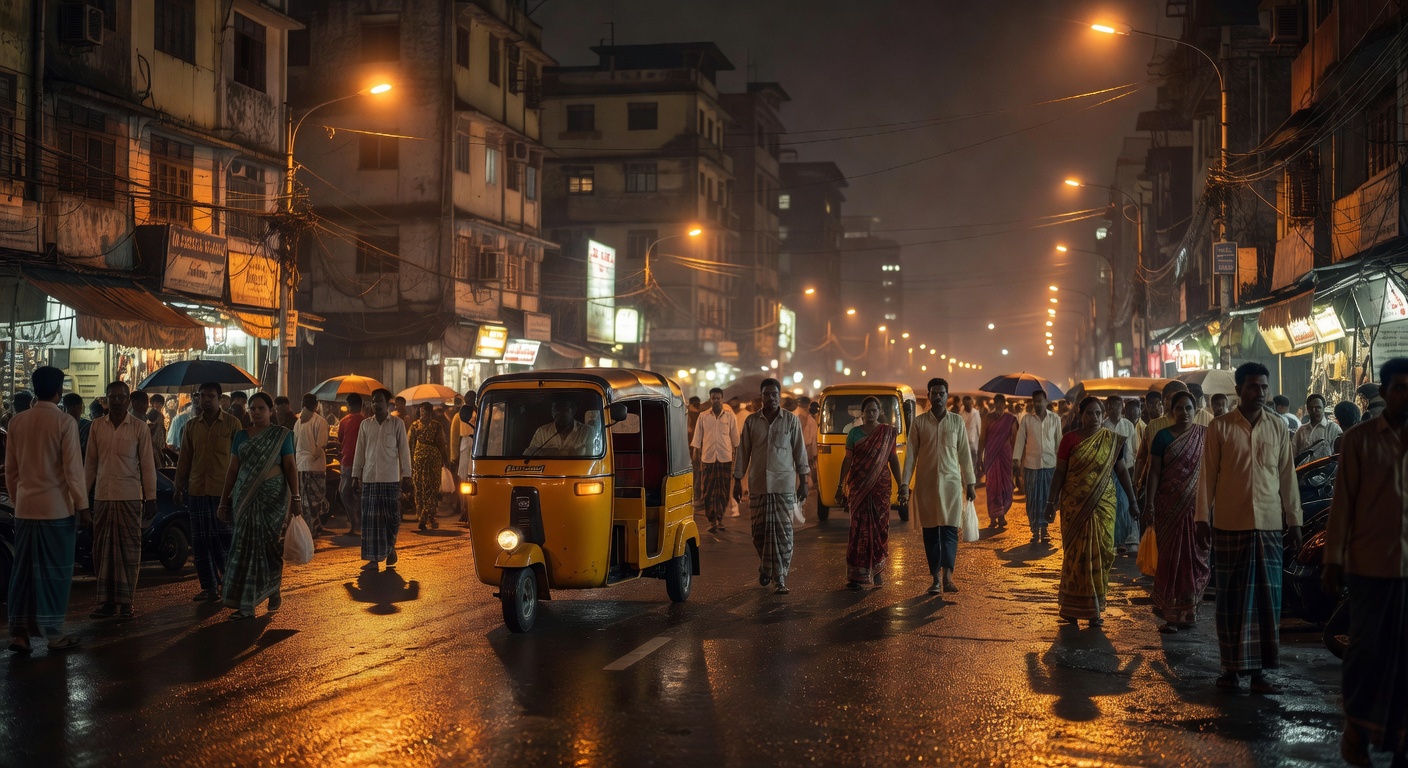
Country Guide
Bangladesh
A deeply conservative country with almost no adult tourism, an unusual legal quirk of tolerated brothels, and serious trafficking realities travellers should understand rather than seek out.
At a glance: Bangladesh
- Legal model
- Gray Market
- FCDO advisory
- Avoid travel
- HIV prevalence
- 0.1% adult →
- Syphilis (sex workers)
- 4.3%
- Currency
- Bangladeshi Taka (BDT)
- Language
- Bengali, Tourist English
- Population
- 171.5M
- Capital
- Dhaka
- Last verified
ART: 44% · WHO 2025
MSM: 8.3% · WHO 2020
Government travel advisories
Pre-travel medical — vaccines & medicines(12 · CDC)
- COVID-19Recommended
All eligible travelers should be up to date with their COVID-19 vaccines. Please see Your COVID-19 Vaccination for more information.
- Hepatitis ARecommended
Recommended for unvaccinated travelers one year old or older going to Bangladesh. Infants 6 to 11 months old should also be vaccinated against Hepatitis A.
- Hepatitis BRecommended
Recommended for unvaccinated travelers younger than 60 years old traveling to Bangladesh. Unvaccinated travelers 60 years and older may get vaccinated before traveling to Bangladesh.
- MalariaRecommended
CDC recommends that travelers going to certain areas of Bangladesh take prescription medicine to prevent malaria.
- MeaslesRecommended
Cases of measles are on the rise worldwide. Travelers are at risk of measles if they have not been fully vaccinated at least two weeks prior to departure, or have not had measles in the past, and trav…
- TyphoidRecommended
Recommended for most travelers, especially those staying with friends or relatives or visiting smaller cities or rural areas.
- CholeraConsider
Areas of active cholera transmission are localized to the division of Chittagong (last case reported 9-12 months ago) in Bangladesh. Cholera is rare in travelers.
- RabiesConsider
Dogs infected with rabies are commonly found in Bangladesh. If rabies exposures occur while in Bangladesh, rabies vaccines are typically available throughout most of the country.
- Routine vaccinesRoutine
Make sure you are up-to-date on all routine vaccines before every trip.
- ChikungunyaNot recommended
All travelers should take steps to prevent mosquito bites. Chikungunya vaccination is generally not recommended.
- Japanese EncephalitisNot recommended
Recommended for travelers who Are moving to an area with Japanese encephalitis to live Spend long periods of time, such as a month or more, in areas with Japanese encephalitis Frequently travel to are…
- Yellow FeverNot recommended
CDC recommendations: Vaccine is not recommended. Country entry requirements: Direct travel from United States: Vaccine is not required.
General guidance from the CDC Travelers' Health page (2026-07-23) — not medical advice. See a travel clinic 4–6 weeks before departure. Malaria and some vaccines depend on your specific itinerary.
Common questions about Bangladesh
What people are actually searching for.
What is the age of consent in Bangladesh, and why is there confusion about it?
Bangladesh's age of consent is genuinely unsettled in law: the older Penal Code (Section 375) defines sex with a girl under 14 as rape regardless of consent, while Section 9 of the Women and Children Repression Prevention Act, 2000, as amended, is widely read as setting the threshold at 16, with no close-in-age exemption. In practice, any commercial sexual activity involving anyone under 18 is treated as child exploitation and trafficking, carrying the harshest penalties under Bangladeshi law and possible prosecution at home under many countries' extraterritorial child-sex laws.
Is Bangladesh safe for LGBTQ travelers?
No — Bangladesh is described as a dangerous environment for LGBTQ people. Same-sex sexual activity remains criminalised under Section 377 of the Penal Code, with penalties up to life imprisonment, and the guide notes there have been high-profile killings of LGBTQ activists.
What are the biggest safety risks for travelers in Bangladesh?
The biggest safety variables are political and social rather than nightlife-related: protests and strikes ("hartals") can flare with little warning, sometimes turn violent, and shut down transport for days. Petty crime, pickpocketing, and traffic accidents are more routine hazards, and roads are described as extraordinarily dangerous — a car or CNG (auto-rickshaw) journey is statistically far riskier than anything encountered socially. The UK FCDO advisory is listed as "Avoid travel," and the US State Department lists Bangladesh at Level 2 (Exercise Increased Caution) as of 2026-07-30, reflecting instability following the 2024 political upheaval.
What is the HIV and STI risk profile in Bangladesh?
Overall adult HIV prevalence is low, at 0.1%, with an estimated 41% antiretroviral therapy (ART) coverage (WHO 2024). WHO 2020 data cited in the guide show markedly higher syphilis prevalence among higher-risk groups, however — 4.3% among sex workers and 8.3% among men who have sex with men (MSM) — indicating that population-level HIV figures do not reflect risk within specific groups.
Is Bangladesh an adult-tourism or nightlife destination?
No. Bangladesh is a densely populated, Muslim-majority, socially conservative country with restricted alcohol and effectively no organised nightlife-tourism scene, and the guide states outright that it is not an adult-travel destination in any conventional sense. Most foreigners present are business travellers, aid and development workers, diplomats, or people of Bangladeshi origin visiting family, rather than tourists seeking a nightlife or dating scene.
Legal Model
Contradictory (regulated brothels + criminalisation)
Risk Level
High
Currency
Bangladeshi Taka (BDT)
Language
Bengali, Tourist English
Emergency
999
Age of Consent
16
Overview
Bangladesh is not an adult-travel destination in any conventional sense, and any guide that pretends otherwise is selling a fiction. It is a densely populated, Muslim-majority South Asian country with a socially conservative culture, restricted alcohol, and effectively no organised nightlife-tourism scene. The overwhelming majority of foreigners here are business travellers, aid and development workers, diplomats, and people of Bangladeshi origin visiting family. Public dating, casual relationships between strangers, and visible commercial sex simply do not form part of the tourist experience the way they might in Thailand or the Philippines.
What makes Bangladesh legally unusual is that it is one of a small number of Muslim-majority countries where sex work by an adult woman is technically tolerated rather than fully criminalised, and where a handful of large, long-established brothels operate openly. This is not a loophole for tourists. Those brothels are domestic poverty economies, deeply entangled with trafficking, debt bondage, and the exploitation of minors. Understanding them is important context for anyone reading about "legal prostitution in Bangladesh" online, but they are places to understand, not places to visit.
Bangladesh also went through significant political upheaval in 2024, when the long-ruling government fell and an interim administration took over, followed by periods of protest and instability. Foreign-ministry travel advice from several governments continues to reflect this. Check your own government's current advisory before travelling; the security picture, not the adult scene, is the thing that actually shapes a trip here.
Legal Status
The legal position is genuinely paradoxical and worth stating precisely. The Constitution of Bangladesh directs the state to take measures to prevent prostitution and gambling, yet courts and practice have long tolerated commercial sex by an adult woman who has sworn a notarised affidavit stating she is doing so of her own free will and cannot find other work. In that narrow sense, an individual adult woman selling sex is not itself prosecuted. Almost everything around it, however, is criminal: brothel-keeping, pimping, living off the earnings of sex work, and soliciting are all offences. The Suppression of Immoral Traffic Act (1933) criminalises keeping a brothel, defined broadly, which is why the tolerated brothel complexes exist in an ambiguous, semi-legal grey zone rather than as licensed businesses.
Trafficking and exploitation are governed by the Prevention and Suppression of Human Trafficking Act, 2012, which carries severe penalties including life imprisonment and, in aggravated cases, death. Sexual offences against women and children fall under the Women and Children Repression Prevention Act, 2000 (Nari-o-Shishu Nirjatan Daman Ain), which treats sexual exploitation of minors and coerced sex as extremely serious crimes.
Age of consent is an area of genuine legal conflict, so treat any single number with caution. The old Penal Code (Section 375) frames sex with a girl under 14 as rape regardless of consent, while Section 9 of the Women and Children Repression Prevention Act, as amended, is widely read as setting 16 as the threshold. There is no close-in-age exemption. The practical takeaway is unambiguous: any commercial sexual activity involving anyone under 18 is treated as child exploitation and trafficking, carries the harshest penalties in Bangladeshi law, and is prosecutable at home under many foreigners' own countries' extraterritorial child-sex laws. Separately, same-sex sexual activity remains criminalised under Section 377 of the Penal Code, with penalties up to life imprisonment; Bangladesh is a dangerous environment for LGBTQ people, and there have been high-profile killings of activists.
Practical Safety
Day-to-day violent crime against foreigners is not the norm in the main cities, but Bangladesh demands more situational awareness than a typical tourist destination, and the biggest safety variables are political and social rather than nightlife-related. Protests, strikes ("hartals"), and localised unrest can flare with little warning, sometimes turning violent, and can shut down transport for days. Petty crime, pickpocketing, and traffic accidents are the more routine hazards. Bangladesh has extraordinarily dangerous roads, and a car or CNG (auto-rickshaw) journey is statistically far riskier than anything you'll encounter socially.
Socially, this is a modest, conservative society. Overt displays of intimacy, drunkenness in public, and unaccompanied late-night wandering all draw attention and, for women especially, unwanted harassment. Dress conservatively. The safest and most comfortable areas for foreigners are the diplomatic and expat zones of the capital, chiefly Gulshan, Banani, and Baridhara, where the international hotels, embassies, and licensed hotel bars are concentrated. Anyone pursuing informal sexual encounters faces an outsized blackmail and extortion risk in a country where morality is socially policed and same-sex activity is criminal; the legal and reputational exposure typically dwarfs any perceived upside.
Health Considerations
Bangladesh's national HIV prevalence is low, but that headline masks concentrated risk among key populations, including sex workers, people who inject drugs, and men who have sex with men, where consistent condom use is far from universal. Sexually transmitted infections circulate, and in the informal and brothel-based sex economy, condom negotiation is weak and health access is poor. Barrier protection is the single most important precaution; condoms are sold in pharmacies ("farmacy") in cities and are inexpensive, though quality and discretion vary, so bring a trusted supply.
General medical care outside major hospitals is limited, and serious illness or injury usually means heading to a private facility in the capital. Dhaka has several well-regarded private hospitals used by expats and diplomats, including large multi-speciality institutions in the Gulshan and Dhanmondi areas; your embassy can provide a current list, and comprehensive travel insurance with medical evacuation cover is strongly advised because complex care may mean flying to Bangkok, Singapore, or India. For sexual-health needs, public STI services and NGO-run clinics exist but can be hard for a visitor to navigate discreetly; a private hospital or clinic is usually the more practical route. Standard travel-health precautions matter here too: dengue is a recurring seasonal epidemic, waterborne illness is common, and tap water should be avoided.
Common Scams
Because there is no developed foreigner-facing sex trade, Bangladesh lacks the industrialised bar-fine, mamasan, and "lady drink" scam ecosystem found in Southeast Asian nightlife hubs. The scams travellers actually meet are ordinary ones: CNG and taxi drivers refusing the meter or quoting inflated foreigner prices, "helpful" strangers steering you to shops or hotels for a commission, and overcharging at unmetered stalls. Agree fares before getting in, or use a ride-hailing app where the price is fixed.
The higher-stakes risk sits online and around any informal encounter. Romance and "sextortion" scams operate through dating and social apps, where a warm conversation escalates to a request for money, or to recorded video calls later used for blackmail. Because extramarital and same-sex activity are socially and legally fraught, the blackmail leverage is real, and a badger-game setup, where a supposed partner's "family" or a fake police officer appears to demand payment, is a plausible threat. Treat requests for money, unexpected "emergencies," and pressure to move to a private location as red flags, and never hand over your passport as security to anyone.
Police & Enforcement Reality
Bangladesh has a dedicated Tourist Police unit covering major destinations, and the national emergency number 999 connects to police, fire, and ambulance services. In practice, ordinary policing is under-resourced and corruption is a well-documented reality; low-level bribe-seeking ("speed money") is common, and travellers occasionally report being pressured for informal payments. Keep interactions calm and documented, know your embassy's emergency line, and avoid situations that hand anyone leverage over you.
Enforcement around sex work is selective and inconsistent. The tolerated brothels operate under a mix of official tolerance and local police collusion, with credible reporting that officers accept bribes to overlook the presence of underage girls. That same discretionary environment means a foreigner drawn into an informal encounter has essentially no reliable protection and considerable exposure, whether to extortion by private actors or to arrest under morality, trafficking, or Section 377 provisions. Do not assume that "prostitution is legal here" offers you any practical safety; the tolerance is narrow, domestic, and not designed with visitors in mind.
Cities & Where the Scene Is
Dhaka, the capital, is the centre of whatever adult and nightlife activity exists, and even there it is muted and largely private. The expat-oriented social life clusters in Gulshan and Banani, where a handful of international hotels and members' clubs hold liquor licences and host the closest thing to a bar scene; entry to licensed bars typically requires being a hotel guest, a club member, or a foreign passport holder. Chattogram (Chittagong), the main port city, and Sylhet, a city with strong ties to the British-Bangladeshi diaspora and a notably conservative character, have limited nightlife. Cox's Bazar, famous for the world's longest natural sea beach, is Bangladesh's leading domestic-tourism resort but is a family and conservative-leisure destination, not a party town.
The country's registered brothels are a separate phenomenon that outsiders often read about and misunderstand. The best known are Daulatdia, in Rajbari district near a major ferry crossing, one of the largest brothel complexes in the world with well over a thousand women and girls, and Kandapara in Tangail, one of the oldest. These are not nightlife venues or tourist sights; they are impoverished, walled communities shaped by trafficking and debt bondage, with a documented and shocking presence of minors. Journalists and NGOs work in them; they are not places for casual visitors, and any commercial engagement there risks direct complicity in child exploitation and trafficking. The honest summary of "where the scene is" in Bangladesh is that there isn't a foreigner-facing one, and the domestic sex economy that does exist is defined by exploitation rather than leisure.
Local Trafficking Indicators
Bangladesh is a significant source and, to a lesser degree, transit and destination country for human trafficking, and the indicators are stark. In the tolerated brothels, a large share of women were trafficked or deceived into the trade as adolescents, then held under debt to a "madam" (sardarni) who effectively owns their earnings until an often-unpayable purchase price is cleared. Reporting from Daulatdia describes an average entry age around 14, with some girls far younger, and the widespread forced use of the steroid dexamethasone, sold locally as Oradexon, to make underage girls appear older and more mature to clients, a practice with serious long-term health harms.
Beyond the brothels, cross-border trafficking runs toward India and, through fraudulent labour-migration schemes, to the Gulf states, with women and girls deceived by promises of jobs or marriage. The Rohingya refugee population concentrated in camps around Cox's Bazar is acutely vulnerable to trafficking and sexual exploitation. Warning signs any traveller should recognise and never rationalise include anyone who appears underage, women who cannot move or speak freely, third parties controlling a person's documents or money, and coercion or debt language. If you encounter a credible trafficking situation, contact the police via 999, the women-and-children helpline (109), or an established organisation such as the Bangladesh National Woman Lawyers' Association; do not attempt a private "rescue" that could endanger the victim or yourself.
Getting Around
Dhaka's traffic congestion is legendary and journeys that look short on a map can take hours, so plan generously. Within cities the workhorses are cycle rickshaws for short hops, CNG auto-rickshaws for medium distances (agree the fare or insist on the meter), and app-based ride-hailing, with international and local platforms operating in the main cities; a metro line now serves parts of Dhaka. Ride-hailing is generally the safest and least stressful option for a visitor because the price and route are recorded.
Between cities, options include domestic flights, an extensive but often overcrowded bus network, trains, and the country's characteristic river ferries and launches. Road safety is a serious concern nationwide, night-time intercity bus travel especially so. Women travelling alone should expect staring and occasional harassment on crowded public transport and may prefer women's carriages or seating where available and pre-booked private cars for longer trips. Dress modestly everywhere; it materially reduces unwanted attention.
Money & Practicalities
The currency is the Bangladeshi taka (BDT), and Bangladesh remains a heavily cash-based economy. ATMs are plentiful in Dhaka, Chattogram, and other cities but sparse elsewhere, and card acceptance is limited outside upmarket hotels, restaurants, and shops. Mobile-money services, above all bKash, are ubiquitous for domestic payments but generally require a local account. Carry cash in small denominations, keep some separate from your main stash, and expect to negotiate.
Alcohol is restricted: it is legally sold only through licensed venues and to permit holders, is expensive, and is not part of everyday public life for most of the population. Foreigners can usually buy drinks in licensed hotel bars and some clubs. Get a local SIM or eSIM for connectivity, which also makes ride-hailing and maps far easier. Note the working week: the weekend is Friday and Saturday, government offices and many businesses close Friday, and prayer times and Ramadan significantly affect opening hours and the availability of food and alcohol. Dress and behave conservatively in public, and keep a copy of your passport and visa separate from the originals.
Resources
In an emergency, dial 999 for police, fire, and ambulance; it is toll-free and operates 24/7. For violence against women and children, the national helpline is 109, and a dedicated child helpline operates on 1098. Bangladesh's Tourist Police assist visitors at major destinations. Your own country's embassy or high commission, most of which are located in the Gulshan and Baridhara diplomatic zone of Dhaka, is the right first call for lost passports, legal trouble, arrest, or a medical crisis, and is the most reliable source of a current, vetted list of English-speaking hospitals and doctors.
For sexual-health care, private hospitals and clinics in the capital are the most practical and discreet option; ask your embassy or insurer for referrals rather than relying on unverified online listings. If you become aware of trafficking or the exploitation of a minor, report it through 999 or 109, or through an established anti-trafficking organisation such as the Bangladesh National Woman Lawyers' Association (BNWLA). Before you travel, read your government's official Bangladesh advisory for the latest on political stability, demonstrations, and regional safety, and buy travel insurance that explicitly covers medical evacuation.