Colombia · City Guide
Medellín
What an adult visitor to Medellín actually needs to know — the law, the scopolamine risk, the child-exploitation crackdown, and where enforcement really falls.
Overview
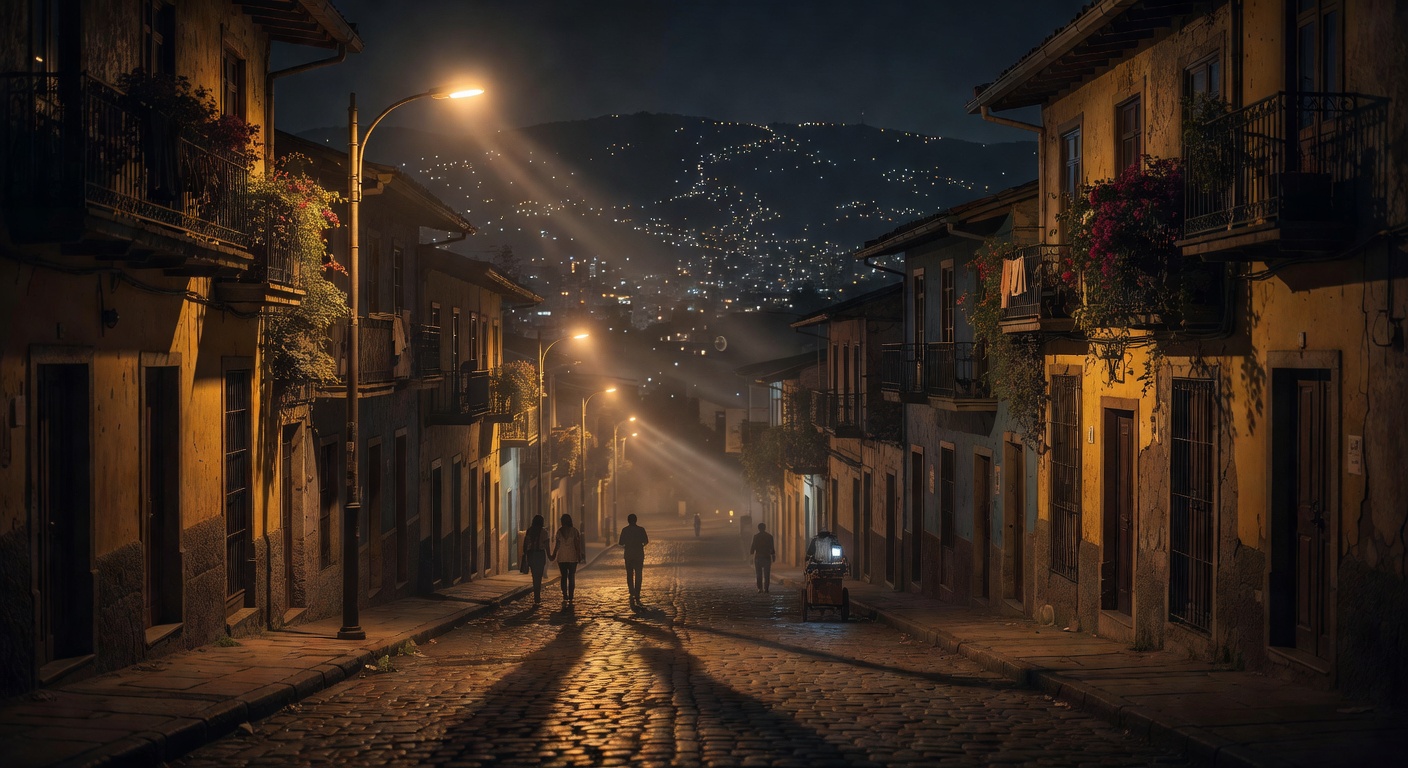
Medellín is the capital of Antioquia and Colombia's second-largest city, home to roughly 2.5 million people spread across the Aburrá Valley at about 1,500 metres of altitude. Its spring-like climate earned it the nickname La Ciudad de la Eterna Primavera, and its remarkable pivot from the violence of the Escobar era to an internationally marketed hub for tourism, remote work and nightlife is now the city's dominant story. For adult visitors, the centre of gravity is El Poblado and its nightlife core around Parque Lleras and Provenza, where hostels, rooftop bars, clubs and short-let apartments cluster within a few walkable blocks.
That same transformation has a harder edge that this guide exists to address plainly. The post-pandemic surge in foreign arrivals brought a parallel surge in sex tourism, and Medellín now sits at the intersection of a fully legal adult sex industry and an acute, well-documented crisis of child sexual exploitation and drug-facilitated crime against tourists. In late 2023 the U.S. Embassy in Colombia recorded eight suspicious deaths of American citizens in Medellín in a two-month span, several tied to online dating applications and suspected drugging. In April 2024 the city's mayor took the extraordinary step of banning prostitution outright in its most touristed neighbourhoods. An adult tourist here is navigating not a lawless free-for-all but a place where the law is specific, enforcement has recently sharpened, and the genuine dangers are chemical and criminal rather than legal.
The sections below set out the legal framework by its real statutes, the health picture, the scams that separate visitors from their money and occasionally their lives, where police enforcement actually falls, and a district-by-district read of the city. The framing throughout is harm reduction: what the rules are, what the risks are, and how to reduce your exposure to both.
Legal Status
Selling and buying sex between consenting adults is legal in Colombia. The country does not criminalise the sex worker or the client, and its Constitutional Court went further than most: in Sentencia T-629 de 2010, the court recognised sex work as legitimate labour and held that sex workers are entitled to the same labour and social protections as any other worker. Regulation happens at the municipal level through zoning — designated zonas de tolerancia — and business licensing for bars, clubs and venues. What remains firmly criminal under the Penal Code (Ley 599 de 2000) is third-party exploitation: pimping, inducing or coercing another person into prostitution, and profiting from their coerced work.
The single most important legal fact for any visitor is the boundary around minors, because it does not track the general age of consent. Colombia's general age of consent is 14. But paying for, soliciting, or engaging in any commercial sexual activity with a person under 18 is a grave felony regardless of apparent consent, a convincing appearance of adulthood, or a presented ID. This is codified as the demand for commercial sexual exploitation of a minor under 18 (Article 217A of the Penal Code, added by Ley 1329 de 2009), and it carries a prison sentence measured in well over a decade. Colombia has also removed the statute of limitations for sexual offences against minors, and the framework built by Ley 679 de 2001 and Ley 1336 de 2009 specifically targets child sexual exploitation and sex tourism. Article 219 criminalises organising, promoting or facilitating sex tourism involving minors, and human trafficking is prosecuted under Ley 985 de 2005 (Article 188A of the Penal Code). "I didn't know" and "she showed me an ID" are not defences here. The gap between the age of consent and the commercial-exploitation threshold is exactly where foreign visitors get caught, and Medellín treats these cases as an enforcement priority.
Practical Safety
Medellín is safer today than its reputation suggests, but the specific risks facing adult male tourists in the nightlife economy are serious and, in a handful of recent cases, fatal. The headline danger is chemical incapacitation. Scopolamine — known locally as burundanga — is a potent, hard-to-detect alkaloid that can render a victim unconscious for hours and, in concentrated doses, cause respiratory failure and death. It is used to sedate targets so they can be robbed of phones, cards, watches and cash, sometimes marched to ATMs while compliant. The classic delivery is a spiked drink, a laced cigarette, or a laced snack offered by someone met that night, very often through a dating or hook-up application. The U.S. Embassy's January 2024 security alert tied a cluster of American deaths in the city directly to this pattern.
The defensive rules are simple and they work. Never leave a drink unattended and never accept an open drink, food, gum or a cigarette from someone you have just met. Treat a match on a dating app the same way you would treat a stranger who approached you on the street: meet in a busy public place in daylight if possible, tell someone where you are, and do not invite an unfamiliar person to your apartment or hotel room, where you are isolated and outnumbered. The local phrase no dar papaya — roughly, don't hand someone the opportunity — captures the mindset: keep your phone and jewellery out of sight, carry only one card and limited cash, and leave your passport in a safe. Robbery, phone-snatching from moving motorbikes, and the "millionaire's ride" (paseo millonario) express kidnapping in unmarked taxis are all real; the drug-facilitated version is simply the most dangerous. The city's own tourism monitor reported thefts against foreign visitors rising roughly 200 percent year-on-year in one recent quarter.
Health Considerations
Colombia's HIV prevalence in the general adult population is under one percent, but as in most countries it runs considerably higher among key populations, including sex workers and men who have sex with men, which makes barrier protection non-negotiable rather than optional. Condoms are sold cheaply and without prescription at any pharmacy — the large chains include Cruz Verde, Farmatodo and La Rebaja — as is emergency contraception. Post-exposure prophylaxis (PEP) for HIV is time-sensitive and should be sought at a hospital emergency department as soon as possible after a potential exposure, ideally within hours and no later than 72 hours.
Medellín has strong medical infrastructure by regional standards. Public and subsidised care runs through the municipal network Metrosalud and the city's Secretaría de Salud, while the private sector includes well-regarded hospitals such as Hospital Pablo Tobón Uribe and Clínica Las Américas; travel insurance and private clinics generally mean faster service for tourists. For any medical emergency, including a suspected drugging, the national emergency number is 123, and drug-facilitated crime should be treated as a medical emergency first — get the person to an ER, because scopolamine and alcohol combinations can suppress breathing. Routine STI screening is available through public clinics and private labs. One upside of the altitude: at 1,500 metres, Medellín itself has far less mosquito-borne disease risk than Colombia's lowlands, though dengue does circulate in the warmer towns of the surrounding valley, so standard precautions apply if you travel outside the city.
Common Scams
The most dangerous "scam" is the drugging-and-robbery operation described above, which frequently begins as an ordinary-looking date or a paid encounter arranged through an app and ends with the victim waking hours later stripped of valuables. Related to it are coordinated prepago (escort) robbery rings, in which the arranged companion either administers a sedative herself or admits accomplices to the room once the client is incapacitated or asleep. These are organised crimes, not opportunistic ones, and the app-based introduction is the common thread.
Lower-stakes but far more common are the money traps around nightlife. Some bars and clubs operate as clip joints, inflating tabs dramatically, adding phantom "fines" or minimum-consumption charges, or steering a companion's commission onto your bill; always keep track of what you order and query a tab that looks wrong before paying. Fake-police shakedowns occur, where a supposed officer demands to inspect your wallet, phone or documents and skims cash or plants a pretext for a bribe — real officers do not need to hold your cash, and you can ask for identification and to deal with the matter at a station. ATM skimming and counterfeit banknotes are worth guarding against by using machines inside banks and shopping centres. Taxi overcharging is routine; use a metered yellow cab or a ride-hailing app so the price is fixed in advance. Finally, treat any claim of age at face value as worthless: deliberate misrepresentation of age, sometimes with forged documents, is a well-known trap, and as the Legal Status section makes clear, the legal consequences of being wrong fall entirely on you.
Police & Enforcement Reality
Enforcement in Medellín is sharply asymmetric, and understanding where it falls is the single most useful thing a visitor can know. The routine transaction between two consenting adults is broadly tolerated and rarely the target of police attention. The full weight of the state falls on anything touching minors. The trigger for the current posture was a February 2024 case in which an American citizen was found in the El Poblado area with two Colombian girls aged 12 and 13; the political and policing response was immediate and has not relaxed.
In April 2024, Mayor Federico Gutiérrez issued a decree banning prostitution for six months in El Poblado and Provenza, paired with a second decree imposing a 1 a.m. curfew and alcohol restrictions in the Parque Lleras zone and cutting nightlife trading hours. Beyond the headline bans, the durable effect has been intensified operations: hotel and short-let guest registration is enforced, Migración Colombia and the police run checks in the tourist core, and cases involving foreigners and minors are pursued for prosecution and, where relevant, deportation. A foreigner caught in a commercial encounter with a minor faces a long Colombian prison sentence with no statute of limitations, and this is treated as a priority category, not a technicality. At the same time, visitors should be realistic about petty corruption at the street level — shakedown attempts by individuals presenting as officials do happen, which is why insisting on formal identification and a police station is a reasonable response. The tourist police (Policía de Turismo) operate in the main visitor areas and are the appropriate first contact for crimes against tourists.
Neighborhood Overview
El Poblado (Comuna 14) is the district nearly every visitor means when they say Medellín's nightlife. Within it, Parque Lleras is the historic epicentre of bars and clubs, Provenza is the trendier restaurant-and-cocktail strip a few blocks over, and Manila and the wider Zona Rosa fill in around them. This is also the zone most affected by the 2024 decrees and the heaviest police presence, so the scene here is more constrained and more surveilled than it was a couple of years ago. The area is comparatively affluent and walkable, but its concentration of tourists also concentrates the drugging and robbery risk described earlier.
Laureles-Estadio, on the other side of the valley, is quieter, flatter, more residential and increasingly favoured by longer-stay visitors who find El Poblado too intense. Its nightlife runs along Avenida 70 (La 70) and La 33 and skews more local and less overtly transactional. The satellite municipalities of Envigado and Sabaneta to the south are calmer, family-oriented and popular with residents. By contrast, the traditional street-based sex trade sits in the old centre — around Parque Berrío, La Veracruz, Barbacoas and near Parque Bolívar — and in the historic tolerance zone of Barrio Antioquia (officially Trinidad). These downtown areas are cheaper and more local but carry markedly higher risk of robbery and violence, are best treated as daytime-only for the unfamiliar, and are precisely the settings where exploitation and coercion are hardest for an outsider to read. Separately, Comuna 13 in the west has become a major daytime tourist attraction for its street art and history; it is not a sex-tourism zone, and visitors should go with a guide and stay to the established route.
Local Trafficking Indicators
Medellín has a documented, ongoing problem with the commercial sexual exploitation of children and adolescents (known in Colombia by the acronym ESCNNA), and the same networks that exploit minors also traffic vulnerable adults. A large and particularly exploited group are Venezuelan migrant women, many of whom arrived with no papers, no money and no safety net, making them targets for debt bondage and coercion. The presence of a legal adult market does not make any given encounter consensual or lawful, and a visitor who cannot tell the difference should treat that uncertainty as a reason to walk away.
Concrete warning signs include anyone who looks or may plausibly be under 18; a person who is not free to leave, is being watched, or is accompanied by a controller who speaks for them, holds their phone, money or documents, or takes the payment; rehearsed or evasive answers about their age, name or origin; and signs of fear, injury, branding tattoos, or heavy substance dependence. Being moved between hotels by a "manager," or a group of women managed by one man, are further red flags. If you suspect a minor is being exploited or that anyone is being held against their will, the child-protection line of the Instituto Colombiano de Bienestar Familiar (ICBF) is 141, the Fiscalía (attorney general's office) reporting line is 122, and the general emergency number is 123. Reports can be made anonymously.
Getting Around
Medellín has the only metro system in Colombia and it is clean, cheap and safe. The rail network runs on two lines — Line A north-south along the valley floor and Line B west from the central San Antonio interchange — supplemented by the aerial Metrocable gondolas that climb the hillside comunas, the Tranvía tram serving the Ayacucho corridor, and the EnCicla public bikes. A rechargeable Cívica card covers the integrated fare. One quirk matters for nightlife: the Poblado metro station sits down in the valley on the main artery, a steep couple of kilometres below Parque Lleras, so almost nobody walks it — plan on a short taxi or app ride up the hill.
For door-to-door travel, official taxis are yellow and should run the meter; ride-hailing apps such as Uber, DiDi, Cabify and InDrive all operate in the city, though Uber sits in a legal grey area in Colombia and drivers may ask you to sit up front. Apps are generally the safer choice at night because the route, driver and price are logged, which sidesteps both meter disputes and the paseo millonario risk of hailing an unmarked car on the street. The main international gateway is José María Córdova International Airport (MDE), about 45 minutes east in Rionegro; the smaller Olaya Herrera (EOH) handles regional domestic flights from within the city itself. Agree an airport fare or use an app rather than accepting an unsolicited driver in the arrivals hall.
Where to Stay
The default choice for most first-time visitors is El Poblado, which has by far the densest concentration of hotels, hostels and serviced apartments and puts the nightlife on your doorstep — with the trade-off that it is also where the crackdown, the crowds and the drugging risk are most concentrated. Travellers who want a calmer base increasingly pick Laureles for its residential feel and walkable, more local nightlife, or Envigado for something quieter still. Wherever you stay, choose accommodation with a genuine 24-hour front desk and secure entry rather than an anonymous lockbox apartment.
Be aware that Colombian law requires hotels to register every guest by ID, and bringing a visitor to your room means that person must present valid identification and be recorded. Since the 2024 measures, El Poblado establishments in particular enforce this strictly, many buildings and short-let operators have tightened or barred overnight guests, and some Airbnb-style rentals no longer permit unregistered visitors at all. Rather than an inconvenience to work around, treat guest registration as a safeguard that protects you: it is the mechanism by which an under-age or trafficked person is caught at the door, and it creates a record that protects a guest against later accusations. If a venue or arrangement is specifically designed to avoid any registration or documentation, that is a signal to be cautious, not a convenience.
Resources
In any emergency — crime, a medical crisis, or a suspected drugging — call 123, the single national emergency line, and treat a drugging as a medical emergency by getting the person to a hospital immediately. To report suspected child sexual exploitation, trafficking or coercion, contact the ICBF child-protection line 141 or the Fiscalía reporting line 122; both accept anonymous reports. The Policía de Turismo (tourist police) operate in the main visitor districts and are the appropriate first contact for crimes against tourists.
Foreign nationals who are victims of a serious crime, arrested, or otherwise in trouble should contact their own embassy or consulate; U.S. citizens can reach the U.S. Embassy in Colombia, which publishes current security alerts for the country, including the guidance on dating-app risk that followed the 2023–2024 incidents in Medellín. For health needs, condoms and emergency contraception are available over the counter at any pharmacy, time-sensitive HIV post-exposure prophylaxis should be sought at a hospital emergency department, and the municipal network Metrosalud provides public care alongside the city's private hospitals. The through-line of everything above is simple: the adult side of Medellín is legal, but the real dangers are chemical incapacitation and the hard legal wall around minors. Stay in public, guard your drink, verify who you are actually dealing with, and when something feels off, leave.