India · City Guide
Mumbai
What an adult visitor to Mumbai actually needs to know about the law, the health picture, the scams, and where enforcement really falls.
City facts
Read more about Mumbai on Wikipedia →Overview
Mumbai is India's financial capital and its largest city, a dense coastal metropolis of more than twenty million people spread across a narrow peninsula and its northern suburbs. It is also home to Kamathipura, one of Asia's oldest and most written-about red-light districts, established in the nineteenth century and for generations a fixture of the city's social geography. Any adult visitor forming an impression of Mumbai from older travel writing, films, or word of mouth should understand that the reality on the ground has changed enormously. Kamathipura has contracted sharply over the last two decades under the combined pressure of real-estate redevelopment, aggressive public-health programmes, anti-trafficking enforcement, and a broad migration of the trade toward apartments, spas, and phone-and-app arrangements dispersed across the suburbs.
India's legal framework around sex work is often described, inaccurately, as either fully legal or fully banned. Neither is true. The country operates a partial-criminalisation model in which the private exchange of sex for money between consenting adults is not itself a specific crime, but nearly every surrounding activity — soliciting in public, keeping or managing a brothel, living off another person's earnings, and procuring — is criminalised. This produces an environment that is legally ambiguous, heavily policed at its edges, and shaped as much by extortion and informal arrangements as by the statute book. For a visitor, the practical consequences are less about the theoretical legality of any single act and more about the very real risks of coercion, exploitation, health exposure, financial scams, and enforcement that lands unpredictably.
This guide treats Mumbai as it is, not as it is imagined. The reader assumed here is an adult tourist who wants accurate information: what the law says, what the health data show, which scams are common, how the police actually behave, and how to recognise the coercion and trafficking that remain genuine features of parts of this trade. The framing throughout is harm reduction and factual accuracy, not endorsement or moralising.
Legal Status
The governing statute is the Immoral Traffic (Prevention) Act, 1956 (ITPA), originally enacted as the Suppression of Immoral Traffic in Women and Girls Act and substantially amended in 1986. Under the ITPA, the sale of sex in private between consenting adults is not itself a defined offence, but the Act criminalises the ecosystem around it: keeping or managing a brothel (Section 3), living on the earnings of prostitution, which is how pimping is prosecuted (Section 4), procuring or inducing a person into prostitution (Section 5), carrying on prostitution in or near any public place, historically framed as within roughly 200 metres of places such as schools, temples and hospitals (Section 7), and soliciting or seducing for the purpose of prostitution in a public place (Section 8). The net effect is that almost everything a visitor would encounter in a commercial setting — a managed venue, a tout, a public approach — sits on the wrong side of one of these provisions.
The age of consent in India is 18. This is set by the Protection of Children from Sexual Offences Act, 2012 (POCSO) read with the general rape law, and it was raised to 18 by the Criminal Law (Amendment) Act, 2013 following the 2012 Delhi gang-rape case. There is no lower threshold that applies to tourists or in any commercial context, and offences involving anyone under 18 carry severe, non-negotiable penalties. As of 1 July 2024, the Indian Penal Code of 1860 was replaced by the Bharatiya Nyaya Sanhita, 2023 (BNS), the country's new general criminal code. Trafficking of persons, formerly Section 370 of the IPC, is now Section 143 of the BNS, a cognizable, non-bailable offence carrying rigorous imprisonment of at least seven years, with sexual exploitation of a trafficked person punished more severely still.
Two Maharashtra-specific points matter. First, the state effectively banned dance bars in 2005 through an amendment to the Bombay Police Act; after prolonged litigation the state passed the Maharashtra Prohibition of Obscene Dance in Hotels, Restaurants and Bar Rooms and Protection of Dignity of Women (Working therein) Act, 2016, and the Supreme Court has repeatedly struck down or read down the tightest restrictions, leaving the sector legal but heavily regulated and often operating in a grey zone. Second, alcohol itself is regulated more strictly here than in much of India: under the Bombay Prohibition Act, 1949 the legal age is 21 for beer and wine and 25 for spirits, and a liquor permit is technically required to purchase, transport or consume alcohol, though in practice licensed bars in Mumbai serve on ID alone. Narcotics are governed by the Narcotic Drugs and Psychotropic Substances Act, 1985 (NDPS), which is strict and applies to tourists exactly as it does to residents.
Practical Safety
Mumbai is, by the standards of large cities, comparatively safe for street-level movement, including at night in the central and southern districts where much of the tourist accommodation sits. Violent robbery of foreigners is uncommon; the everyday risks are pickpocketing in crowded markets and on packed local trains, opportunistic theft, and the financial predation covered in the scams section below. The specific hazards that attach to adult nightlife are more about spiked drinks, inflated bills, and extortion than about physical assault.
The single most consequential piece of advice is to keep control of your drink and your surroundings. Drink-spiking followed by robbery — of phone, cash and cards — is a documented pattern in and around nightlife venues and in encounters that begin with a friendly stranger or an unsolicited invitation to a bar. Do not accept drinks you did not watch being poured, and be wary of anyone who steers you from a public place to a private one they chose. Carry a photocopy or phone image of your passport and visa rather than the original, keep cash in more than one place, and know that the red-light lanes around Kamathipura and Falkland Road are dense, closely watched, and not places to wander alone at night with valuables. The national emergency number is 112, which reaches police, ambulance and fire; police can also be reached directly on 100.
Health Considerations
Mumbai was one of the early epicentres of India's HIV epidemic, and Kamathipura in the 1990s recorded some of the highest HIV prevalence figures ever measured among sex workers anywhere. That picture has changed substantially. Large-scale targeted-intervention programmes — condom promotion, peer outreach, and free testing and treatment delivered through the National AIDS Control Organisation (NACO) and the Mumbai District AIDS Control Society — drove a marked, sustained fall in prevalence and a large rise in reported condom use over the following two decades. HIV nonetheless remains present, and other sexually transmitted infections including syphilis, gonorrhoea, chlamydia, herpes and hepatitis B are common; drug-resistant gonorrhoea is a growing concern across the region. Condom use is the single most effective protection and should be treated as non-negotiable.
Testing and treatment infrastructure is real and, for many services, free. NACO operates Integrated Counselling and Testing Centres (ICTCs) offering free, confidential HIV testing, and free antiretroviral therapy is available through government ART centres. India manufactures generic antiretrovirals cheaply, and post-exposure prophylaxis (PEP) — a short course started ideally within 72 hours of a possible exposure — is available through major hospitals; the sooner it is started, the better it works. Rather than direct anyone to a specific clinic that may have moved, the reliable categories to seek are a government ICTC, a hospital emergency department, or a private diagnostic laboratory, of which Mumbai has many. The city's large public hospitals — KEM Hospital in Parel, Sir J.J. Hospital in Byculla, Sion Hospital, Nair Hospital at Mumbai Central and Cooper Hospital in the western suburbs — run skin-and-VD (STI) and HIV services and are appropriate points of contact in an emergency.
Two further health notes: hepatitis B is vaccine-preventable and worth confirming before travel, and general travel health precautions apply strongly in Mumbai. Do not drink tap water; stick to sealed bottled or properly filtered water, be cautious with street food and ice, and carry any personal medication you rely on, as pharmacy stock and brand names differ. Mumbai's monsoon season, roughly June to September, brings flooding that can contaminate standing water and raises the risk of waterborne and mosquito-borne illness.
Common Scams
The most frequent financial trap in Mumbai nightlife is the padded or fabricated bar bill. A visitor is befriended or invited into a bar — sometimes an ordinary-looking establishment, sometimes a venue presented as a dance bar — and at the end of the evening is presented with a bill running to many thousands of rupees, inflated by drinks supposedly bought for hostesses, invented cover charges, or simple overcharging, with intimidation applied if there is any objection. The defence is to choose your own venue, ask prices before ordering, keep a running tally, and avoid anywhere you were led to by a stranger or a hotel tout. Related to this is the drink-spiking robbery already noted, where the objective is your phone, cards and cash rather than a bill.
Extortion is the second major category, and it takes two forms. Real or fake police, or men claiming to be police, may threaten arrest under the ITPA to extract a bribe from a foreigner caught in or near a commercial-sex setting; because the surrounding activities genuinely are offences, the threat has enough plausibility to work. The third and fastest-growing category is sextortion. India has a very large online sextortion problem, including recorded video calls used for blackmail and the so-called "digital arrest" scam in which fraudsters impersonate police or agencies over the phone to frighten victims into paying. Anyone who is being blackmailed over intimate images or video should stop paying, preserve the evidence, and report to the police cyber cell or the national cybercrime helpline, 1930, rather than negotiating with the blackmailer. Standard traveller scams also persist: taxi and auto-rickshaw drivers who claim the meter is broken, and hotel or airport touts steering guests to businesses that pay commissions.
Police & Enforcement Reality
Enforcement of the ITPA in Mumbai falls primarily to the Social Service Branch of the Mumbai Police, which conducts brothel raids, along with the police's Anti-Human Trafficking Units. Because the law targets the organisers rather than the private act, enforcement pressure lands most heavily on brothel-keepers, madams (locally the gharwali or malkin), pimps and procurers, and on rescuing those found to be minors or coerced. Clients are not the primary target of the statute, but that does not make a foreigner safe: a person present during a raid can be detained, questioned, named, and exposed to the extortion dynamic described above, and any involvement with a minor or a trafficked person is prosecuted with full severity under POCSO and the BNS.
Visitors should be realistic about corruption and informal policing at street level. Payments demanded to make a problem disappear are common, and a demand framed as an on-the-spot fine or a threat of ITPA arrest may be either genuine leverage or pure extortion; either way the situation is one to avoid entering rather than to negotiate out of. If you are the victim of a crime — robbery, spiking, blackmail, assault — the legitimate channel is a police station or the 112 emergency line, and Mumbai does maintain tourist-facing policing. Keep interactions calm and factual, ask for identification if plainclothes officers assert authority, and involve your country's consulate early if you are detained; consulates cannot override Indian law but can monitor your treatment and help you find a lawyer.
Neighborhood Overview
The name most associated with commercial sex in Mumbai is Kamathipura, in the central city near Grant Road and Mumbai Central stations. For over a century it was one of the largest red-light districts in Asia, laid out in a grid of numbered lanes, with the adjacent Falkland Road and Foras Road areas — the historic "cages" and Safed Gali — forming part of the same complex. Its scale today is a fraction of what it was. Soaring central-Mumbai land values, large redevelopment plans, decades of HIV programmes, anti-trafficking raids and generational change have hollowed it out; many buildings have been cleared or repurposed, the resident population of sex workers has fallen dramatically, and much of what remains is older, poorer and precarious. A visitor should understand Kamathipura less as a functioning destination than as a shrinking, heavily surveilled and socially fraught area.
As the traditional districts have contracted, the trade has dispersed and gone indoors and online. Suburban apartments, so-called massage parlours and spas, hotel-based arrangements, and phone-and-app introductions now account for much of the activity, spread across the northern and eastern suburbs and into Navi Mumbai — including areas around Vashi and Turbhe — as well as pockets of the western suburbs. Enforcement follows this dispersal: spa and parlour raids in suburbs such as Andheri and Malad are a recurring feature of local news. This shift also means that the coercion and trafficking risks are less visible than they once were in the concentrated lanes, not less real.
Mumbai's mainstream nightlife is a separate geography and worth naming to avoid confusion. Colaba in the far south, centred on the Colaba Causeway, is the main backpacker and tourist zone with bars, cafes and heavy foot traffic; the adjacent Fort district holds much of the colonial-era architecture and business hotels. The city's fashionable bar-and-club scene clusters in Bandra in the western suburbs, in Lower Parel around the Kamala Mills and Todi Mills compounds, and in parts of Andheri, particularly Lokhandwala. Juhu, further north along the coast, mixes beachfront hotels with residential affluence. These are ordinary nightlife districts; treating them as adult-trade areas is both inaccurate and a good way to walk into a bar-bill scam.
Local Trafficking Indicators
Kamathipura and the broader Mumbai trade have a long, well-documented association with trafficking, historically drawing coerced women and girls from Nepal, Bangladesh, and Indian source regions including West Bengal, and from communities in Karnataka and Andhra Pradesh, sometimes through the devadasi system. Exploitation mechanisms include debt bondage — the so-called chukri arrangement in which a person is held until an unpayable "debt" is worked off — confinement, confiscation of documents and phones, and control exercised by a gharwali or malkin. These are not historical curiosities; anti-trafficking units and NGOs continue to rescue victims, including minors, from Mumbai settings each year.
Practical indicators that someone is coerced or underage include an apparent age below 18 or uncertainty about it; an inability to leave, to speak freely, or to keep their own earnings, money or identity documents; the constant presence and control of a third party who answers for them; signs of confinement, fear, injury or heavy monitoring; and scripted or rehearsed responses. Under Indian law the stakes here are absolute: any sexual contact with a person under 18 is a serious crime under POCSO and the BNS regardless of appearance, payment or claimed consent, and involvement with a trafficked adult engages the trafficking provisions of the BNS. There is no ambiguity and no defence built on being a foreigner or being deceived about age.
Anyone who encounters what looks like trafficking or child exploitation should not attempt a personal intervention but should report it. The child helpline Childline, reachable on 1098, handles cases involving minors; the emergency line 112 and the police Anti-Human Trafficking Units handle trafficking; and Mumbai has established organisations working in exactly this space. Prerana has worked for decades in the Kamathipura, Falkland Road and Foras Road areas to protect the children of women in prostitution and to prevent intergenerational trafficking; Apne Aap Women Worldwide works with women and girls in the same districts; the Rescue Foundation conducts rescues and rehabilitation of trafficking victims across Mumbai and Maharashtra; and Kranti supports the daughters of sex workers. These are appropriate points of contact for reporting concerns responsibly.
Getting Around
Mumbai's transport backbone is its suburban railway, the local-train network, which carries millions daily along the Western Line (Churchgate to the northern suburbs), the Central Line (from Chhatrapati Shivaji Maharaj Terminus, still widely called CST or VT), and the Harbour Line toward Navi Mumbai. Trains are fast and cheap but extremely crowded at peak hours; women's compartments exist and are worth using where relevant, and packed carriages are prime pickpocketing territory. The expanding Mumbai Metro supplements the trains, including the elevated Line 1 across the Andheri corridor and the newer underground Line 3 (Aqua Line) serving the business districts and the airport corridor; the metro is cleaner and less crowded than the locals but covers fewer routes. BEST buses fill in the gaps across the city.
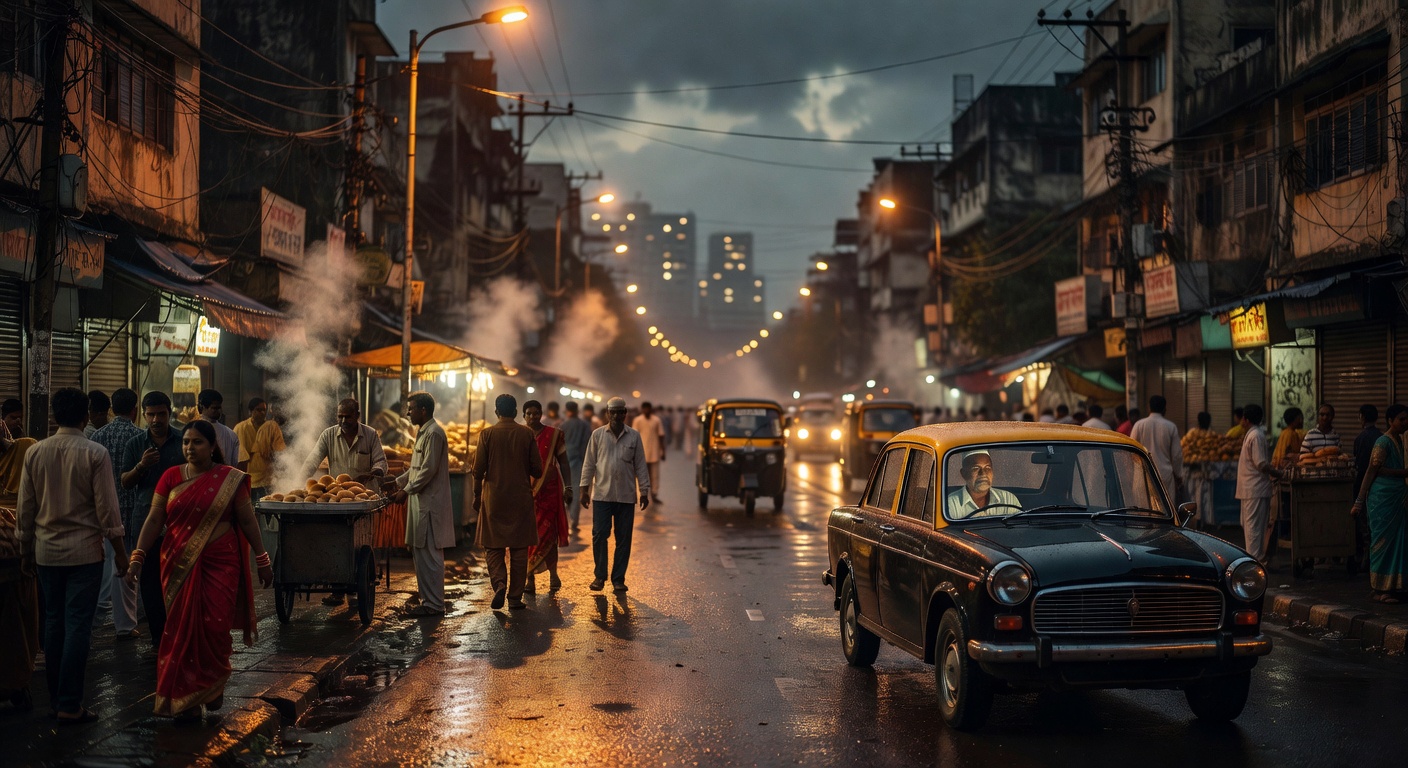
For door-to-door travel, the ride-hailing apps Uber and Ola are widely used, generally reliable, and remove haggling and meter disputes from the equation, which makes them the safest default for a visitor moving between nightlife areas late at night. The traditional black-and-yellow "kaali-peeli" taxis operate mainly in the island city (south and central Mumbai), while auto-rickshaws operate in the suburbs and are generally not permitted south of the Bandra–Sion line, so the vehicle available to you depends on where you are. Insist on the meter or agree a fare before starting, and be aware of the "broken meter" overcharging noted earlier. During the monsoon, flooding can shut down road and rail with little warning, so build in time and check conditions before travelling.
Where to Stay
For most visitors the sensible bases are the southern and western districts rather than anywhere near the historic red-light lanes. Colaba and Fort in the south offer everything from backpacker guesthouses to heritage and business hotels, walkable sightseeing, and easy access to Churchgate and CST stations. Bandra and the western suburbs suit those who want nightlife and a more contemporary scene, while Andheri and the area around the airport are convenient for short stays and early flights. There is no practical reason to stay in or beside Kamathipura, Falkland Road or Foras Road, and doing so places you in a heavily policed, socially difficult area for no benefit.
One India-specific point catches travellers out. Indian hotels are legally required to verify guest identity, so carry your passport and visa; foreigners will have their details recorded and may be asked to complete a registration form. Many hotels, particularly budget and mid-range ones, apply their own policies to unmarried couples and to local guests, and some refuse or restrict rooms shared by a couple who cannot show they are married or who are both Indian residents; policies vary widely and are applied at the property's discretion. Business-class and international-brand hotels are generally the most straightforward on this front. Bringing a guest back to a hotel room is entirely at the property's discretion and may be refused or may trigger additional ID recording; a room booked as a single may not permit a second person at all.
Resources
In any emergency, the single national number is 112, which dispatches police, ambulance and fire. Police can also be reached on 100, the ambulance service on 108 in Maharashtra, the national women's helpline on 1091, the child helpline (Childline) on 1098, and the national cybercrime and financial-fraud helpline — relevant for sextortion and "digital arrest" scams — on 1930. Save these before you need them.
For health, free and confidential HIV testing is available through NACO's Integrated Counselling and Testing Centres, and free antiretroviral treatment through government ART centres; post-exposure prophylaxis (PEP) should be sought urgently, ideally within 72 hours, through a hospital. Mumbai's major public hospitals for STI and HIV services and emergencies include KEM Hospital (Parel), Sir J.J. Hospital (Byculla), Sion Hospital, Nair Hospital (Mumbai Central) and Cooper Hospital (western suburbs); private diagnostic laboratories offer rapid STI testing across the city.
For concerns about coercion, exploitation or trafficking, established Mumbai organisations include Prerana, Apne Aap Women Worldwide, the Rescue Foundation and Kranti, working alongside the police Anti-Human Trafficking Units and Childline. Finally, register with or note the contact details for your country's consulate in Mumbai on arrival; a consulate cannot set aside Indian law, but if you are detained, robbed, or in a medical crisis it can monitor your welfare, help you contact family, and point you to English-speaking legal and medical assistance.