Italy · City Guide
Milan
What the law actually says, where enforcement really falls, and how to stay safe in Italy's fashion and finance capital.
Overview
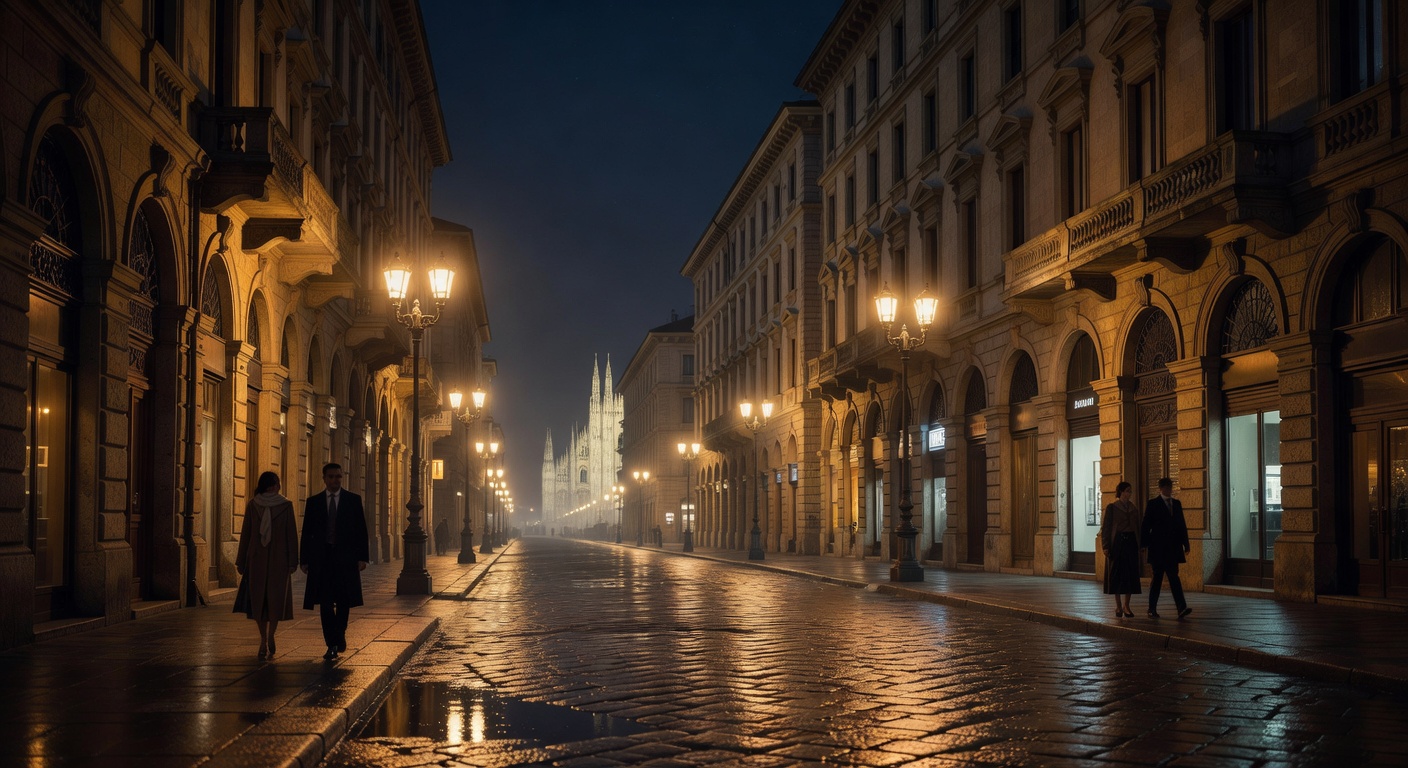
Milan is Italy's financial and industrial engine and its fashion capital: a working city of roughly 1.4 million in the metropolitan core of Lombardy, oriented around trade fairs at Rho Fiera, the design week of the Salone del MobileSan Siro, and a dense population of business travellers. Unlike Amsterdam it has no window district; unlike Bangkok it has no go-go strip. There is no legal red-light zone anywhere in Italy, and Milan is no exception. The adult scene here is deliberately low-visibility: street sex work concentrated on the industrial peripheries and ring roads, and a much larger indoor market of private apartments and escorts advertised online. Central Milan looks, to a visitor, like any prosperous European business city.
That discretion is a product of the law. Selling sex as an independent adult is not a crime in Italy, but organising it is, so nothing operates openly as a venue. What a tourist actually encounters day to day is not the sex trade but the city's real risk: petty theft. Milan consistently records among the highest reported-theft rates of any Italian city, and pickpocketing around the Duomo, Milano Centrale station and the metro is the single most likely thing to go wrong on a trip. The adult-oriented hazards that do exist are mostly financial predation dressed up as nightlife: hostess bars and "clip joints" that run up ruinous drink tabs.
This guide is written for harm reduction, not judgement. It sets out what the law says and how it is actually enforced, where the health infrastructure is, the scams that separate visitors from their money, how to recognise the coercion and trafficking that sit behind much of the street trade, and which neighbourhoods are which. The aim is to let an adult make informed, lawful decisions and avoid becoming either a victim or, unwittingly, a party to someone else's exploitation.
Legal Status
Italy follows an abolitionist model defined by the Merlin Law (Legge 20 febbraio 1958, n. 75), named for Senator Lina Merlin, which shut the state-licensed brothels that had existed since unification and criminalised the organisation of prostitution rather than the act itself. The result: an adult selling sexual services is not committing a crime, and buying from an adult is likewise not a crime — Italy is not a Nordic-model country like France or Sweden. What is illegal is essentially everything around it: keeping or managing premises used for prostitution (a brothel or casa chiusa), pimping and exploitation (sfruttamento), recruiting or inducing another person into prostitution, and profiting from it. These offences carry prison terms of roughly two to six years and fines. This is why there are no legal venues in Milan and why any apartment operated by a third party sits on the wrong side of the line.
The age of consent in Italy is 14 under Article 609-quater of the Penal Code, with important qualifications: it rises to 16 where the older person holds a position of authority or trust (teacher, coach, guardian), and is effectively 18 for a parent, adoptive parent or cohabiting family figure. A close-in-age exemption protects consensual acts between minors where the younger is at least 13 and the age gap is no more than four years. Crucially, none of that applies to paid sex: engaging in sexual acts in exchange for money or other benefit with anyone under 18 is a separate and serious crime of child prostitution under Article 600-bis of the Penal Code, punishable by imprisonment regardless of the general age of consent. A visitor should treat 18 as the only relevant number in any commercial context.
Trafficking and enslavement are prosecuted under Articles 600, 601 and 602 of the Penal Code, substantially reformed by Law No. 228 of 2003 ("Measures against trafficking in persons"), which carry long custodial sentences. Italy also operates a distinctive victim-protection mechanism: Article 18 of the Immigration Consolidation Act (Legislative Decree 286/1998) allows a residence permit for social-protection reasons to trafficking victims who escape their exploiters, independent of whether they cooperate with a prosecution. Finally, note that although street work is not itself criminal, many Italian municipalities — Milan among them — have used local ordinances under national "security package" powers to impose administrative fines on street solicitation by clients and workers alike, and to justify periodic police sweeps of the periphery. The act may be legal; doing it on the street can still cost you a fine.
Practical Safety
Milan is, by the standards of large global cities, low in violent crime; the realistic threat to a visitor is property crime, and it is genuinely high. Skilled pickpocket teams work the Duomo piazza, the Galleria Vittorio Emanuele II, the steps and concourse of Milano Centrale, tram routes serving tourist sights, and the crush of metro Lines M1 and M3 at rush hour. Techniques are the standard European repertoire: the bump on a crowded escalator, a "spilled" drink or dropped object as distraction, a folded map or cardboard held against your body while a hand works underneath. Carry cards and cash in a front pocket or an inside zipped layer, keep your phone off the café table, and never leave a bag on the back of a chair or on the ground between your feet at a bar.
After dark the central and inner districts — Brera, the Quadrilatero, Porta Venezia, most of the Navigli — are busy and well-lit and present little threat beyond the same petty theft. The areas that warrant more care at night are the immediate surroundings of Milano Centrale and, a few blocks out, the streets toward Piazza Duca d'Aosta and northeast of the station, where aggressive begging, drug dealing and occasional harassment concentrate; and the outer peripheries and ring-road corridors where street prostitution and open drug markets overlap. Rogoredo, on the southeastern edge, was for years home to an open-air heroin market known as the "boschetto della droga" and remains an area to avoid wandering into.
Anyone engaging with the paid scene should apply ordinary personal-safety discipline: tell someone where you are, meet in a neutral place first, never hand over your passport as a "deposit," keep control of your own drink, and be wary of any arrangement that moves you to an unfamiliar apartment on the periphery. Drink-spiking and coordinated theft — where a companion's associates arrive once you are intoxicated — are the mechanism behind most serious losses reported by male visitors here, far more than street violence.
Health Considerations
Italy has a strong public health system (Servizio Sanitario Nazionale). EU/EEA visitors are covered for necessary care with a European Health Insurance Card; UK visitors with a GHIC; everyone else should carry travel insurance, as non-residents pay for hospital care. The single emergency number across Italy, including Lombardy, is 112, which dispatches police, ambulance and fire. Pharmacies (farmacia, green cross) are widespread, several open late or 24 hours including one inside Milano Centrale; condoms are sold freely, and emergency contraception (levonorgestrel and ulipristal/ellaOne) is available over the counter to adults without prescription.
Milan has genuinely good, low-barrier sexual-health services. The public STI reference clinic run by ASST Fatebenefratelli-Sacco at Ospedale Sacco (Via G.B. Grassi 74, in the Vialba-Certosa area) operates a walk-in ambulatorio MTS — no appointment, direct access on weekday mornings — offering testing and treatment for HIV, syphilis, gonorrhoea, chlamydia and hepatitis, vaccination for hepatitis A/B and HPV, and HIV post-exposure prophylaxis (PEP) if you present within 72 hours of a risk exposure. The Fondazione IRCCS Ca' Granda Ospedale Maggiore Policlinico runs a comparable STI/IST reference centre in the city centre with free, anonymous, rapid testing. The NGO LILA Milano (Lega Italiana per la Lotta contro l'AIDS) also provides anonymous HIV testing and counselling. PrEP is available in Italy through the public system and specialist centres.
Practical harm-reduction notes: the window between exposure and a reliable antibody result for HIV, hepatitis C and syphilis is around 45 days, so testing is most meaningful after that interval, while PEP is time-critical and must be started within 72 hours — go straight to an infectious-disease hospital emergency department or the Sacco MTS clinic if a condom fails or breaks. Barrier protection remains the only reliable defence against the full range of STIs; carry your own and do not rely on a partner to supply it.
Common Scams
The most common street scams in Milan are non-sexual but target the same distracted tourist. Around the Duomo and the Castello Sforzesco, men aggressively tie friendship bracelets or press "free" corn or bird seed on you, then demand payment and surround you until you pay; rose sellers work restaurant terraces the same way. Clipboard "petition" crews, often working with a pickpocket, crowd you while you read a fake charity form. At Milano Centrale and both airports, unlicensed drivers approach arrivals offering rides — use only the official white metered taxis (taxi bianchi) from marked ranks, a licensed radio-taxi, or an app such as FreeNow, and ignore anyone touting inside the terminal.
The adult-specific trap in Milan is the hostess-bar or "clip joint" scam. A friendly local or a well-dressed woman strikes up conversation near the station, in a central bar, or around nightlife streets and suggests going somewhere for a drink; the venue has no visible prices, your companion orders champagne, and the bill arrives at hundreds of euros with muscle at the door making refusal difficult. The defence is simple: be extremely wary of any stranger who steers you to a specific bar, never let someone else order, and confirm prices in writing before anything is served. If you are cornered with an extortionate bill, pay by card if you must (a card charge can be disputed later), photograph the receipt, and report it to the police — these operations sometimes fold when a denuncia is filed. Online escort advertising carries its own risks: deposit-request scams where you pay upfront and no one appears, and bait-and-switch listings. Never send money in advance to secure a booking.
Police & Enforcement Reality
Italy has no dedicated tourist-police force. Policing is split between the Polizia di Stato (state police, the usual body for reporting crime, with a post inside Milano Centrale), the Carabinieri (a national gendarmerie, equally able to take a report), and the Polizia Locale di Milano (municipal police, who enforce city ordinances and traffic zones). To report a crime — theft, extortion, assault — you file a denuncia at any Questura or Carabinieri station; for a stolen passport, get the police report first, then contact your consulate. English is not guaranteed at the counter, so a translation app or a hotel's help can speed things up.
Enforcement priorities around the sex trade are clear and worth understanding. Police effort is directed overwhelmingly at exploitation and trafficking — the pimps, madams and networks that control street prostitution — and at the visible street trade itself through periodic peripheral sweeps and municipal ordinances that fine both clients and workers for public solicitation. Consenting private transactions between adults indoors attract essentially no attention. In practice, the visitor most likely to have a police encounter is not the person who paid for legal adult company but the one caught up in a clip-joint dispute, a street-solicitation sweep, or an operation targeting a controlled apartment where the third-party operator is the real target.
Two hard boundaries carry severe consequences regardless of the softness of the general regime: anything involving a person under 18, and anything touching a trafficked or coerced person. Both are prosecuted vigorously, and "I didn't know her age" or "I didn't realise she was controlled" is a weak defence. If a situation feels coerced, the lawful and humane response is to walk away and, if you have real information, use the anti-trafficking helpline rather than the police-tip route, which can expose a victim to immigration consequences.
Neighborhood Overview
Milan's centre radiates from the Duomo. The historic core — the cathedral, the Galleria, Piazza della Scala — is tourist territory: safe, monitored, and thick with pickpockets by day. Immediately north, Brera is the elegant art-and-gallery quarter, and the adjacent Quadrilatero della Moda (Via Monte Napoleone, Via della Spiga) is the luxury-fashion grid — polished, expensive, uneventful after dark. For nightlife, three zones dominate: the Navigli, the old canal district in the south along the Naviglio Grande and Naviglio Pavese, packed with bars and the evening aperitivo crowd; Corso Como and the modern Porta Nuova towers just north of Garibaldi station, home to the higher-end clubs; and Porta Venezia, a diverse, LGBTQ-friendly quarter along Corso Buenos Aires with a lively bar scene. Isola and Lambrate add younger, creative nightlife.
The paid sex trade is largely invisible in these central districts. Street prostitution has historically concentrated on the industrial peripheries and the ring roads (tangenziali): the long commercial stretch of Viale Certosa to the northwest, the Forlanini corridor near Linate airport to the east, the outer end of Via Ripamonti to the south, and various segments of the outer boulevards where cars can pull over. These are functional, car-dependent, and frequently the sites of both municipal ordinance sweeps and anti-trafficking operations; they are not places to explore on foot. The area around Milano Centrale and northeast toward Via Padova mixes cheap lodging, transient population and a rougher after-dark feel — convenient for transport but the part of the inner city where a visitor is most likely to be hassled. The indoor market — private apartments and online escorts — is dispersed citywide rather than tied to any single street, which is precisely why Milan has no recognisable district to point to.
Local Trafficking Indicators
A large share of Milan's visible street prostitution is not free adult sex work but coerced or trafficked labour, and understanding that is central to acting ethically. Italy has been a primary destination for two well-documented trafficking flows: Nigerian women, many from Edo State and the Benin City area, controlled through debt bondage and coercive juju oaths by a "madam," and Eastern European women (Romanian, Bulgarian, Albanian) controlled by boyfriend-pimps or organised networks. Much of this exploitation is worked out on exactly the peripheral ring-road stretches described above.
Recognisable indicators include: a woman who does not control her own movements or money and appears monitored from a nearby car; visible fear, injuries, or deference to a controller; inability to speak Italian or explain where she is or where she lives; signs of being underage; a fixed nightly quota she cannot leave until she meets; and confiscated documents. On the indoor side, warning signs are an apartment with several women who cannot come and go freely, a third party collecting all payment, and workers who seem coached to say the same thing. None of this is compatible with a free transaction, and paying into it means paying a trafficker.
The right response is not amateur rescue, which can endanger the victim, but to disengage and — if you have concrete information — contact the Numero Verde Antitratta, Italy's national anti-trafficking freephone on 800 290 290, which is free, anonymous, multilingual and staffed 24 hours by the Department for Equal Opportunities' network. It exists precisely to route information and offers of help, including for private citizens who witness exploitation. In an immediate emergency where someone is in danger, call 112. Milan's ecosystem of anti-trafficking and outreach services — Caritas Ambrosiana, the Comunità di Sant'Egidio, and specialist regional NGOs working under the Article 18 protection framework — can also assist a victim toward a residence permit and exit from exploitation.
Getting Around
Milan's public transport, run by ATM, is efficient and the sensible way to move around. The metro has five lines — M1 (red), M2 (green), M3 (yellow), M4 (blue) and M5 (lilac) — supplemented by an extensive tram and bus network, with the historic orange trams a landmark in their own right. A single ATM ticket covers 90 minutes across metro, tram and bus in the urban area, and contactless bank-card tap-in works on the metro gates. The M4 blue line now runs directly from Linate airport to San Babila in the centre in around 15 minutes, transforming the eastern airport connection. Malpensa, the main long-haul airport, is linked by the Malpensa Express train to Cadorna and Milano Centrale; Bergamo Orio al Serio, the low-cost hub, is served by frequent coaches to Centrale.
Two driving zones matter if you rent a car. Area C is a congestion charge covering the central historic core (the Cerchia dei Bastioni); Area B is a wide low-emission zone spanning most of the city that bars older, higher-polluting vehicles. Both are camera-enforced and fines reach non-resident renters via the rental company weeks later. For most visitors a car is a liability, not an asset. Taxis are the licensed white cars from marked ranks or booked by radio-taxi or the FreeNow app; ride-hailing in Italy is limited to licensed services (Uber operates only its premium tier). Avoid unbooked drivers who approach you, especially at the station and airports. Late at night the metro is generally safe until it closes (roughly midnight, later on some nights), but the immediate Centrale surroundings warrant the usual awareness, and a booked taxi is the low-friction option after the metro stops.
Where to Stay
Base yourself for walkability and safety rather than proximity to nightlife. Brera and the central Duomo/Quadrilatero area are the safest, best-connected and most expensive; you trade cost for the ability to walk home through busy, lit streets (while staying alert to daytime pickpockets). Porta Venezia offers excellent transit, a diverse and welcoming feel, and mid-range value along Corso Buenos Aires. The Navigli is atmospheric and central to the bar scene but genuinely noisy at night — good if that is the point, less so for sleep. Porta Nuova/Corso Como is modern, business-oriented and secure.
The cluster of hotels immediately around Milano Centrale is a real trade-off: unbeatable for onward transport and often cheaper, but the immediate streets can feel edgy after dark and attract more petty crime than the inner districts. If you book there, favour the blocks southwest toward the centre over those to the northeast. Two practical points for the paid scene: reputable Milan hotels do not operate a guest-policy that welcomes casual overnight visitors, and some will register or query an unregistered guest for their own liability, so discretion and choosing accommodation accordingly matter. And book far ahead for the demand spikes — Fashion Weeks in February and September, and the Salone del Mobile design week in April — when the whole city fills, prices multiply, and both hotel and escort markets run hot.
Resources
Keep the essential numbers accessible before you need them. 112 is the single emergency number for police, ambulance and fire across Italy. The national anti-trafficking freephone, the Numero Verde Antitratta, is 800 290 290 — free, anonymous, multilingual, 24 hours. The national anti-violence and anti-stalking helpline is 1522. To report a crime, file a denuncia at any Polizia di Stato Questura or Carabinieri station; for a lost or stolen passport, obtain the police report and then contact your country's consulate, several of which maintain offices in Milan.
For sexual health, the public STI clinics at Ospedale Sacco (ASST Fatebenefratelli-Sacco, walk-in MTS clinic with PEP) and the Policlinico di Milano IST reference centre offer testing and treatment within the national health system, and LILA Milano provides anonymous HIV testing; late-night pharmacies including the one at Milano Centrale cover urgent needs. Useful official web resources include the state police at poliziadistato.it, ATM transport information at atm.it, the city administration at comune.milano.it, and the anti-violence helpline at 1522.eu.
The overarching harm-reduction message for Milan is straightforward. The law tolerates private adult transactions but criminalises everything organised around them, so there is no safe legal venue and no scene to seek out — only individuals, some of them coerced. Your realistic risks are theft and financial predation, not the police. Protect your valuables, protect your health with your own barrier protection and the city's excellent free clinics, refuse to be steered into a bar or an advance payment, treat 18 and any sign of coercion as absolute lines, and when something looks like exploitation, step back and let the anti-trafficking helpline do the work it exists to do.