Philippines · City Guide
Manila
What the law actually says, where enforcement really falls, and how to stay healthy and safe in the Philippine capital's adult-entertainment economy.
City facts
- Population
- 1.9M
- Region
- Metro Manila
- Area
- 24.98 km²
- Timezone
- Philippine Standard Time
Overview
Manila is the political and commercial heart of the Philippines, a sprawling, majority-Catholic metropolis of more than thirteen million people spread across seventeen cities and municipalities that make up Metro Manila. It is important to separate two things a first-time visitor constantly confuses: the City of Manila proper (home to the old red-light quarters of Malate and Ermita) and the wider National Capital Region, which includes Makati, Taguig, Pasay, and Quezon City. The adult-nightlife economy is not concentrated in one district as it is in some Asian cities; it is scattered across several of these municipalities, each with its own character and its own local government enforcing the law slightly differently.
Prostitution is illegal in the Philippines, full stop, yet a very large "entertainment" economy operates in plain sight. It is built around KTV (karaoke) bars, go-go bars, gentlemen's clubs, and massage establishments staffed by women and men officially titled guest relations officers, or GROs. Money changes hands through "lady drinks," "bar fines," and private arrangements rather than an openly advertised transaction, which is how the sector survives inside a formally prohibitionist legal framework. This grey zone shapes everything: the venues, the pricing, the health-certificate system, and the way police intervene.
Three facts frame the entire picture for a visiting adult and should be internalised before anything else. First, the Philippines has one of the fastest-growing HIV epidemics in the Asia-Pacific region, a public-health reality that is well documented and non-negotiable for anyone weighing risk. Second, drug enforcement here is severe by any global standard, a legacy of the 2016-2022 "war on drugs" that killed thousands; carrying even small quantities of any controlled substance is a catastrophic mistake. Third, the country is a global epicentre of online child sexual exploitation, and both the law and enforcement agencies treat anything involving minors with the harshest penalties on the books. The rest of this guide unpacks these realities in practical terms.
Legal Status
The sale of sex is criminalised under Article 202 of the Revised Penal Code (Act No. 3815 of 1930). As amended by Republic Act No. 10158 in 2012 (which decriminalised vagrancy), Article 202 still penalises "prostitutes," defined narrowly as persons who habitually engage in sexual intercourse or lascivious conduct for money or profit. In practice the statute falls almost entirely on the sex worker rather than the client, an asymmetry that is a subject of ongoing legal criticism but remains the operative law. There is no legalised, licensed brothel model anywhere in the country; establishments trade legally as bars, clubs, spas, or karaoke lounges, and the sexual commerce happens in the gaps.
The far more consequential exposure for any foreign visitor comes from two bodies of law. The first is anti-trafficking legislation: the Anti-Trafficking in Persons Act of 2003 (Republic Act No. 9208), its expansion in the Expanded Anti-Trafficking in Persons Act of 2012 (Republic Act No. 10364), and the further Expanded Anti-Trafficking in Persons Act of 2022 (Republic Act No. 11862). These laws carry heavy prison terms and treat buyers who engage anyone who has been coerced, deceived, or trafficked as offenders. The second is child protection, where the Philippines has become deliberately draconian: the Special Protection of Children Against Abuse, Exploitation and Discrimination Act (Republic Act No. 7610), the Anti-Child Pornography Act of 2009 (Republic Act No. 9775), and the Anti-OSAEC and Anti-CSAEM Act of 2022 (Republic Act No. 11930) covering online sexual abuse and exploitation of children.
The single most important recent change is the age of consent. For decades the Philippines had one of the lowest thresholds in the world at just twelve years. That ended with Republic Act No. 11648, signed on 4 March 2022, which raised the age for statutory rape to sixteen and amended both the Revised Penal Code and RA 7610. A narrow close-in-age exemption applies only where the partners are within three years of each other and the act is proven consensual and non-abusive, and it never applies where a party is under thirteen. For a foreign adult the practical rule is unambiguous: sixteen is the floor, and the burden of certainty about age sits entirely on you. The Anti-Photo and Video Voyeurism Act of 2009 (Republic Act No. 9995) separately criminalises recording or sharing sexual images without consent, a common issue in disputes and extortion cases.
Practical Safety
Metro Manila is not a war zone, but it is a large, unequal city where petty crime, opportunistic theft, and confidence scams are common, and where the risks around nightlife are more about being fleeced or drugged than being attacked. Violent street crime against tourists is comparatively rare in the well-trafficked commercial districts of Makati and Bonifacio Global City, but it rises noticeably in poorly lit areas, in parts of the City of Manila after dark, and around transit hubs late at night. Keep phones and wallets out of sight, avoid displaying cash or expensive watches, and treat unsolicited friendliness from strangers with polite caution.
The most serious nightlife-specific danger is drink spiking. Manila has a long-documented problem with drugging-and-robbing crews, colloquially called the "Ativan gang," who sedate victims with benzodiazepines slipped into drinks and then clean out their cash, cards, and phones. Never leave a drink unattended, be wary of drinks or snacks offered by new acquaintances (a common approach is a friendly stranger on the street or in a mall food court), and be especially alert in unfamiliar bars where you have no relationship with the staff. Use registered ride-hailing rather than flagging vehicles on the street when leaving venues intoxicated.
Seasonal and environmental factors matter more here than in most cities. The rainy season runs roughly June to November and brings typhoons and rapid urban flooding that can strand you or shut down transit within hours; monitor weather advisories. Traffic is among the worst in the world, which is a genuine safety and logistics issue when you need to reach a hospital or the airport. Finally, keep a photographed copy of your passport and a small amount of separated emergency cash; a spiking or pickpocketing incident is far easier to recover from when your identity documents and a backup card are not all in the same bag.
Health Considerations
The health backdrop is the most important part of this guide. The Philippines has one of the fastest-rising HIV epidemics in the Asia-Pacific, with new infections climbing sharply over the past decade and the burden concentrated among younger people and among men who have sex with men, though heterosexual transmission also occurs. National policy is set by the Philippine HIV and AIDS Policy Act of 2018 (Republic Act No. 11166), which lowered barriers to testing and expanded services, but prevalence and rising incidence mean condom use is not optional for anyone sexually active here. Bring your own supply or buy from any Mercury Drug or Watsons pharmacy, both of which are ubiquitous across the metro.
The government runs Social Hygiene Clinics through the Department of Health and local government units, where entertainment workers are required to hold health cards and undergo periodic STI screening. A health card is a regulatory formality, not a guarantee of current status, and it says nothing about the window period between infection and detection; do not treat it as a substitute for barrier protection. Beyond HIV, gonorrhoea, chlamydia, syphilis, and hepatitis B all circulate, and hepatitis B vaccination before travel is sensible if you are not already covered.
For testing, prevention, and treatment, the Philippines has a well-developed community-based system. LoveYourself Inc. is a large, established NGO operating community clinics in Metro Manila that provide free HIV testing, counselling, and access to PrEP (pre-exposure prophylaxis) and PEP (post-exposure prophylaxis); PEP must be started within 72 hours of a possible exposure to be effective, so know where to go before you need it. The Research Institute for Tropical Medicine in Muntinlupa is the national reference laboratory. For any serious medical need, the private tertiary hospitals are excellent by regional standards: Makati Medical Center, St. Luke's Medical Center (in BGC and Quezon City), and The Medical City in Pasig all have international-standard emergency and infectious-disease services, while Philippine General Hospital in Ermita is the major public referral hospital.
Common Scams
The signature nightlife scam in Manila is the inflated bill. In certain KTV and "super club" venues, particularly some establishments in Quezon City and along the older Ermita and Malate strips, a pleasant evening ends with a bill running to tens of thousands of pesos padded with unordered "lady drinks," mystery service charges, and per-song or per-hour fees that were never disclosed. Intimidation, a locked door, or a group of large staff can accompany the demand. Protect yourself by asking for a printed drinks menu and prices up front, keeping a running mental tally, paying as you go rather than opening a tab, and never letting staff order rounds "for the ladies" without your explicit agreement.
Beyond the bar bill, several classic Manila scams recur. Drink spiking (the "Ativan gang") overlaps with nightlife but also happens to travellers approached in daylight. The "budol-budol" gangs run confidence tricks that separate victims from cash or valuables through elaborate stories or sleight of hand. Taxi drivers who refuse the meter, claim it is "broken," or take long routes are routine; insist on the meter or use a ride-hailing app with a fixed fare. At the airport, be aware of the notorious "tanim-bala" bullet-planting extortion scheme that surfaced in past years, in which a small item is claimed to be found in a bag; keep your luggage sealed and never accept help packing from strangers.
Online and financial scams are a major and growing category. The Philippines is a documented hub for "sextortion," in which a video-call encounter is recorded and the victim is then blackmailed with threats to send the footage to family or contacts; romance and investment scams operate similarly. Assume any intimate video call can be recorded. On the money side, use ATMs inside bank branches or malls to reduce skimming risk, count currency carefully at money changers, and be cautious of anyone offering a rate that seems too good on the street.
Police & Enforcement Reality
Policing in Metro Manila is handled by the Philippine National Police, supported by tourist-assistance units and a national emergency hotline reachable by dialling 911, which the Philippines adopted as its single emergency number in 2016. In practice, enforcement of prostitution law against individual foreign clients is uncommon; the visible operations that make the news are raids on establishments, and those raids are overwhelmingly aimed at trafficking, minors, and unlicensed operation rather than at rounding up customers. That said, being present in a venue that is raided is disruptive at best and can mean detention and questioning while your status is sorted out.
The realities to plan around are corruption and drug enforcement. Shakedowns of foreigners do happen, sometimes styled as an on-the-spot "fine" for a vague infraction; the term locals use for a fake or pretextual arrest is hulidap. Stay calm, ask for identification and a proper receipt, decline to hand over your passport or wallet, and where possible move the interaction to a police station or involve tourist-assistance officers. On drugs, there is no grey area whatsoever. The Comprehensive Dangerous Drugs Act of 2002 (Republic Act No. 9165) imposes extremely harsh penalties, the Philippine Drug Enforcement Agency (PDEA) is aggressive, and the legacy of the drug war means possession of even a small amount can be life-altering. Do not carry, buy, or accept any illicit substance under any circumstances, and be aware that some nightlife venues have been targets of surprise drug operations.
Neighborhood Overview
The best-known adult-nightlife strip in Metro Manila is P. Burgos Street in the Poblacion district of Makati. This compact grid of go-go bars, gentlemen's clubs, and KTVs is the closest the metro has to a concentrated red-light quarter, and it sits incongruously beside Poblacion's broader transformation into a fashionable dining-and-cocktail neighbourhood. The wider Poblacion has become genuinely hip, with speakeasies and restaurants drawing a young mixed crowd, so the two economies now coexist block by block. Makati overall is central, walkable by Manila standards, and among the safer parts of the metro.
The historic red-light districts of the City of Manila are Ermita and Malate, clustered around Adriatico Street, M. H. del Pilar Street, and J. Nakpil Street near Manila Bay and Rizal Park. In the 1970s and 1980s Ermita was the country's most infamous strip of go-go bars, until Manila mayor Alfredo Lim mounted a high-profile crackdown in the 1990s that shuttered much of it. Today the area is faded and uneven: some KTVs and bars remain, the district skews budget and backpacker, and parts of it feel seedy after dark. Quezon City, to the north, concentrates a different format around Timog Avenue and Tomas Morato and along EDSA, where large KTV and karaoke-club complexes cater to a mostly local clientele; some of these venues are exactly the ones associated with inflated-bill complaints.
Two more areas round out the map. Pasay, near the airport and the Mall of Asia complex, has a scattering of clubs and is convenient for arrivals and departures. Bonifacio Global City in Taguig is the metro's polished, upscale district, essentially free of the go-go economy and oriented toward upmarket bars, restaurants, and expatriate life. Finally, the two most famous adult-tourism destinations in the region are not in Manila at all: Angeles City in Pampanga, roughly eighty kilometres north near the former Clark Air Base, is built around the Fields Avenue bar strip, and the Subic Bay area near Olongapo (notably Barrio Barretto) grew up around the former US naval base. Both draw visitors specifically for their nightlife and are a two-to-three-hour drive from the capital.
Local Trafficking Indicators
The Philippines occupies a paradoxical position: it is one of the few countries in the region consistently placed in the top tier of the US State Department's Trafficking in Persons report for the strength of its government response, yet it is simultaneously a global epicentre of online sexual exploitation of children (OSEC), in which minors are abused on camera for paying viewers abroad. Both facts should raise a visitor's vigilance rather than lower it. The Inter-Agency Council Against Trafficking (IACAT), the Department of Justice, and international partners run active investigation and rescue operations, and the penalties for anyone who participates in exploitation, on-site or online, are among the most severe in Philippine law.
Recognisable indicators of trafficking or coercion in a commercial-sex setting include anyone who appears underage or whose stated age you cannot independently verify; workers who are not free to leave, whose identity documents are held by a manager or "mama-san," or who describe a debt they must work off; signs of monitoring, fear, or scripted answers; and venues where the arrangement is controlled entirely by third parties rather than the worker. Under RA 9208 as expanded by RA 11862, a client who engages a person who has been trafficked or coerced can be prosecuted regardless of what they believed, and anything involving a minor triggers the child-protection statutes and OSAEC law with no defence of ignorance. If you encounter what appears to be exploitation, especially involving children, you can report it to authorities via the 911 emergency line and to IACAT; disengage rather than involve yourself.
Getting Around
Ride-hailing is the default and the safest option for a visitor. Grab operates across Metro Manila with app-based fixed or metered fares and a record of the trip, which sidesteps the fare disputes and refusals endemic to street taxis; motorcycle-taxi apps also operate for shorter hops. Metered taxis exist but insist on the meter and be alert to "broken meter" claims. Traffic congestion is severe and unpredictable, so build in generous time buffers, especially to and from Ninoy Aquino International Airport (NAIA), where a short distance can take an hour or more in peak periods.
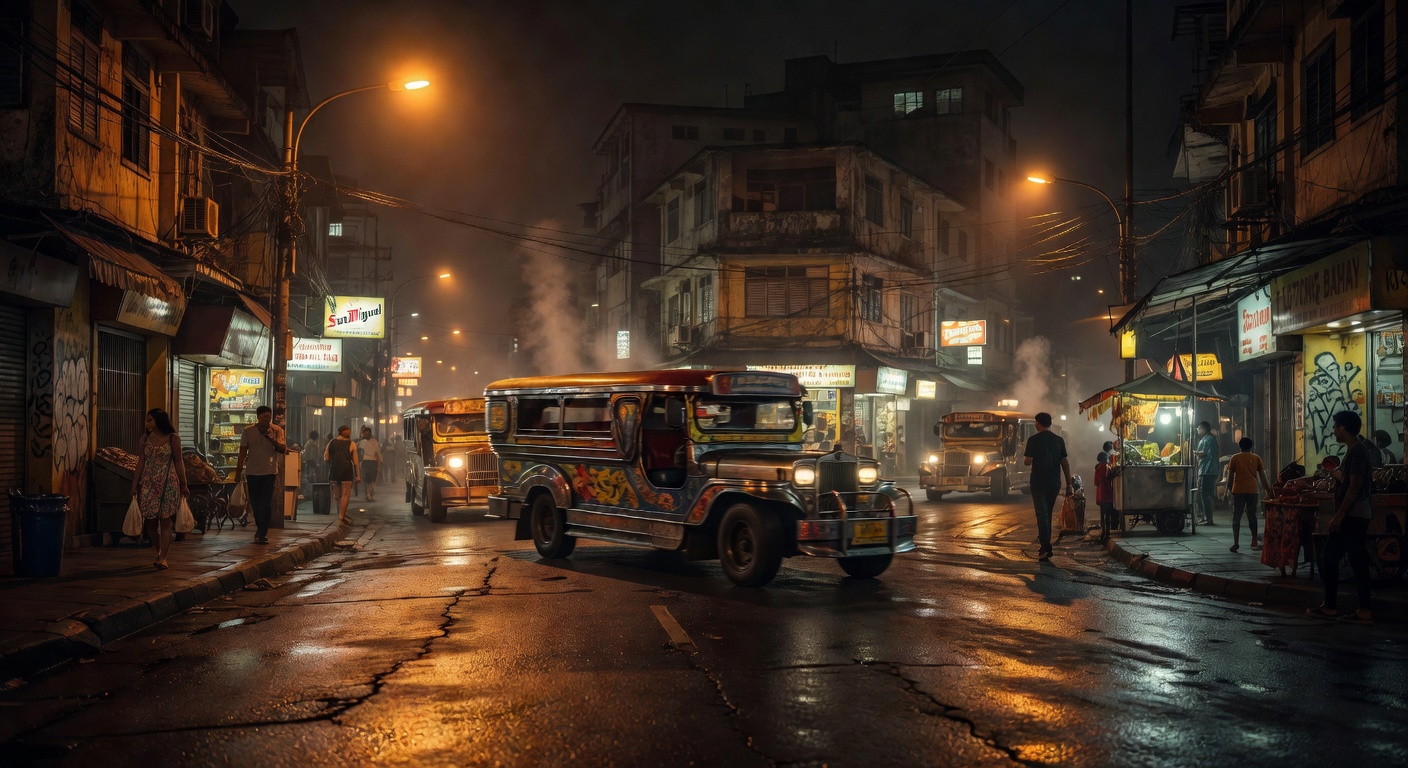
Rail covers useful corridors but does not reach everywhere. The LRT-1 line runs largely along Taft Avenue and Rizal Avenue through the City of Manila; LRT-2 runs east-west; and MRT-3 runs along EDSA through Makati, Ortigas, and Quezon City. Trains are cheap and can beat traffic but are extremely crowded at peak times and are targets for pickpockets. Jeepneys, tricycles, and UV Express vans fill the gaps for local trips but are hard to navigate without local knowledge. For airport transfers late at night after drinking, use a booked ride rather than an unmarked "airport taxi" tout; the fixed-fare airport coupon or app booking avoids the most common overcharging.
Where to Stay
For most visitors, Makati is the sensible base: central, comparatively safe, well-served by hotels across every price band, close to the Poblacion nightlife, and easy to reach by ride-hailing. Bonifacio Global City in Taguig is the choice for travellers who want a modern, secure, upmarket environment with excellent dining and are not prioritising proximity to the go-go strips. Malate and Ermita offer the cheapest rooms and a backpacker scene near Manila Bay and Rizal Park, but the area is more run-down and warrants more caution after dark. Pasay near the airport and Mall of Asia suits short stays and early flights.
One practical point specific to this topic: Philippine hotels vary widely on whether they permit overnight visitors. Many properties are not "guest-friendly" and will either refuse an unregistered overnight guest, require the visitor to present valid government ID at reception, or charge a "joiner fee." These policies are legitimate and are partly tied to the hotel's own liability under anti-trafficking rules, which require establishments to verify that guests are adults. Check a property's policy before assuming, carry ID, and understand that a hotel asking for a visitor's identification is following the law, not singling you out. Regardless of policy, never bring anyone whose adulthood you cannot verify onto the premises.
Resources
For any emergency, dial 911, the national emergency hotline covering police, fire, and medical response. The Philippine National Police maintains tourist-assistance functions, and the Department of Tourism operates a tourist-assistance service; your national embassy in Manila is the right first call for lost passports, legal trouble, or detention, and registering your trip with your embassy before arrival is worthwhile.
For sexual-health services, the community NGO LoveYourself Inc. provides free HIV testing, counselling, and PrEP/PEP access at its Metro Manila clinics; government Social Hygiene Clinics run by the Department of Health and local governments offer STI screening; and the Research Institute for Tropical Medicine is the national reference laboratory. Remember that PEP after a possible HIV exposure must be started within 72 hours. For serious medical care, Makati Medical Center, St. Luke's Medical Center, and The Medical City are the leading private hospitals, with Philippine General Hospital as the major public facility.
To report suspected trafficking or exploitation, contact the authorities through the 911 line and the Inter-Agency Council Against Trafficking (IACAT). The overarching harm-reduction summary for Manila is short: use protection every time and know where PEP is before you need it; never carry or accept drugs; verify age and free consent, and walk away from anything that looks coerced or involves a minor; settle bar prices in writing and pay as you go; guard your drink; and use booked ride-hailing rather than street vehicles at night. Nothing in this guide is legal advice, and laws and services change, so confirm current details locally before relying on them.