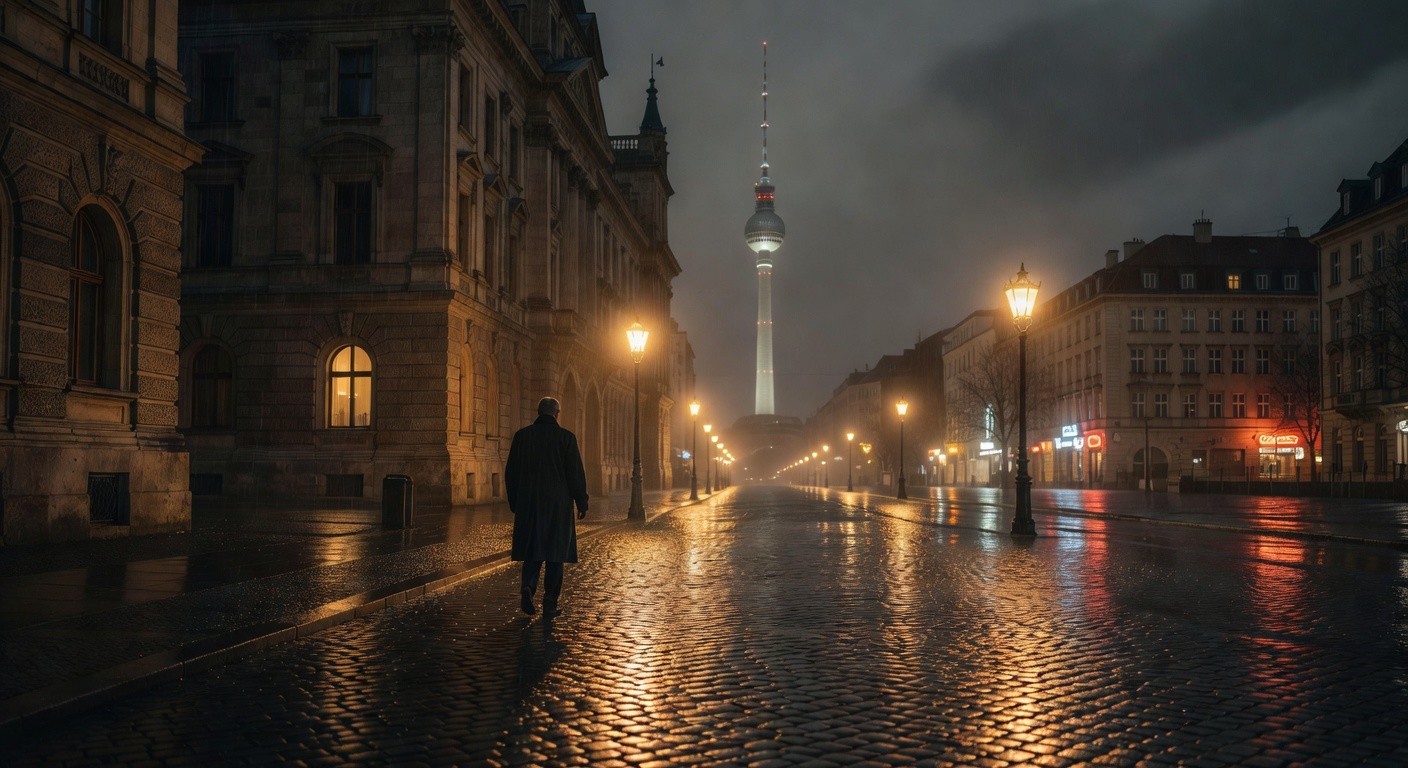
Germany · City Guide
Berlin
Europe's most permissive major sex-work market, where the law protects you more than in prohibitionist cities but legality is a floor, not a guarantee of safety.
Overview
Berlin is one of the most permissive major cities in the world for commercial sex. Germany operates a legalization-and-regulation model rather than prohibition, and it is the deliberate opposite of the Nordic "buyer-criminalization" approach used in neighbouring France, Sweden and Norway. Under the 2002 Prostitution Act (Prostitutionsgesetz) and the 2017 Prostitute Protection Act (Prostituiertenschutzgesetz), both selling and buying sexual services between consenting adults are lawful, taxable and, on paper, regulated. For the adult traveller this means the transaction itself carries very little legal risk to the client. It also means a large, visible and commercially sophisticated industry, with the full spectrum of legitimate operators, grey-zone venues and criminal exploitation that any legal market attracts.
The Berlin scene spans several distinct formats. There are licensed brothels; large FKK and sauna clubs, where a flat entry fee covers the facilities and food while services are negotiated individually with workers inside; apartment-based independent workers, advertised as Modellwohnungen; escort agencies operating by phone and website; bar-based work clustered on a handful of red-light streets; and street prostitution concentrated in specific tolerated zones. Unlike Amsterdam or Hamburg's Reeperbahn, Berlin has no famous window-brothel district. The visible street trade is comparatively small and gritty, centred on the Kurfürstenstraße corridor on the Schöneberg-Tiergarten border, while the higher-turnover business happens indoors and online.
The harm-reduction bottom line: the German legal framework protects you far more than the law does in prohibitionist destinations, but legality is not a guarantee of safety, honesty, or that everyone you meet is working voluntarily. Registration and condom rules exist, but compliance in practice varies widely, and Berlin's markets sit alongside documented trafficking and drug-dependency problems. Treat the law as a floor beneath your own judgement, not a replacement for it.
Legal Status
Prostitution by adults is legal in Germany and has been explicitly so since the Prostitution Act (Prostitutionsgesetz, ProstG) came into force on 1 January 2002. That law removed prostitution's status as sittenwidrig (contrary to public morals), made payment for agreed services a legally enforceable claim, and opened access to social insurance for workers. It was overhauled by the Prostitute Protection Act (Prostituiertenschutzgesetz, ProstSchG), in force since 1 July 2017, which introduced mandatory registration of sex workers, a compulsory health-counselling session before registering and periodically thereafter, licensing and inspection requirements for brothel operators, and a statutory condom obligation (Kondompflicht). Advertising that promises or promotes condomless sex is prohibited. Registered workers receive a certificate colloquially known as a Hurenausweis; the requirement is controversial and non-registration is common, but it is the operator, not the client, who bears most of the compliance burden.
Age of consent in Germany is set by the Criminal Code (Strafgesetzbuch, StGB) and is generally 14, with layered protections under §176 (absolute protection of children under 14) and §182 for adolescents. Crucially for travellers, paying for sex is a separate and stricter matter: under §182 StGB, engaging in sexual acts with a person under 18 in exchange for payment is a criminal offence regardless of the general age of consent. In other words, everyone in the legal commercial market must be 18 or older, and no "consent" defence applies to paid sex with a minor. Do not assume youthful appearance is styling; if there is any doubt about age, walk away.
The hard criminal lines are trafficking and coercion. Human trafficking is criminalized under §232 StGB, forced prostitution (Zwangsprostitution) under §232a StGB, and exploitation-related offences under §233. Critically, §232a(6) StGB makes it a crime for a client to knowingly, or recklessly ignoring the circumstances, use the services of a person who is a victim of trafficking or coercion. "I paid, so it was legal" is not a defence if the person was controlled by others. Street prostitution is further restricted by Berlin's Sperrgebietsverordnung, which prohibits street work in defined restricted zones and, in some areas, within certain hours; the tolerated street corridors are the exception, not the citywide rule.
Practical Safety
Berlin is, by the standards of large European capitals, a reasonably safe city for visitors, with low rates of violent crime against tourists. The realistic risks for someone moving through the nightlife and adult scene are property crime, drug-market friction, and the diminished judgement that comes with alcohol. Pickpocketing is common at transit hubs and tourist crush-points, especially Alexanderplatz, Zoologischer Garten, Warschauer Straße and inside crowded U-Bahn and S-Bahn carriages. Keep your phone and wallet in front pockets and be wary of the classic distraction routines around ticket machines and station exits.
Certain areas have visible open drug scenes that are worth understanding rather than fearing. The U8 underground line and stations such as Kottbusser Tor and Hermannplatz, parts of Görlitzer Park in Kreuzberg, and the RAW-Gelände in Friedrichshain are known for street dealing. These are not primarily violent, but they attract aggressive selling, and drugs bought on the street are frequently adulterated or misrepresented. The safest posture is to avoid buying entirely. If you are moving through these zones late at night, stay on well-lit main streets and keep moving.
Within the commercial-sex context, the standard precautions apply: agree the price and what it covers before anything begins, keep valuables secured and out of sight in rooms and apartments, never leave a drink unattended, and be cautious about how much cash you carry into a venue. Solo travellers should tell someone where they are going, keep a charged phone, and trust the instinct to leave if a situation feels controlled or coercive. Germany's universal emergency numbers are 112 for ambulance and fire and 110 for police; both are free from any phone.
Health Considerations
Sexually transmitted infections are the central health consideration, and Berlin's legal framework is unusually favourable to protecting yourself. The 2017 Act's statutory condom requirement means condoms are the legal norm across the licensed market, and any venue or worker advertising or pressuring for condomless sex is operating outside the law. That is a protection you should use, not treat as a mere formality. Barrier protection remains the single most effective measure against HIV, gonorrhoea, chlamydia, syphilis and hepatitis B; oral transmission is a real route for several of these, so "lower-risk" acts are not zero-risk.
Berlin has an excellent, low-barrier sexual-health infrastructure. The city's district public-health offices (Gesundheitsämter) and their sexual-health centres (Zentren für sexuelle Gesundheit und Familienplanung) offer anonymous and free or low-cost STI testing and counselling, and there are well-established community testing services connected to the German AIDS-help network. Pre-exposure prophylaxis (PrEP) for HIV has been covered by German statutory health insurance since 2019 and is widely available through Berlin clinics and specialist practices; if you are on PrEP, remember it does not protect against other STIs. For anyone who has had a possible HIV exposure, post-exposure prophylaxis (PEP) is time-critical and should be sought at a hospital emergency department as soon as possible, ideally within hours.
Germany's healthcare is high-quality but not automatically free to visitors. EU and EEA travellers should carry a European Health Insurance Card; everyone else should hold travel health insurance, as private billing can be substantial. Pharmacies (Apotheken) are widespread and staff are knowledgeable; condoms, emergency contraception and basic testing kits are readily available without prescription. Keep the emergency number 112 in mind for any medical urgency.
Common Scams
Because the market is legal, outright "honey-trap" extortion is less common in Berlin than in prohibitionist cities where shame is the leverage. The more frequent problems are commercial: overpriced drinks and inflated bills. Bars marketed as "table dance" or hostess venues, particularly some around the Kurfürstendamm and Zoologischer Garten area, can run the classic clip-joint routine, where a friendly companion runs up an enormous drinks tab or where "champagne" and companionship charges appear that were never clearly quoted. Establish prices in writing or on a posted menu before ordering, and be sceptical of anyone who steers you off the street into a venue you did not choose.
In the street and drug-market context, the scams are simpler and cruder. Street sellers in and around Görlitzer Park, the RAW-Gelände and along the U8 corridor routinely sell fake, cut or misrepresented substances, and disputes over these transactions are a genuine risk to your safety and wallet. Some street-based sex work along Kurfürstenstraße intersects with drug dependency, and theft of phones, wallets and watches during encounters is a documented risk; keep valuables out of reach and out of sight.
General tourist scams round out the picture: fraudulent "petition" clipboards used to mask pickpocketing near landmarks, the occasional fake-police "let me check your wallet for counterfeit notes" approach (real German police do not do this — ask for uniformed identification and never hand over your wallet), and ATM skimming. Use bank-lobby or in-branch cash machines rather than standalone units in nightlife strips, shield your PIN, and prefer official taxis or licensed ride-hailing over unmarked "drivers" touting outside clubs.
Police & Enforcement Reality
Because adult sex work is legal, the everyday enforcement posture of the Polizei Berlin is fundamentally different from that in prohibitionist countries. The buyer of sex from a consenting adult is not committing an offence and is not a target. Police and regulatory attention concentrates on the serious crimes around the industry: trafficking and forced prostitution (§232 and §232a StGB), exploitation of minors (§182 StGB), unlicensed brothel operation, tax evasion, and organized crime. The regulatory side — worker registration, health-counselling compliance and brothel licensing — is administered by health and public-order authorities rather than by patrol officers, and Berlin's district Ordnungsämter handle enforcement of the street-work restricted zones (Sperrgebiet).
What this means in practice is that a client is most likely to encounter police only as a witness, a bystander to a raid, or a potential offender if they cross the two bright lines: paying for sex with anyone under 18, or using the services of someone they know or should reasonably know is being coerced or trafficked. Both carry real criminal liability. Large clubs and brothels are periodically inspected and, occasionally, raided in trafficking investigations; there have been high-profile enforcement actions against major venues over the years. If you are present during such an action, cooperate, provide identification if asked, and do not attempt to leave the scene. To report suspected coercion or trafficking, call 110; specialist counselling organizations (below) can also relay concerns confidentially.
Neighborhood Overview
Berlin's adult scene is geographically dispersed rather than concentrated in a single district, and understanding the map helps you read what you are walking into. The most visible street prostitution is on and around Kurfürstenstraße, straddling the Schöneberg-Tiergarten border near the Kurfürstenstraße U-Bahn station (U1/U3) and Nollendorfplatz. This is a long-established, partly tolerated street corridor; it is also where street work most visibly intersects with drug dependency and precarity, and it warrants the most caution and the most awareness of exploitation indicators.
Oranienburger Straße in Mitte is historically famous as a street-prostitution stretch dating back decades, though gentrification and tourism have thinned the trade considerably; today it is more a nightlife-and-restaurant street with a residual reputation. Stuttgarter Platz ("Stutti") in Charlottenburg, near the Charlottenburg S-Bahn station, is an older red-light pocket of bars and apartment-based work. The large FKK and sauna clubs that anchor the higher-volume end of the market tend to sit on the city's arterial edges and inner-ring roads rather than in residential cores — the best-known example is the long-operating Artemis club near Halensee in the west, which has been extensively documented in German media, including past police investigations. Treat these clubs as licensed businesses with posted entry fees and separately negotiated services.
It is worth separating the sex-work map from the broader nightlife map, because they overlap but are not the same. Schöneberg around Nollendorfplatz — the streets of Motzstraße and Fuggerstraße — is Berlin's historic LGBTQ nightlife quarter, with bars and clubs rather than commercial sex per se. Kreuzberg and Friedrichshain, around Warschauer Straße, Kottbusser Tor and the RAW-Gelände, are the epicentre of Berlin's club culture (including the internationally known techno scene) and also its most visible street drug markets. Neukölln is a dense, gentrifying nightlife district. Knowing which category a street belongs to helps you set realistic expectations and avoid conflating a party street with a red-light one.
Local Trafficking Indicators
Legalization does not eliminate coercion; it changes where it hides. Germany's regulated market coexists with documented trafficking, much of it involving people brought from poorer parts of Europe and beyond, and the client-liability provision of §232a(6) StGB means recognizing the signs is both an ethical and a legal matter. Warning indicators include a worker who does not control her own money or set her own prices, who appears monitored or is never alone, who cannot produce or does not hold her own identity documents, who seems fearful, disoriented, unfamiliar with the city, or unable to communicate freely, and who gives scripted or evasive answers about her situation. Signs of physical control, injury, or of being moved frequently between venues are serious red flags.
If any of these are present, the right response is to disengage — do not proceed with a transaction — and, if you have concrete concerns, to report them. In an emergency or where someone appears to be in immediate danger, call 110. Berlin has specialist organizations that support people in the sex trade and victims of trafficking and can receive information confidentially: Hydra e.V., Germany's oldest sex-worker counselling and advocacy organization, and Ban Ying, a Berlin counselling centre specializing in support for trafficking victims. Nationally, the coordinating body against trafficking, KOK (Bundesweiter Koordinierungskreis gegen Menschenhandel), maintains a network of specialist counselling centres. Reporting a well-founded concern can help someone who cannot ask for help themselves; guessing wrongly and harassing a voluntary worker helps no one, so weigh what you actually observe.
Getting Around
Berlin has one of Europe's best public-transport systems, run by the BVG (buses, trams and the U-Bahn) and S-Bahn Berlin (the suburban rail network), integrated under the VBB fare zones A, B and C — most of the city and its nightlife sit within zones A and B. The U-Bahn lines (U1 through U9, plus others) and S-Bahn ring and cross-city lines connect essentially all the districts described above; key interchanges include Alexanderplatz, Zoologischer Garten, Warschauer Straße and Nollendorfplatz. On Friday and Saturday nights the U-Bahn and S-Bahn run through the night; on other nights a comprehensive network of night buses (Nachtbusse, prefixed "N") and night trams fills the gap. Buy tickets via the BVG app or machines and validate as required, since fare inspections are frequent and fines are on-the-spot.
Taxis are metered, regulated and generally honest; licensed ride-hailing apps operate across the city and remove any language friction over destinations and fares. For short hops, Berlin is flat and highly cyclable, with dockless bikes and e-scooters widely available, though riding under the influence carries the same legal risks as driving. A practical safety note that ties back to the earlier sections: some of the most convenient late-night routes pass through the U8 corridor and stations like Kottbusser Tor and Hermannplatz, where the open drug scene is concentrated; there is nothing to fear in simply transiting, but it is a reason to stay alert, keep valuables secured, and prefer well-lit platforms.
Where to Stay
Where you base yourself shapes your experience more than any single venue does. Mitte is central, well-connected and convenient to almost everything, if less atmospheric. Charlottenburg and the western City West around Kurfürstendamm offer classic, quieter, business-district hotels with easy transit and proximity to the western red-light pockets. Schöneberg around Nollendorfplatz suits travellers who want to be in or near the LGBTQ nightlife quarter. Kreuzberg, Friedrichshain and Neukölln put you in the middle of the club and bar scene, lively but noisier, while Prenzlauer Berg is calmer and residential. Berlin's hotel supply is large and price-competitive across all of these.
On discretion and rules: Germany's legal framework means there is generally no legal problem with an adult guest visiting your accommodation, but individual hotels set their own house policies, and some — particularly business and chain hotels — restrict or bill for additional overnight guests, so read the terms and do not assume. Legitimate independent workers and agencies in Berlin routinely do outcall visits to hotels; be aware that some hotels log visitors. If discretion matters to you, choose accommodation accordingly and behave as a considerate guest. Germany's registration formality (Meldeschein) at check-in applies to the registered guest, not to short visits. As always, keep your own valuables and documents secured in the room safe rather than left out during any encounter.
Resources
Emergency numbers in Germany are 112 for medical and fire emergencies and 110 for police; both are free and answered by operators who can usually assist in English. For sexual-health services, Berlin's public-health offices (Gesundheitsämter) and their sexual-health centres (Zentren für sexuelle Gesundheit und Familienplanung) provide anonymous, low-cost or free STI testing and counselling, and the German AIDS-help network operates community testing and advice services across the city; hospital emergency departments handle time-critical HIV post-exposure prophylaxis (PEP). Pharmacies (Apotheken) are everywhere for condoms, emergency contraception and basic self-test kits.
For sex-work counselling, rights information and support with exploitation, Hydra e.V. is Germany's long-established sex-worker organization and a first point of contact in Berlin. For trafficking-specific help, Ban Ying in Berlin and the national coordinating body KOK maintain specialist counselling services and can receive concerns confidentially. Non-German visitors who become victims of a crime can also contact their embassy or consulate for assistance. Finally, remember that the strongest protections available to you here are structural and free: the legal condom norm, the legal age floor of 18 for paid sex, the right to walk away from anything that feels coerced, and the knowledge that reporting trafficking to 110 or to a specialist NGO can protect someone who cannot protect themselves.