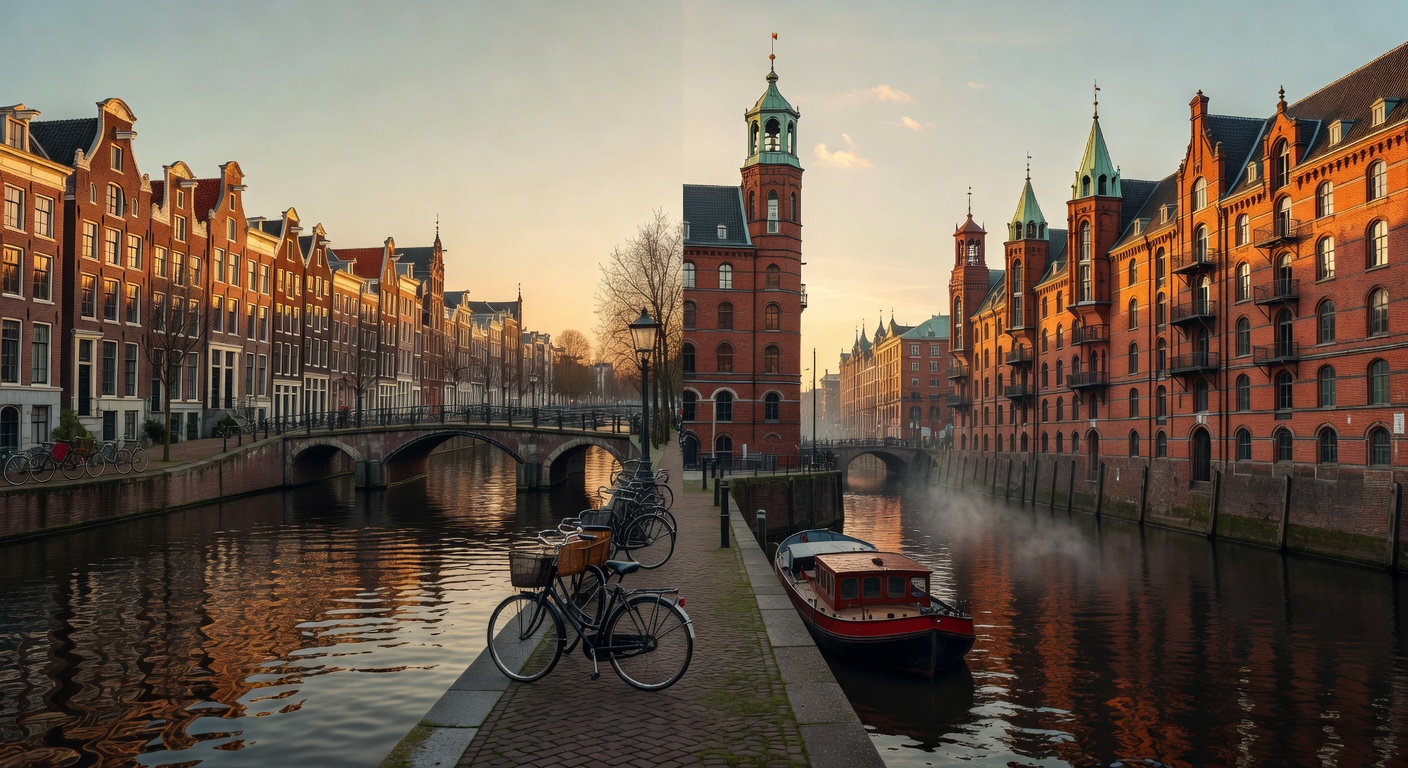
Amsterdam vs Hamburg: Red Light Districts Compared 2026
Europe's two most famous red-light districts go head-to-head — Amsterdam's iconic windows versus Hamburg's legendary Reeperbahn, compared across pricing, venues, culture, safety, and overall experience.
Overview
Amsterdam's De Wallen and Hamburg's Reeperbahn are Europe's most iconic red-light districts. Both operate within fully legal frameworks, both are major tourist attractions in their own right, and both offer experiences unlike anything else in the world. But they're fundamentally different in format, atmosphere, and what they deliver. This comparison helps you choose — or plan a trip that hits both.
The Window System vs The Reeperbahn
Amsterdam — De Wallen Windows
Amsterdam's red-light district centers on the window system — women stand or sit behind floor-to-ceiling glass doors lit by red (or sometimes blue/purple) neon. The windows line narrow medieval streets and canals in the oldest part of the city. The system is uniquely visual: you walk past, browse, and if someone catches your eye, you knock on the door and negotiate face-to-face.
Key characteristics:
- Approximately 300 active windows across De Wallen, Singelgebied, and Ruysdaelkade
- Women rent the windows from property owners — they're independent contractors, not employees
- Services happen on-premises in a small room behind the window (bed, sink, basic amenities)
- Sessions are typically short — 15-20 minutes is standard for the base price
- Negotiation happens at the door — prices are not posted but there are established norms
- Windows are open roughly 11am-3am with peak activity 8pm-1am
Hamburg — Reeperbahn & Herbertstrasse
Hamburg's adult district is centered on the Reeperbahn, a 930-meter street in the St. Pauli neighborhood. Unlike Amsterdam's compact canal district, the Reeperbahn is a full entertainment boulevard with bars, clubs, theaters, restaurants, and adult venues mixed together. The adult-specific areas include:
- Herbertstrasse: Hamburg's window street — a gated, 60-meter alley with windows similar to Amsterdam's. Women-only entry gates at each end (men enter freely; women and children are asked not to enter). Smaller than Amsterdam's window area but more concentrated.
- Grosse Freiheit: Side street with strip clubs, table dance venues, and bars. The Beatles played their early Hamburg gigs here.
- Laufhaus/Eros Centers: Multi-story buildings where women rent rooms. You walk the corridors and choose. Several operate on or near the Reeperbahn.
- FKK clubs: Hamburg has FKK-style clubs in the surrounding area. Larger, more social, with sauna/bar/lounge areas.
- Strip clubs and table dance: Numerous venues along the Reeperbahn offering shows and private dances, some with extras available.
Winner: Hamburg. More venue variety. Amsterdam has the superior window experience, but Hamburg offers windows plus laufhaus, FKK clubs, strip venues, and an entire entertainment district. More options for more preferences.
Pricing
Amsterdam
- Window visit (15-20 min): EUR 50-75 (standard); EUR 100-150 (extended time or specific requests)
- Half hour: EUR 100-150
- Full hour (rare at windows): EUR 200-300
- Private escort (off-window): EUR 150-300/hour
- Sex show (Casa Rosso etc.): EUR 40-60 entry
- Typical spend per visit: EUR 50-100
Hamburg
- Herbertstrasse window (15-20 min): EUR 30-50
- Laufhaus/Eros Center visit: EUR 30-60 (30 min); EUR 50-100 (1 hour)
- FKK club entry + session: EUR 50 entry + EUR 50-100 per session
- Strip club + private dance: EUR 30-80 (varies widely)
- Independent escort: EUR 100-250/hour
- Typical spend per visit: EUR 30-80
Winner: Hamburg. Significantly cheaper across all comparable formats. Amsterdam's window prices have climbed steadily as the district has gentrified and the number of windows has decreased. Hamburg offers more encounters per euro.
Venue Types Beyond the Windows
Amsterdam
- Windows (De Wallen): The main event. Nothing else in Amsterdam competes for the core adult experience.
- Private escort/outcall: Active online market. Providers advertise on Dutch platforms and international sites. Quality is good but pricing is Western European (EUR 150-300/hour).
- Sex shows: Casa Rosso and other live-show theaters in De Wallen. Tourist-oriented entertainment — not interactive.
- Erotic massage: Several parlors in the city center offering various levels of service.
- Coffeeshops: Not adult venues, but Amsterdam's legal cannabis culture creates a unique pre-game atmosphere that many visitors enjoy.
Hamburg
- Herbertstrasse windows: Smaller than Amsterdam's but functional equivalent.
- Laufhaus/Eros Centers: Multi-story walk-in venues. Hamburg's equivalent of an FKK without the sauna. Very efficient format.
- FKK clubs: Full-service spa clubs in Hamburg and surrounding area. Entry fee includes sauna, pool, buffet, bar — then negotiate separately with women. The most social format.
- Grosse Freiheit strip clubs: Shows, private dances, and VIP rooms with available extras. Dollhouse and Safari are landmark venues.
- Table dance bars: Pay-per-dance format along the Reeperbahn. Social and entertaining even without extras.
- Bars and clubs: The Reeperbahn is a genuine entertainment district — mainstream bars, live music venues, comedy clubs. The adult scene integrates with normal nightlife.
Winner: Hamburg. More variety, more formats, and better integration with mainstream entertainment. Amsterdam is essentially a one-trick pony (an excellent trick, but still one trick).
Culture & Atmosphere
Amsterdam
De Wallen has a uniquely surreal atmosphere. Walking through medieval streets lined with red-lit windows while tourists gawk and stag parties stumble past creates a scene unlike anywhere else. The district feels both ancient and brazenly modern. The coffeeshop culture adds a hazy, laid-back dimension. Amsterdam itself is beautiful — canals, museums, cycling culture — and the red-light district is woven into the historic center rather than segregated from it.
The downside: De Wallen has become heavily touristic. On weekend nights, the narrow streets are packed with gawking crowds who are there to look, not participate. This can make the experience feel like a human zoo. The Amsterdam city council has been actively trying to reduce the district's adult character, closing windows and proposing relocations. The trend is toward contraction.
Hamburg
The Reeperbahn has a grittier, more authentic atmosphere. It's a working entertainment district, not a tourist attraction that happens to have adult venues. The Beatles connection (they played at the Star-Club and Indra) gives it rock-and-roll credibility. St. Pauli's football culture (the left-wing FC St. Pauli) adds a counterculture edge. The district feels lived-in and genuine rather than curated for Instagram.
Hamburg itself is Germany's wealthiest major city — a port town with a distinct, confident personality. The Reeperbahn exists because Hamburg has always been a sailors' town where entertainment thrived. There's no civic hand-wringing about the district's existence — it's accepted as part of the city's identity.
Winner: Hamburg for authenticity and atmosphere. Amsterdam for the unique, surreal window-walking experience that simply doesn't exist anywhere else.
Safety
Amsterdam
De Wallen is generally safe:
- Pickpockets: Very active in the crowded streets. The distraction of the windows makes you an easy target. Secure your valuables.
- Drug dealers: Street dealers along the canals offer hard drugs (cocaine, MDMA). These are often scams (fake product) or setups. Ignore them completely.
- No photography: Taking photos of the windows is prohibited and will get you confronted by security or the women themselves. Respect this rule.
- Scams: Some window workers may try to charge more after the agreed service. Establish everything before entering.
- Violence: Extremely rare. The area is well-policed and well-lit.
Hamburg
The Reeperbahn is safe by entertainment-district standards:
- Drunk crowds: Weekend nights bring large groups of intoxicated Germans and tourists. Most are harmless but fights occasionally break out between groups.
- Strip club overcharging: Some Reeperbahn venues use aggressive tactics — inflated drink prices, unclear extras charges. Stick to well-reviewed venues.
- Pickpockets: Present but less aggressive than Amsterdam.
- Side streets: The main Reeperbahn is well-lit and policed. Smaller side streets can feel sketchy late at night.
- Herbertstrasse: Very safe — it's a gated street with only one purpose. No ambiguity.
Winner: Draw. Both are safe by red-light-district standards. Amsterdam has more pickpocket risk; Hamburg has more drunk-crowd risk. Neither presents serious safety concerns for aware travelers.
Quality & Demographics
Amsterdam
The women in Amsterdam's windows represent a wide international mix. Eastern European (Romanian, Bulgarian, Hungarian), Latin American (Colombian, Dominican), African, and Asian women are all represented. Dutch women are increasingly rare in the windows. Quality varies block by block and hour by hour — the most attractive women tend to work evenings and weekends. Daytime visits may find thinner selections. The window system means what you see is exactly what you get — no photo discrepancy issues.
Hamburg
Hamburg's demographics are similarly international. German, Eastern European, Thai, and Latin American women work across the various venues. The Herbertstrasse windows tend to have a higher proportion of German and Eastern European women. FKK clubs draw from across Europe. The laufhaus buildings offer the widest variety in a single location. Quality at Hamburg's FKK clubs is generally high — these venues compete for top talent and the spa atmosphere attracts professional-tier workers.
Winner: Draw. Similar demographic diversity. Hamburg's FKK clubs may have a slight edge on average quality due to the venue competition dynamic.
Logistics
Amsterdam
- Getting there: Schiphol Airport is a major European hub. Direct flights from everywhere. Train from the airport to Centraal Station takes 15 minutes (EUR 5).
- Getting to De Wallen: 5-minute walk from Amsterdam Centraal Station. Impossible to get lost — follow the crowds.
- Accommodation: Expensive. Budget: EUR 40-70/night (hostels); mid-range: EUR 100-180/night; upscale: EUR 200-400/night. Hotels near De Wallen are priciest.
- Food: EUR 15-30 for a meal. Indonesian rijsttafel is the local specialty. Cheaper eats in the Jordaan district.
- Transport: Trams, metro, and cycling (rent a bike for EUR 12-15/day). The city is compact and walkable.
Hamburg
- Getting there: Hamburg Airport has good European connections but fewer intercontinental flights than Amsterdam. Also reachable by ICE train from Berlin (1.5 hours) and other German cities.
- Getting to Reeperbahn: S-Bahn to Reeperbahn station — literally exits onto the street. From the airport: 25 minutes by S1.
- Accommodation: Cheaper than Amsterdam. Budget: EUR 30-55/night; mid-range: EUR 70-130/night; upscale: EUR 140-280/night. St. Pauli neighborhood hotels put you steps from the action.
- Food: EUR 10-25 for a meal. Fish sandwiches at the Fischmarkt, currywurst on the Reeperbahn, excellent German/Turkish food everywhere.
- Transport: Excellent U-Bahn/S-Bahn system. Hamburg is larger than Amsterdam so public transport matters more.
Winner: Hamburg. Cheaper accommodation and food. Amsterdam is better-connected internationally but Hamburg is more affordable once you arrive.
Best Time to Visit
Amsterdam
- Peak (April-September): Warm weather, long daylight hours, bustling canal-side atmosphere. De Wallen is most active in summer evenings. King's Day (April 27) is a massive street party. Accommodation prices peak in July-August.
- Shoulder (March, October): Cooler but fewer tourists. The window district operates normally. Hotel prices drop 20-30%.
- Winter (November-February): Cold, dark, and atmospheric. The red neon reflects off wet cobblestones. Fewer tourists make De Wallen feel more intimate. Holiday season (December) brings Christmas markets and festive atmosphere.
Hamburg
- Peak (June-August): Warm, long evenings. The Reeperbahn is at its liveliest. Fischmarkt on Sunday mornings is best in summer. Schlagermove (July) is a massive street parade.
- Shoulder (April-May, September-October): Comfortable weather, full scene, fewer tourists. Ideal timing.
- Winter (November-February): Cold and dark but the Reeperbahn never sleeps. Hamburg's Christmas market (Winterdom) is one of Germany's largest. Indoor venues (FKK clubs, laufhaus) are weather-proof.
Winner: Draw. Both are year-round destinations. Summer is peak for both. Winter visits have their own appeal — Hamburg's FKK clubs are especially attractive when it's cold outside.
Combining Both
Amsterdam and Hamburg are easily combinable. The options:
- Train: Direct IC/ICE trains take about 5.5 hours. Scenic route through the Netherlands and northern Germany. Prices from EUR 30-60 booked in advance.
- Flight: 1-hour flight, but once you factor in airport time, the train is often faster city-center to city-center.
- Flixbus: Budget option, 5-6 hours, from EUR 15-25.
A recommended itinerary: 2-3 nights in Amsterdam (windows, coffeeshops, canals, museums) followed by 2-3 nights in Hamburg (Reeperbahn, FKK, Herbertstrasse, Fischmarkt). This gives you Europe's two most famous red-light experiences in under a week.
Who Each City Suits Best
Choose Amsterdam If:
- You want the iconic window-browsing experience — it's truly unique
- You're combining an adult trip with museums, canals, and coffeeshops
- You prefer a compact, walkable district you can explore in an evening
- You want the "bucket list" red-light district experience
- You value an international hub with easy connections
Choose Hamburg If:
- Budget matters — Hamburg delivers more for less at every level
- You want more venue variety (windows + laufhaus + FKK + strip clubs)
- You prefer an authentic entertainment district over a tourist attraction
- You're interested in FKK-style clubs (Hamburg's are excellent)
- You want a grittier, more rock-and-roll atmosphere
- You're already in Germany or combining with a German FKK tour
Regulatory Trends & Future Outlook
Amsterdam
Amsterdam is trending toward restriction. The city council has been actively reducing the red-light district for years:
- Window closures: The number of active windows has decreased from roughly 500 to about 300 over the past 15 years. The Project 1012 initiative aimed to replace windows with boutiques and restaurants.
- Proposed relocation: Amsterdam has discussed moving the window district to a purpose-built "erotic center" outside the city center. This remains politically contentious but the direction of travel is toward contraction.
- Tourist management: Restrictions on guided tours through De Wallen, campaigns discouraging stag parties, and a general push to rebrand Amsterdam away from its "sin city" image.
The message is clear: visit Amsterdam's windows sooner rather than later. The district may look very different in 5-10 years.
Hamburg
Hamburg is trending toward stability. The Reeperbahn is accepted as part of St. Pauli's identity, and there is no significant political movement to restrict or relocate the district. If anything, the trend is toward gentrification alongside the scene — nicer restaurants, better hotels, and upscale bars coexisting with the adult venues. Hamburg shows no signs of undermining its red-light character.
Winner: Hamburg. More stable future. Amsterdam's window district faces genuine existential threats from city policy. Hamburg's Reeperbahn is secure.
Day Activities & Cultural Highlights
Amsterdam
- Museums: Rijksmuseum, Van Gogh Museum, Anne Frank House — world-class cultural institutions
- Canal cruises: Relaxing daytime activity, beautiful views of 17th-century architecture
- Coffeeshops: Legal cannabis culture is a unique Amsterdam experience. Dozens of coffeeshops throughout the center.
- Cycling: Rent a bike and explore neighborhoods beyond the tourist center. Vondelpark, Jordaan, De Pijp.
- Food: Indonesian rijsttafel, stroopwafels, herring from street stands, and an excellent brunch scene.
Hamburg
- Miniatur Wunderland: The world's largest model railway exhibition — surprisingly entertaining even for adults.
- Elbphilharmonie: Stunning concert hall on the harbor. Even without a performance, the viewing platform is worth visiting.
- Fischmarkt: Sunday morning fish market (5am-9:30am). Excellent atmosphere, live music, and fresh seafood sandwiches. The perfect post-Reeperbahn morning activity.
- Speicherstadt: UNESCO World Heritage warehouse district. Beautiful brick architecture, coffee museum, and harbor tours.
- Food: Fresh fish, currywurst, Turkish kebabs, and excellent German craft beer scene. Hamburg is a port city — the seafood is exceptional.
Winner: Amsterdam for cultural institutions and the coffeeshop experience. Hamburg for the Fischmarkt, harbor atmosphere, and architectural novelty.
Category Scorecard
- Window experience: Amsterdam (unique)
- Venue variety: Hamburg
- Pricing: Hamburg
- Culture & atmosphere: Amsterdam (unique), Hamburg (authentic)
- Safety: Draw
- Logistics: Hamburg (cheaper)
- Future outlook: Hamburg (more stable)
- Day activities: Draw (different strengths)
Final Verdict
Hamburg wins on value, variety, and authenticity. It's cheaper, offers more venue types, and feels like a real entertainment district rather than a tourist attraction. The Reeperbahn delivers a complete night out — adult venues, live music, great food, and nightlife — in a way that De Wallen, for all its charm, does not.
Amsterdam wins on uniqueness. The window experience is singular — there is nothing like walking De Wallen's candlelit streets at midnight. If you've never been, it's a must-see. But for repeat visits and overall adult travel value, Hamburg is the better destination.
Given Amsterdam's trend toward restriction, the recommendation is: visit Amsterdam first (before the window district shrinks further), then make Hamburg your regular European red-light destination. The Reeperbahn isn't going anywhere.
For detailed guides, see our Netherlands Guide and Germany Guide.